Key Considerations When Sourcing Commercial Battery Storage Systems from China
China has become a major manufacturing hub for commercial battery energy storage systems (BESS), and the range of options for commercial and industrial (C&I) projects is wide. For EPC contractors, solar developers, distributors and project owners, sourcing there usually gets you three things: tighter pricing, a battery supply chain that already exists, and room to shape the system around your project instead of around a catalogue.
Buying one, though, isn't a price-per-kilowatt-hour exercise. What you're actually choosing is a system design, a factory's engineering depth, a set of safety decisions, a business case, and someone who still picks up the phone in year three.
On solar-plus-storage work this shows up quickly. The factory you pick affects your margin, how long the installation takes, when you can commission, and whether the system still behaves after a few hundred cycles. Here's what to look at when sourcing commercial BESS from China, and a workable way to score suppliers and quotations.
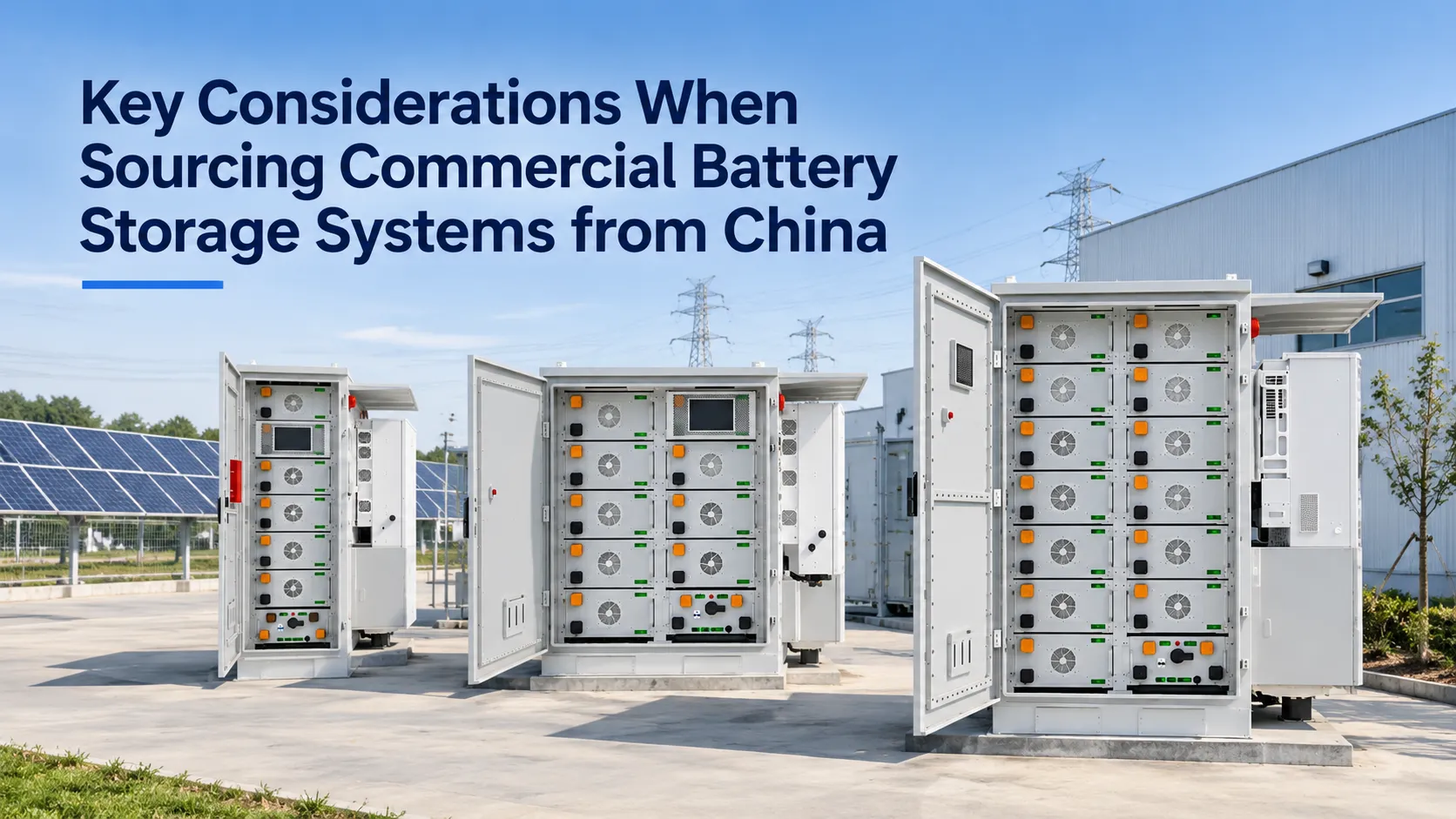
What China's commercial BESS supply chain covers
Manufacturing strength and supply chain advantages
The chain runs from lithium cells and modules through racks, battery management systems, power conversion systems, energy management systems, thermal management equipment, and finished cabinets or containers. Much of it sits in one country, and often in one industrial region.
That integration gives overseas buyers a few practical things:
- Cells in volume. LFP (lithium iron phosphate) comes in many formats and capacities, which makes it the easy default rather than a specialty item.
- Lower equipment cost. Large production runs and locally sourced components hold prices down.
- Room to configure. Capacity, voltage, enclosure design, communication protocol and system integration can usually be changed.
- A product for most sites. Small businesses, hotels, factories, solar farms and industrial facilities all have something on the shelf.
- Engineering support, from the better factories. System design, technical documentation, remote commissioning, and settings built for the specific project.
That's why EPC companies and distributors keep going back to China for storage they'll install somewhere else. None of it guarantees quality, though. You still need to know which factory is behind the name, what its engineering team can really do, where the cells come from, how quality control runs day to day, and what it has shipped before.
Capacity and market trends
Storage demand has moved fast. More renewables on the grid, power prices that swing, and transmission that needs flexibility all push the same direction.
The International Energy Agency put global battery storage additions at roughly 42 GW in 2023, well above previous years. China drove a large share of it, both as a manufacturer and as a builder of storage at home.
A few things are shaping the commercial end of the market:
- LFP has become the default chemistry for stationary storage.
- Liquid-cooled cabinets are increasingly requested, especially at higher capacities.
- Systems are denser and more compact than they were a few years back.
- Storage is paired with PV, diesel generators, or a grid connection far more often than it's installed alone.
- EMS functions go well past monitoring now — peak shaving, load shifting, energy optimization.
- Fire safety, certification and long-term performance guarantees get more scrutiny every year.
For buyers outside China, the upside is access to better hardware than was on offer five years ago. The catch: specifications and safety requirements differ by market. Before you commit, check that the equipment suits both the application and the place it will sit.
OEM, ODM, and customization
Most Chinese BESS factories work with overseas customers in one of three ways.
| Model | What it means | Who it suits |
|---|---|---|
| OEM | The product is built under your brand, or to an agreed specification. | Distributors and established storage brands. |
| ODM | The factory handles design and development, with customization layered on top. | Companies building out their own product line. |
| Standard product sourcing | You buy a model that already exists, with limited changes. | EPC contractors and project developers. |
Before you get into customization, settle the commercial basics: minimum order quantities (MOQs), engineering fees, branding requirements, delivery dates. Then ask the question that tends to get skipped — do these changes affect product certification or warranty coverage?
For project work, a standard model with a proven track record is often the more practical choice. Customize because the project genuinely needs it. Not because the factory said yes.
Key technologies and configurations
LFP vs. NMC
Chemistry decides a lot: energy density, how cells behave under heat, cycle life, operating limits, and system cost. Two lithium-ion chemistries come up in storage — lithium iron phosphate (LFP) and nickel manganese cobalt (NMC).
| Factor | LiFePO4 (LFP) | NMC |
|---|---|---|
| Energy density | Generally lower | Generally higher |
| Thermal stability | Generally favorable | Needs careful thermal and safety management |
| Fit for stationary storage | Widely used in commercial and industrial BESS | Workable where higher energy density matters |
| Typical use case | Long-duration cycling and cost-conscious systems | Tight spaces that need more energy in less room |
LFP dominates commercial storage. It handles heat well and takes frequent cycling, which is roughly what a behind-the-meter system does all day. Factories, hotels, commercial buildings and solar-plus-storage projects mostly run on it.
Don't judge a chemistry in isolation. Cell quality, operating temperature, charge and discharge rates, depth of discharge, battery management, and system-level safety design all decide how it performs on a real site.
Liquid cooling vs. air cooling
Thermal management keeps cells inside their recommended temperature range. Steady temperatures narrow the spread between cells, and over a few years that shows up in service life.
Air cooling moves heat out with fans and air circulation. Simple design, usually a lower purchase price. In hot climates, or in systems with high power density, it starts to struggle.
Liquid cooling runs a coolant circuit through the modules or racks and pulls heat away more evenly. It's now common in higher-capacity commercial cabinets.
When you compare the two, look at:
- ambient temperature and where the unit will sit
- battery capacity and power density
- how often the system charges and discharges
- how much energy the cooling system itself consumes
- maintenance needs and component replacement
- protection against coolant leaks, dust and moisture
Liquid cooling suits large systems. It isn't automatically right for every project, and the decision should come from the operating environment, the system design and lifecycle cost — not from a specification sheet that lists it as an upgrade.
Fire protection and thermal safety
Fire safety is one of the first things to examine when sourcing storage. A serious BESS layers protection. It doesn't hang everything on one device.
Features worth checking:
- BMS that monitors cell voltage and temperature
- overcurrent, overvoltage, undervoltage, and short-circuit protection
- thermal management and abnormal temperature detection
- fire detection and suppression that suits the enclosure
- emergency shutdown and isolation
- appropriate enclosure design, ventilation, and separation distances
Ask for the fire protection strategy in technical terms: how detection works, what suppression technology is used, how alarms integrate with the site, and what the emergency response procedure looks like.
Where a project needs specific fire approvals, confirm the whole system has been evaluated against the applicable standard. A certificate for a single cell tells you nothing about the complete unit.
Low-voltage vs. high-voltage architecture
Commercial systems use low-voltage or high-voltage battery architectures depending on capacity, power requirements, inverter design and the intended application.
Low-voltage systems, often built on 48 V-class configurations, are common in smaller commercial, residential and off-grid work. They stay flexible when paired with compatible inverter equipment.
High-voltage systems turn up in larger commercial and industrial installations. At a given power level, higher voltage means lower current, which can shrink cable size and cut electrical losses — provided the system is designed properly.
When comparing architectures, check:
- battery voltage range and inverter compatibility
- maximum charge and discharge current
- system power rating and required operating duration
- installation and electrical protection requirements
- expansion capability against future capacity needs
The right architecture depends on the project. Don't pick a battery because the voltage looks about right. Battery, inverter and control system have to work as one unit.
BMS, EMS, and inverter compatibility
A commercial BESS has several control layers, and they have to talk to each other.
- BMS (Battery Management System): watches cell and pack conditions, runs protection, and publishes the battery's operating limits.
- EMS (Energy Management System): decides how the system behaves, based on load, tariffs, solar generation and project objectives.
- PCS or inverter: moves power between the battery's DC side and the AC network.
This is where projects lose weeks. A battery can have the right capacity and voltage and still refuse to run, because its protocol or control logic doesn't match the inverter.
Before ordering, get written confirmation of:
- supported inverter brands and models
- communication interfaces, such as CAN or RS485
- communication protocol documentation
- battery voltage and current limits
- EMS operating modes and control functions
- remote monitoring and troubleshooting capability
For EPC contractors, compatibility belongs in writing before procurement. Where it's possible, ask for evidence of a working integration, or run a factory acceptance test with the exact inverter and control setup you plan to install.
Evaluating applications and project economics
Commercial and industrial applications
Storage can serve several energy management strategies at once. How much value it creates depends on the site's consumption pattern, the tariff structure, grid conditions and what the owner actually wants.
Common C&I applications:
- Peak shaving. Trim the short periods of high demand that drive demand charges.
- Load shifting. Charge when power is cheap, discharge when it isn't.
- Solar self-consumption. Store excess PV output for the hours when generation drops off.
- Backup power. Carry selected loads through grid interruptions, where the system is designed for it.
- Weak-grid support. Keep energy available where the supply is unreliable.
- Diesel generator optimization. Cut generator hours or fuel burn in suitable hybrid setups.
For hotels, factories, warehouses and commercial buildings, the projects that pay best usually stack two or three of these functions. The catch is that the operating strategy has to be designed deliberately. If the battery is reserved for backup, it can't simultaneously shave every daily peak — something has to give, and it's better to decide that on paper than after commissioning.
Capacity, power rating, and sizing
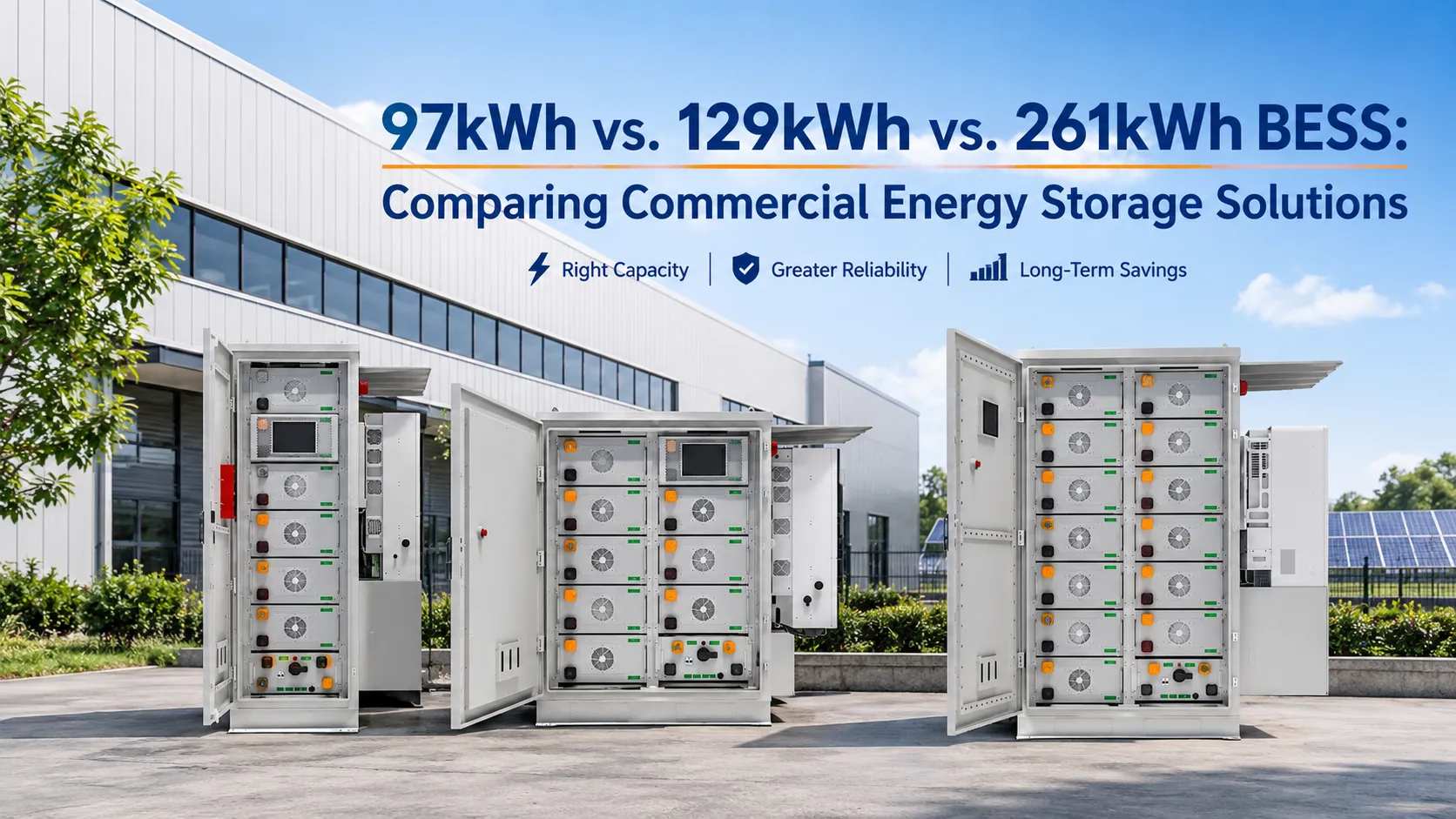
Capacity and power rating describe different things. For product references, compare Bonada’s 97kWh outdoor BESS cabinet, 129kWh high-voltage rack battery, and 261kWh commercial BESS; the capacity comparison guide explains how to match them to project load and operating needs.
Energy capacity is measured in kilowatt-hours (kWh) or megawatt-hours (MWh). It's how much energy the battery holds.
Power rating is measured in kilowatts (kW) or megawatts (MW). It's how much power the system can deliver or absorb at any one moment.
Take a 100 kWh battery with a 50 kW inverter. At full power, that's roughly two hours of nominal duration, before you account for usable capacity, conversion losses and operating limits.
A practical sizing process looks at:
- daily and hourly electricity consumption
- peak demand and how demand charges are structured
- required backup duration, if any
- the solar PV generation profile
- usable capacity and depth of discharge
- inverter power and overload capability
- expected degradation over the life of the system
Oversizing raises capital cost without necessarily delivering matching savings. Undersizing leaves the system short on peak demand or backup duration. Either way, a load profile analysis beats picking a number off the monthly bill.
LCOS and long-term operating cost
The levelized cost of storage (LCOS) is a useful way to compare what a battery system costs per unit of energy delivered over its life. It weighs investment and operating expenses against the energy discharged across the system's lifetime.
Depending on the method, LCOS may include:
- battery and inverter purchase cost
- installation and commissioning
- operation and maintenance
- battery replacement or augmentation
- the cost of the energy used to charge
- efficiency losses and degradation
- financing and end-of-life costs
Round-trip efficiency (RTE) belongs in the same conversation. It measures the energy you get back against the energy you put in.
A low purchase price doesn't mean a low lifetime cost. Better efficiency, longer usable life, reliable components and solid warranty support can produce better project economics even when the invoice is higher.
Common procurement mistakes
A few mistakes show up again and again, and most of them cost money or schedule.
- Comparing on price per kWh alone. Capacity says nothing about power capability, efficiency, safety or integration.
- Not checking inverter compatibility. Protocol or control mismatches surface at commissioning, when the schedule is tightest.
- Accepting vague specifications. Nominal capacity isn't usable capacity, and continuous power rating needs to be stated, not assumed.
- Overlooking local rules. Grid connection, fire safety and electrical codes differ from country to country.
- Leaving the supply scope undefined. Installation accessories, cables, monitoring equipment and commissioning support are often quoted separately.
- Assuming certification covers the whole system. Check the exact model and what the certificate actually covers.
- Ignoring after-sales. A cheap system gets expensive when spare parts take months and nobody answers the technical questions.
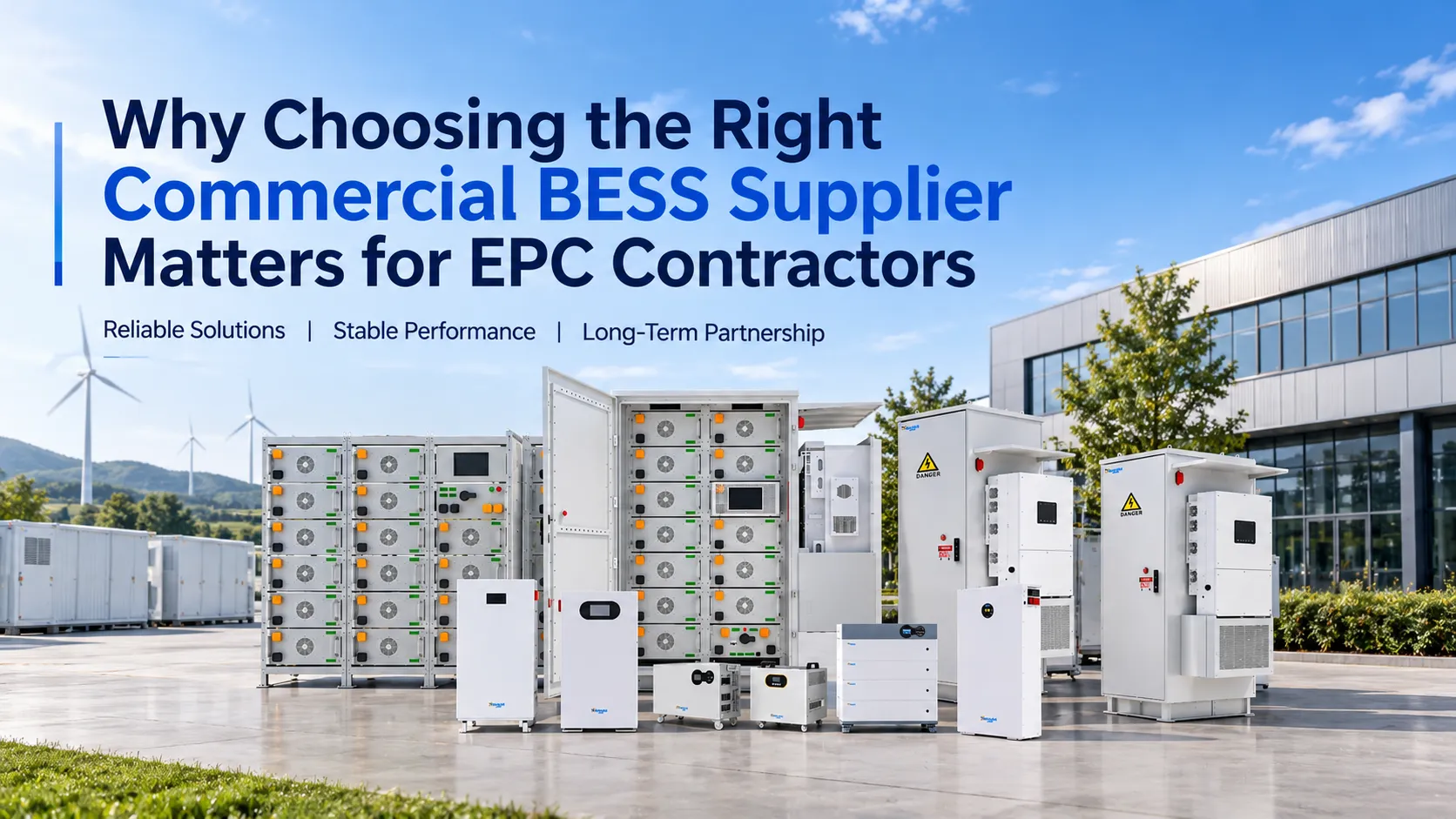
A prepared technical specification and a quotation comparison sheet catch most of this before the purchase order goes out. For a supplier-side checklist, see what EPC contractors should look for in a commercial BESS supplier.
How to evaluate and select a reliable Chinese supplier
Credentials and project experience
Buyers need to tell battery manufacturers, system integrators, trading companies and distributors apart. All four can be legitimate. What matters is knowing who owns product design, manufacturing, quality control, warranty service and technical support.
Useful verification steps:
- review the business registration and the manufacturing address
- confirm whether the supplier runs its own production facility
- check product certifications and test reports
- ask for references from comparable commercial or industrial projects
- look at engineering staffing and technical support capability
- confirm export experience in your market
For EPC contractors, relevant project experience counts for more than general credentials. A supplier that has delivered similar systems for factories, hotels or solar-plus-storage projects tends to understand the practical side of installation and commissioning — the parts that don't appear in a datasheet.
Manufacturing capability and cell traceability
Cell quality feeds straight into system performance and reliability. Ask how cells are sourced, inspected, stored and built into the finished product.
The questions that matter:
- Whose cells are they, and which model?
- Do they come through authorized channels?
- Can the batch be traced?
- Are cells matched on voltage, capacity and internal resistance?
- How are defective cells identified and handled?
- Are production records kept for each pack or system?
Traceability pays off in warranty claims, quality investigations and long-term maintenance. Ask for documentation sized to the project. Verbal assurance about cell quality isn't documentation.
Quality control and factory acceptance testing
A professional manufacturer has documented quality control covering incoming materials, production, system integration and final inspection.
Depending on the product and the project, factory acceptance testing (FAT) may include:
- visual inspection and verification of the system configuration
- battery voltage and capacity checks
- BMS communication and protection function tests
- inverter communication and operating tests
- cooling system inspection
- alarm, emergency shutdown and safety function verification
- review of test records and serial number traceability
On larger projects, buyers sometimes bring in a third-party inspector, or witness the FAT remotely or on site. Agree the test procedure and acceptance criteria before production finishes, not after.
Warranty terms, MOQs, and lead times
Warranty conditions belong next to the technical specification, read against the conditions the system will actually operate in.
Confirm:
- warranty duration and start date
- covered components and exclusions
- capacity retention or energy throughput guarantees, if offered
- temperature and cycling conditions required to keep coverage valid
- claim procedure and response times
- availability of replacement parts and technical support
MOQs and lead times shape the procurement plan. Standard products usually ship faster. Customized systems add engineering, testing and certification review, and that time has to come from somewhere in the schedule.
For distributors, it's worth discussing forecast-based purchasing, sample orders, branding requirements and spare parts availability early. For EPC contractors, delivery dates should line up with site readiness, installation milestones and the commissioning date you've promised the client.
Scope of supply and quotation comparison
Quotations for the same project can cover very different things. One supplier quotes a complete integrated system; another quotes battery cabinets or racks and stops there.
Before comparing prices, confirm whether the quote includes:
- battery modules, racks or cabinets
- BMS and EMS
- PCS or inverter
- cooling and fire protection systems
- power distribution and protection equipment
- communication cables and accessories
- monitoring software and data access
- installation guidance and commissioning support
- packaging, shipping and export documentation
Then line the quotes up on the same technical basis: usable energy capacity, rated power, voltage range, efficiency, operating temperature, warranty and delivery terms.
For international procurement, there's more to pin down — the Incoterms® rule, who arranges shipping, insurance, customs documentation, and whether installation or local commissioning is in scope.
Performance guarantees and acceptance criteria
Guarantees should be specific, measurable and tied to defined operating conditions.
Depending on the project, buyers may want guarantees on:
- usable battery capacity at commissioning
- continuous charge and discharge power
- round-trip efficiency under specified test conditions
- availability or uptime
- capacity retention across the warranty period
- system response time and control performance
Keep three numbers apart: nominal battery capacity, usable capacity, and guaranteed energy delivered at the AC connection point. They differ because of operating limits and conversion losses, and a quote that blurs them is a quote you'll argue about later.
Acceptance criteria should name the test method, the measurement point, the operating conditions, and the remedy if the system misses the agreed figures.
BESS certifications, shipping, and import compliance
Safety standards and test reports
Which standards apply depends on the destination country, the project type and the installation requirements. There's no universal list.
The ones that come up most often:
- UL 9540: the safety standard for energy storage systems and equipment.
- UL 9540A: a test method for evaluating thermal runaway fire propagation in battery energy storage systems.
- IEC 62619: safety requirements for secondary lithium cells and batteries in industrial applications.
- UN 38.3: testing requirements for the safe transport of lithium batteries.
- IEC 61000 series: electromagnetic compatibility requirements for electrical equipment.
Not every project needs every standard. Confirm applicable requirements with the local authority, the project consultant, the utility or the certification body — preferably early, because a missing approval can hold up an entire shipment.
When you review certificates and test reports, verify:
- the exact manufacturer and product model
- the certificate holder and the issuing organization
- the scope of certification
- validity status and the applicable edition of the standard
- whether it covers the complete system or only individual components
Certification claims need real documents behind them. "UL certified" or "IEC compliant" on its own means nothing until the model and the certification scope are identified.
Packaging, Class 9 classification, and sea freight
Lithium battery shipments fall under dangerous goods transport rules. Depending on the configuration and the shipment details, lithium batteries may be classified as Class 9 dangerous goods.
International sea freight commonly requires:
- a UN 38.3 test summary
- a dangerous goods declaration, where applicable
- packaging and labeling that meet the rules
- battery specifications and shipment details
- commercial invoice and packing list
- shipping instructions and other carrier-required documents
Requirements shift with battery type, shipment configuration and the transport regulations that apply. Work with a forwarder that has actually handled lithium batteries before.
Before the container closes, confirm the packaging method, dangerous goods handling charges, sailing schedule, insurance arrangements and who carries which responsibility under the agreed Incoterms® rule.
Export regulations, tariffs, and import duties
Import costs move the landed cost of a BESS more than most buyers expect. The customs classification, tariff rate, taxes and regulatory requirements all depend on the destination country and the specific equipment configuration.
Verify:
- the applicable HS code and customs classification
- import duties and value-added tax or other local taxes
- local product registration or certification requirements
- grid connection and electrical installation regulations
- import permits or restrictions, where they exist
- clearance and local handling charges
Don't assume one tariff or certification requirement covers every storage product. A complete integrated BESS, loose battery modules and inverter equipment can land under different classifications depending on the destination country's customs rules.
On large commercial projects, run the import requirements past a local customs broker before the purchase order is final.
Frequently asked questions about sourcing commercial BESS from China
How do buyers verify a Chinese BESS manufacturer?
Start with the company registration, the manufacturing address, production capability, product certifications, quality control procedures and project references. For larger orders, a factory audit or an independent third-party inspection adds real confidence — and costs less than a delayed commissioning.
What documents should buyers request before ordering?
Typically: product datasheet, system configuration, cell specifications, BMS and EMS documentation, inverter compatibility information, certificates, test reports, warranty terms, installation manual and the commercial quotation. Shipping documents get confirmed before dispatch, not after.
What payment terms are normal for B2B BESS orders?
It depends on the supplier, the order size and how long you've worked together. A deposit with the balance before shipment is common; larger projects often move to milestone payments. Either way, write down the milestones, and tie each payment to a production, inspection or shipment condition in the contract.
How does international warranty and after-sales work?
Support usually means remote troubleshooting, technical documentation, spare parts, replacement components and help with commissioning. Confirm response times, the claim procedure, what local service exists, and who pays for freight and labor — that last item is where the surprises live.
How can EPC contractors get an accurate quotation?
Send the project location, the application, required battery capacity, power rating, operating duration, inverter preference, grid conditions and the installation environment. That's the minimum for a quote that means anything.
For solar-plus-storage, add the PV system capacity, the load profile, the tariff structure and the operating strategy you have in mind.
A complete project brief gets you a configuration built around your site. A one-line enquiry gets you a battery price — which is not the same thing.
Conclusion: choose a supplier on project value, not price alone
Sourcing commercial battery storage from China is a genuine advantage for EPC contractors, distributors and project developers. The supply chain there covers a wide spread of technologies, configurations and manufacturing capability.
But a competitive factory price is the start of the decision, not the end of it. Battery quality, system architecture, safety design, inverter compatibility, certification scope, manufacturing capability, warranty conditions and long-term technical support all carry weight, and most of them show up on the balance sheet years after delivery.
The sourcing approach that holds up: define the project requirements clearly, compare quotations on an equivalent technical basis, verify the supplier's credentials, and agree measurable acceptance criteria before the order goes out.
Get that right, and a well-matched BESS supplier helps EPC contractors deliver on schedule, cut integration risk, and keep the customer relationship intact after handover.
Looking for a reliable commercial BESS supplier?
Price is the easy part to compare. Bonada's engineering team can work through system configuration, battery capacity, inverter compatibility, safety requirements and the technical spec your project actually needs — then put together a tailored BESS solution and technical proposal around it.
Discuss Your BESS Project with Bonada
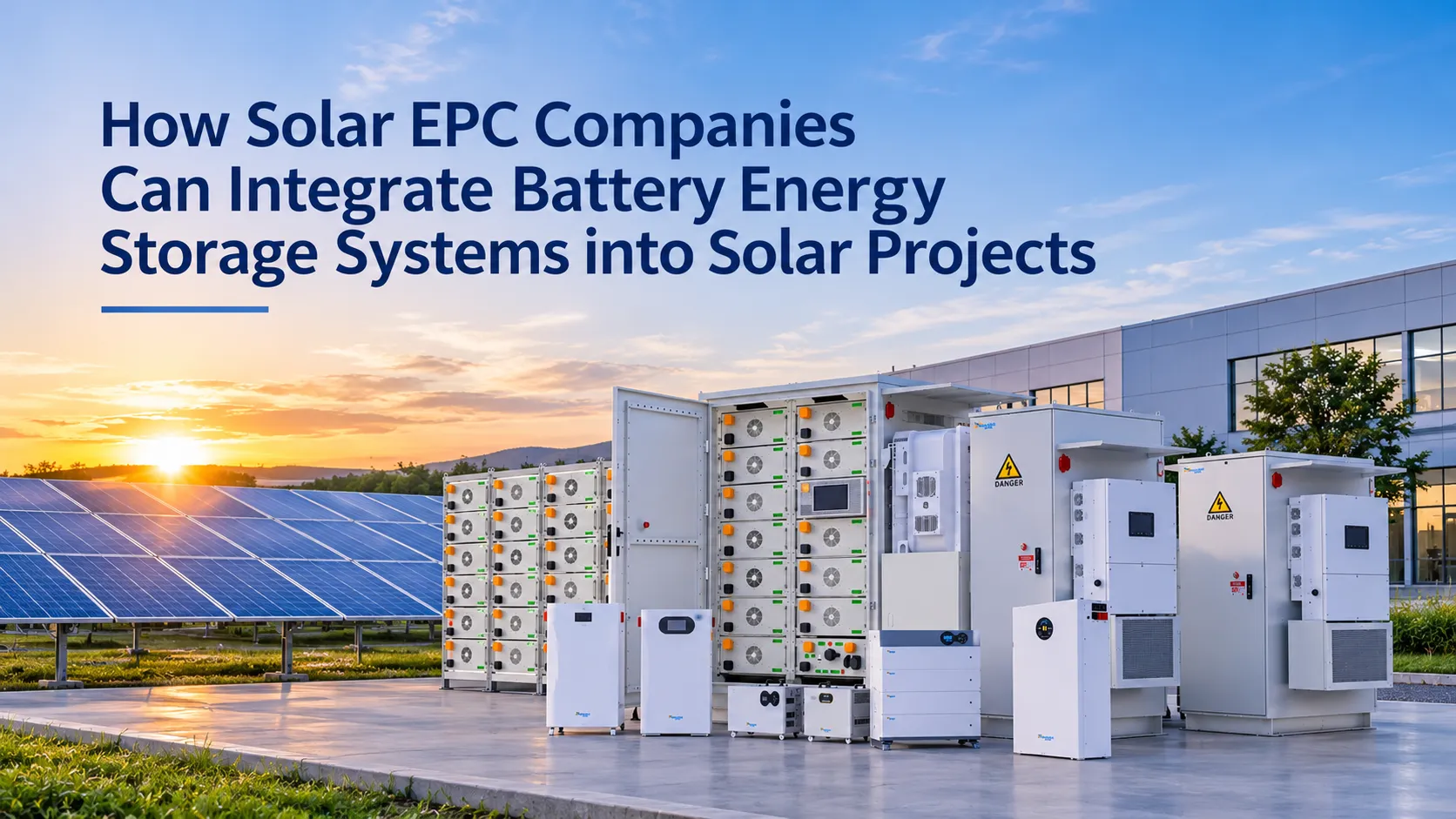
How Solar EPC Companies Can Integrate Battery Energy Storage Systems into Solar Projects
Related Article