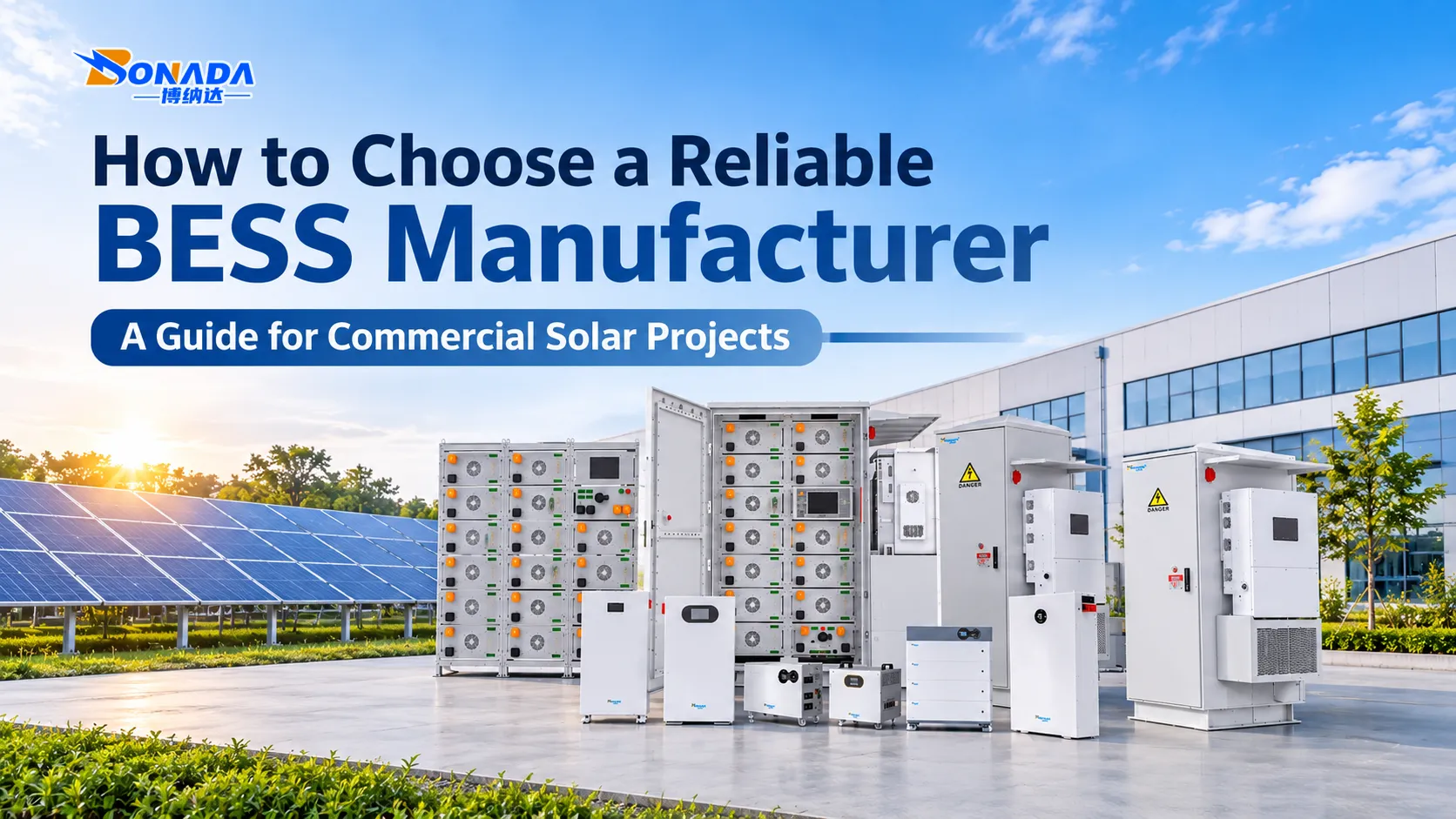
How to Choose a Reliable BESS Manufacturer for Commercial Solar Projects
Choosing who will supply your BESS is a big call for any commercial solar job. If you run an EPC firm, develop energy projects or put together energy packages for clients, a good storage partner does not merely ship out equipment. They affect how the whole setup performs, what you spend, site safety, how fast crews can finish installation, and whether the system holds up year after year.
More and more suppliers are jumping into the commercial and industrial storage market. You will find battery factories, integration teams and general traders everywhere. Still, a lot of them do not have the practical engineering skills, years of production experience or on-call technical help to pull off tricky commercial deployments.
An attractive price on paper is not enough to tell if a supplier makes sense to work with long term. Before locking in an order, you need to go through their battery design, integration work, safety certifications, production capacity, financial standing and what kind of help you can get after delivery.
Understanding BESS for Commercial & Industrial Solar Projects
I always walk through how these commercial battery storage units work with solar before reaching out to suppliers. Knowing what parts are involved and what the site really needs makes it much easier to see if a supplier can put together a matching, fully functional package.
What Is a Commercial Battery Energy Storage System (BESS)?
These commercial storage banks save power in rechargeable cells and release it as needed. Most business and factory setups tie them to solar panels, local grid lines and all the gear drawing power on site.
Home batteries are built for family use and backup when power cuts out. Units for factories and commercial spaces are built tougher. They take bigger loads, handle higher power and hold up under rougher day-to-day operation.
You will usually find these core pieces inside one commercial storage setup:
- Battery modules: The power bank itself, built around lithium cells; most teams go with LFP these days.
- Battery Management System (BMS): Tracks each cell’s voltage, temperature and current, watching for odd behaviour around the clock.
- Power Conversion System (PCS): Flips power between AC and DC, and governs when the batteries charge or send power out.
- Energy Management System (EMS): Shuffles power between the batteries, solar yield, grid feed and all active loads.
- Thermal management: Keeps everything at a safe working temperature, either with air circulation or liquid cooling.
- Safety and protection systems: Includes circuit protection, live monitoring, alert notifications and fire suppression if the project specs demand it.
For solar work at commercial sites, this storage gear cannot run independently. It has to integrate naturally into the whole power layout. That practical hands-on integration skill is what I look for most when picking a manufacturer.
Key Benefits: Peak Shaving, Solar Self-Consumption, and Backup Power
Business owners stand to gain in both daily operation and bottom line by adding battery storage. How much you actually save hinges on local power rates, how the site uses power, solar output, grid rules, and how you run the whole system day to day.
1. Peak shaving
Commercial sites tend to hit heavy power use at certain hours. If your utility charges demand fees, you can let the battery kick in during those busy peaks. That cuts down the maximum power pulled straight from the grid.
Factories, hotels and malls love this trick. It keeps their power bills under control, and they don’t need to alter their regular workflows at all.
2. Boost solar self-use
Solar panels pump out lots of power around midday, often more than the building can use right then. Without batteries, extra power may get sent back to the grid or even cut off, subject to local rules and your setup.
The battery tucks away that spare solar power for later. You can draw on it after sunset, for night shifts, or whenever sunlight drops off. This lets companies get far more value out of their own solar arrays.
3. Backup supply and reliable power
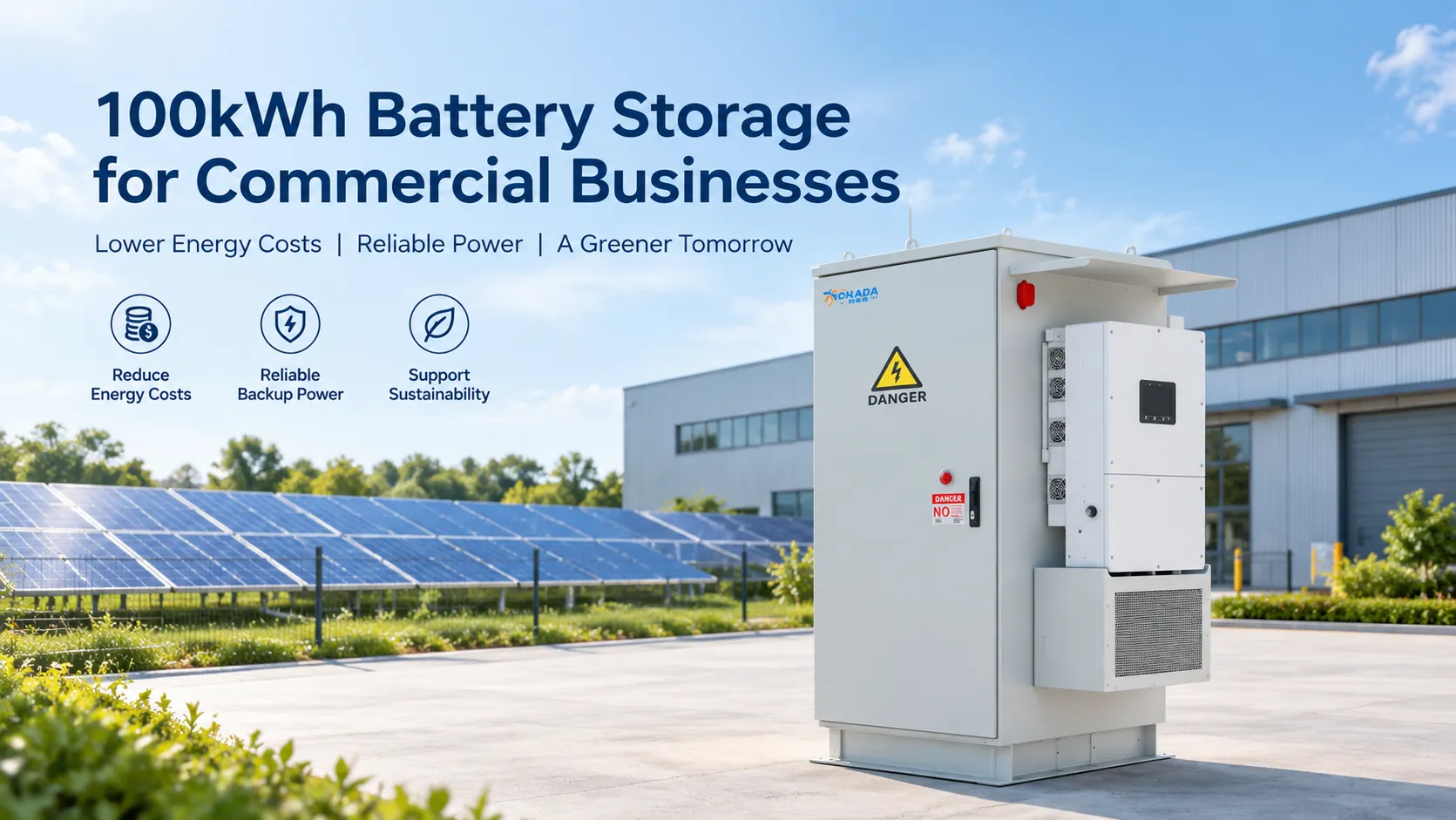
Blackouts can mess up manufacturing runs, hotel services, cold storage and data hardware. A well-planned BESS can keep key equipment running once the main grid goes down.
Still, don’t take backup power for granted just because you have a battery. The inverter or PCS, transfer gear, protection logic and overall layout all have to support off-grid backup mode.
4. Smoother energy control
Pair the system with a good EMS, and you can time charge and discharge cycles around power pricing, predicted solar yield and the site’s usage habits. That gives you more room to cut energy expenses and rely less on grid supply.
Core System Architecture: Cells, BMS, PCS, and EMS
Any trustworthy BESS maker knows every part has to play nicely as one whole. Even if you get top-grade battery cells, the whole unit may run badly if the control logic, electrical layout or cooling setup is poorly thought out.
| Component | Primary Function | What to Check |
|---|---|---|
| Battery Cells | Hold electrical energy | Cell supplier, material type, capacity, batch consistency |
| BMS | Watch over batteries and trigger protection | Protection rules, signal link, reading precision |
| PCS | Switch between AC and DC power | Energy efficiency, power rating, grid adaptability |
| EMS | Arrange and manage power use | Control logic, real-time view, cross-part connection |
| Thermal Management | Keep temperatures in safe range | Cooling output, even heat distribution |
When reaching out for quotes, EPC teams ought to ask for a full system layout drawing instead of judging purely on battery capacity. This way you can spot missing parts, ambiguous work scopes and hidden matching issues before you place any order.
Key Technical Considerations for Commercial BESS Selection
If you want a BESS to fit your commercial solar site, its technical specs are what really count. A supplier that can walk you through these numbers and tweak them for your project usually has solid engineering backing.
Battery Chemistry: Why LiFePO4 (LFP) Is Widely Used in C&I Storage
LiFePO4, or LFP for short, is now the go-to cell type for most commercial and industrial battery storage builds.
Set against other lithium chemistries, LFP strikes a nice balance. It holds up well against heat, can run through plenty of charge cycles, and keeps costs reasonable — perfect for stationary storage setups.
Its standout strengths are listed below:
- Thermal stability: LFP handles heat far better than lithium chemistries high in nickel.
- Long cycle life: A well-built LFP unit can go through thousands of charge and discharge loops. The exact figure changes based on running conditions and the maker’s design.
- Solid reliability: It works great for projects that charge and discharge every single day.
- Raw material perks: The cathode for LFP needs neither nickel nor cobalt.
- Great for stationary use: All these traits make it a sensible pick for long-run fixed energy storage.
Still, picking LFP does not automatically mean you get a good battery. You also need to check how consistent each cell is, whether production batches can be traced, safe temperature boundaries, ageing data, and what tests the factory runs.
Get your supplier to hand over these details:
- The brand and exact model of the battery cells.
- Rated capacity and voltage for individual cells.
- Test parameters used to get the published cycle life.
- Safe charge and discharge limits they recommend.
- Valid working temperature window.
- How modules and racks are assembled.
Never take cycle-life numbers at face value. A claim like “6,000 cycles” means very little unless you also know the depth of discharge, operating temperature, charge speed, and how much capacity remains at that mark.
Thermal Management: Air-Cooled vs. Liquid-Cooled BESS Architectures
How you handle battery temperatures makes a real difference to how well the unit runs, how fast it ages, and overall safety. Most BESS builders stick to either air or liquid cooling; the right pick comes down to how big the system is, where it will sit, and what the project needs.
| Item | Air‑Cooled BESS | Liquid‑Cooled BESS |
|---|---|---|
| Cooling approach | Fans push air through the cabinet | Coolant flows inside closed loops |
| Build complexity | Straightforward setup | Extra piping and circulation parts |
| Temp control | Relies heavily on ducting and cabinet layout | Tighter, more even temperature control |
| Upkeep work | Clean or swap filters, check fans | Service pumps and top up or replace coolant |
| Common use cases | Small to mid‑size storage builds | Large, high‑density commercial and industrial units |
Air cooling works nicely for many commercial jobs if power density and heat loads stay reasonable. Liquid cooling is usually preferred for bigger systems where you want every cell to hold a steady temperature.
As an EPC, don’t just chase the “newer” cooling method. What truly matters is whether the maker’s thermal design can keep the batteries within safe limits under the local weather.
If you are placing these units in hot, humid spots like Southeast Asia, high air temperature and moisture cannot be overlooked. Also keep dust levels, airflow, anti‑corrosion treatment and easy access for routine service on your checklist.
System Sizing: Determining Required Power (kW) and Capacity (kWh)
Getting the system size wrong pops up all the time when people buy commercial battery storage.
It’s critical to tell these two key specs apart:
- Power (kW): How fast the battery can pull in or send out electricity.
- Energy capacity (kWh): The total amount of power the unit can hold and supply over time.
Take a 100kW / 200kWh BESS as an example. At its full rated output, it can theoretically run for two hours, provided real‑world running conditions let it hit that full rated capacity.
Even so, you will not get to use all that stored power. Operating restrictions, conversion waste, mandatory safety reserves and gradual battery wear all cut down the usable portion.
A good supplier should never size the battery purely based on how big the solar array is. To get the right fit, they need plenty of site‑specific data:
- Past power usage records and load trends.
- Peak power draw and how the utility calculates demand fees.
- Solar panel capacity and its typical output curve.
- How long backup power is needed and which loads must stay online.
- The planned daily charge and discharge routine.
- Any caps set by the local grid interconnection rules.
- Whether the client wants room to expand later.
A reliable vendor can work through all this information and suggest the right power level, storage size and operating plan.
For instance, a hotel mostly cares about keeping vital services running during outages and covering evening power use. A factory, by contrast, usually wants to slash demand charges and make the most of daytime solar. Even if their overall power consumption looks alike, their ideal BESS setups can end up quite different.
Deployment Form Factor: Modular Cabinets vs. Containerized Systems
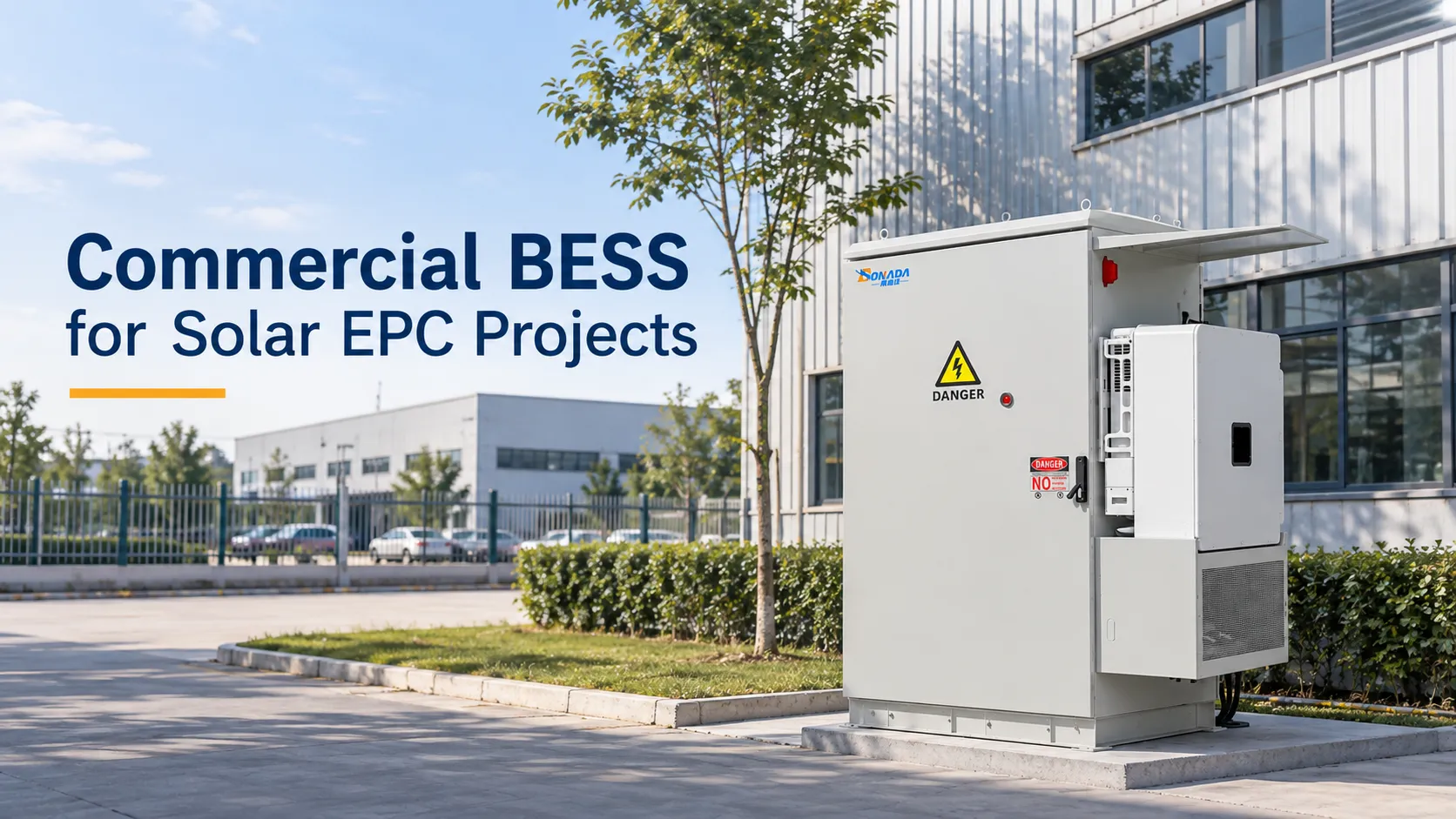
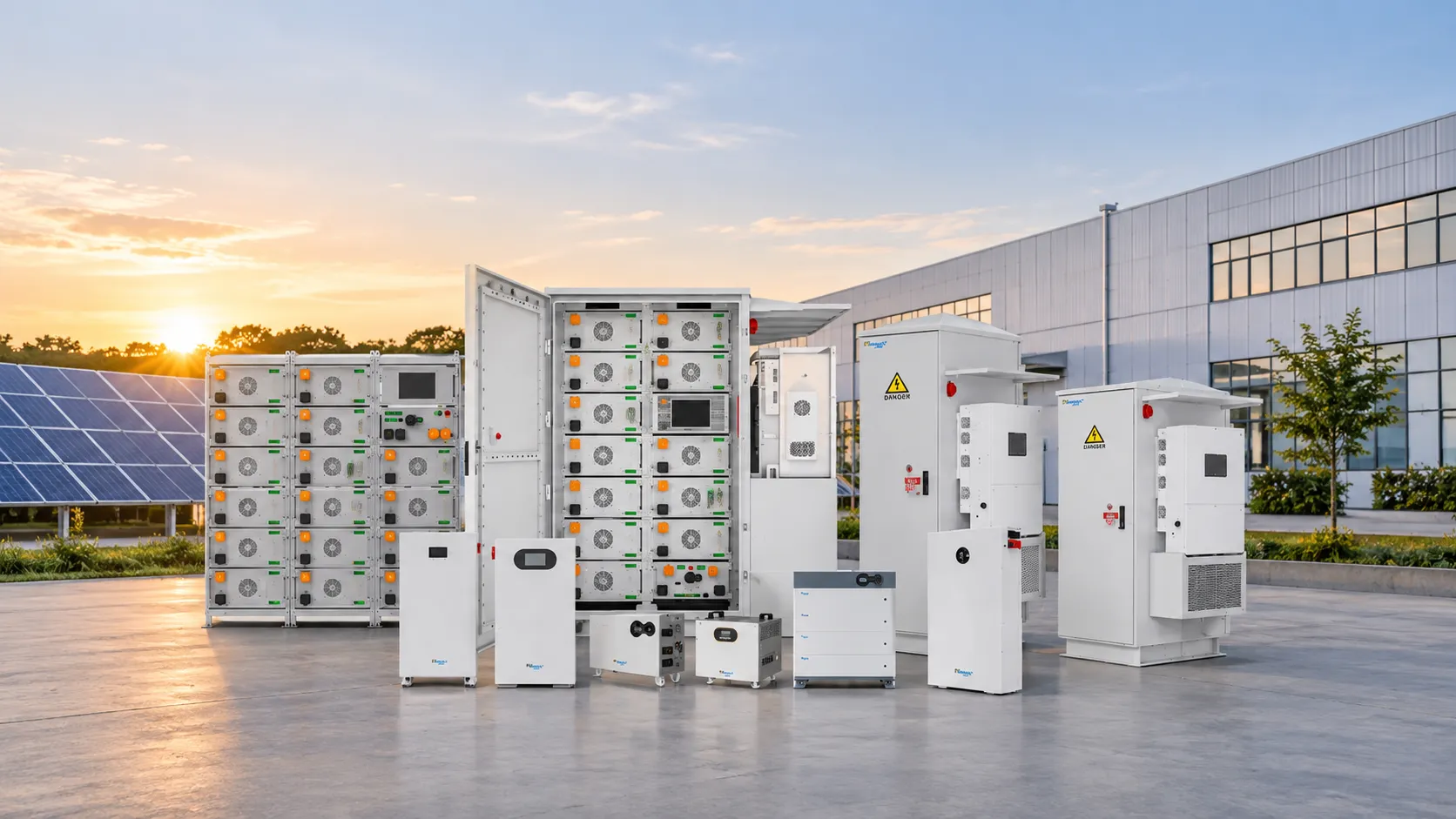
Commercial storage hardware comes in a few different physical layouts. Most jobs pick either standalone modular outdoor cabinets or fully built containerised battery systems.
Modular battery cabinets work well when you want flexible placement and don’t have much ground space. You can link several cabinets together to reach the needed capacity, though the system design sets an upper limit.
They are a frequent fit for:
- Hotels and holiday resorts.
- Office and retail buildings.
- Small and mid‑sized manufacturing plants.
- Solar paired with battery storage.
- Sites where available room for equipment is tight.
Containerized BESS solutions pack bigger battery banks plus all supporting gear inside custom containers. People usually go with these for heavy industrial builds, utility‑scale deployments and microgrid setups.
If you’re weighing these two styles, look at how much ground they take up, freight expenses, whether trucks can reach the site, on‑site assembly work, ease of servicing, fire safety arrangements and scope to add more capacity later.
A good supplier won’t just push their biggest model by default. They should suggest the form factor that truly fits what your project calls for.
Solar PV Compatibility and Grid Integration Requirements
Any commercial BESS has to hook up smoothly with the existing solar array and local power network. If parts do not play well together, you will run into hold‑ups during commissioning, lose system efficiency, and fail to hit the performance targets laid out for the project.
Keep these integration points on your checklist:
- AC‑coupled or DC‑coupled system layout.
- Whether the inverter and PCS can work alongside each other.
- Voltage and frequency rules set by the local grid.
- Three‑phase wiring setup.
- Supported communication standards like Modbus TCP and Modbus RTU.
- Grid safety rules and anti‑islanding protection demands.
- Power export caps and zero‑export control functions.
- Remote monitoring links and EMS connectivity.
When adding storage to already installed solar gear, an AC‑coupled design is often the easier retrofit route. For brand‑new builds, you need to compare both AC and DC coupling, based on the site’s electrical layout and how you plan to run the system.
Lock in a compatibility review before confirming your purchase. Ask the supplier to list out compatible inverter types, available communication ports and all grid rules the unit meets. Experienced makers can walk you through all these points plainly.
Evaluating BESS Manufacturer Capabilities, Quality & Compliance
Once you’ve locked down all technical specs, it’s time to look deeper into the supplier. You have to tell the difference between a real factory partner, a system integrator and a pure trader.
Grade A Battery Cells vs. System Integration Expertise
Lots of storage sellers say they use Grade A lithium cells. There’s no doubt good cells matter, yet they are just one piece of the whole picture.
A commercial BESS is built from many linked subsystems. Even premium cells won’t perform as expected if they are put together poorly.
For instance, a badly tuned BMS may fail to balance cells properly or lack reliable protection. If the thermal layout is rushed, temperatures will vary widely across modules. Broken signal links between BMS, PCS and EMS will mess up charge and discharge control too.
So when you vet a maker, check not only where they source cells but also how well they can integrate the full system.
Throw these questions to your supplier:
- What brands and exact cell models do they adopt?
- Can they trace every batch of cells they ship?
- Do they develop their own BMS, or source it from another reliable vendor?
- Which party takes charge of integrating PCS and EMS?
- Do they run full system tests before delivery?
- Can they hand over test documents and performance data for the whole system?
For EPC teams, working with a manufacturer capable of handling the entire storage package makes ordering, technical talks and warranty handling much easier.
Safety Architecture, Fire Protection, and Global Certifications (UL/IEC)
Safety cannot be skipped when picking commercial battery storage. Any unit meant for factories, hotels or commercial buildings must comply with local rules for wiring, fire prevention, shipment and grid connection.
Certification icons on a vendor’s site mean very little by themselves. Don’t take those at face value.
Request actual certificate copies and full test reports. Make sure these documents belong to the exact model and full system included in their quote.
The required certifications change depending on your target market and project needs. These are the standards you will most often encounter:
- UL 9540: Safety standard for storage hardware and complete battery systems.
- UL 9540A: A test method to see how fire spreads once thermal runaway kicks off.
- UL 1973: Safety guidance for stationary batteries and other defined use cases.
- IEC 62619: Safety rules for rechargeable lithium cells and packs used in industry.
- IEC 62933 series: A suite of standards built for full energy storage assemblies.
- UN 38.3: Required transport testing before lithium batteries can be shipped.
- CE: Conformity marking for goods sold into the European market under relevant local regulations.
No project requires every single one of these. The paperwork you need will depend on the receiving country, installation style, system layout, and what local authorities enforce.
Fire protection also needs careful review. Ask about thermal runaway detection, early warning alerts, power isolation, emergency shutdown, ventilation design and onboard fire suppression.
On larger jobs, collect all safety records from the manufacturer and confirm the planned installation follows local fire codes. UL 9540A test results only hold true for the exact configuration tested. If the build changes, you cannot assume it will perform the same way.
Manufacturing Capacity, Quality Assurance, and OEM/ODM Customization
Delivery timelines are tight for most commercial solar jobs, which makes production capacity a real point to watch. A supplier might quote a great rate, yet fail to ship the right number of units or the correct setup by your deadline.
When you check their production strength, don’t only rely on factory photos or how big their plant looks.
Run through these practical questions:
- Do they run their own factory or assembly workshop?
- What volume can they turn out each month, or over a full year?
- Have they written procedures for production and quality checks?
- Do they test every batch of raw parts as they come in?
- Are battery modules and whole storage systems checked before leaving the factory?
- Can they hand over batch logs and quality inspection papers?
- Will they take OEM or ODM custom requests?
Custom options bring huge value for overseas distributors and EPC teams. Rules and preferences vary by region: you may need different storage sizes, cabinet styles, communication ports, inverter pairings, or marking and label layouts.
A solid manufacturer can talk through these needs while drafting your quote, and tell you what adjustments are workable from an engineering standpoint.
Also ask if they can keep specs steady order after order. This is critical if you are a distributor building a stable product lineup, or an EPC running many separate projects at once.
Factory Direct Manufacturing vs. Trading Companies
Placing bulk orders straight with the maker brings clear perks, especially for distributors and project developers buying commercial storage gear in large quantities.
Still, don’t take the phrase “factory direct” at face value — it’s often just marketing language, so you have to double-check it.
| Check Item | Real Manufacturer | Trading Firm |
|---|---|---|
| Price | Less markup from middlemen | Extra margin usually added |
| Custom Work | Can tap production lines directly | Limited by their factory partners |
| Tech Support | Talk directly with engineers | Messages pass through extra links |
| Production Oversight | Better sight over the whole run | Fully relies on outside plants |
| Warranty | The factory takes ownership | Bound by whatever contract they sign |
That said, traders are not always a bad pick. Many have solid sourcing networks, local on-site help and know how to coordinate whole projects. On the flip side, plenty of companies calling themselves manufacturers do not actually build everything under one roof.
Before locking in your supplier, look up their business registration, confirm the factory location, ask to see their workshop, review product paperwork and get clear on who holds which contractual duties.
If you are an EPC running custom builds or recurring orders, being able to reach engineers and production staff directly will smooth out a lot of headaches down the line.
Field-Proven Track Record and Real-World Operational Data
Brochures and lab test sheets do give you helpful technical details, yet they’re no substitute for feedback from live, running sites.
Get your potential suppliers to share their past C&I project references. It works best if those jobs match yours in scale, working climate and use case.
Try to collect these specifics:
- The power and energy rating of their deployed BESS units.
- Where the project sits and when it went live.
- Its main purpose, for example peak shaving or boosting solar self-use.
- Battery cell type and how the whole system is put together.
- How it has performed over time and available runtime data.
- Service logs and warranty cases, if they can share them.
If you can, ask for approval to reach out to their former clients or project collaborators. A vendor that can hand over verifiable project cases is far simpler to vet, compared to those who only show polished marketing photos.
Financial and Operational Assessment of Potential Suppliers
After you finish checking specs and production capacity, turn your attention to the supplier’s quote and the ongoing support they can offer down the road.
Going just for the cheapest hardware won’t always land you the most affordable project overall. These storage systems stay in service for many years. How well they pay off hinges on running efficiency, battery ageing, regular upkeep and how fast the vendor steps in when you need help.
Total Cost of Ownership (TCO) and Levelized Cost of Storage (LCOS)
Total Cost of Ownership, or TCO, adds up every expense tied to a BESS across its whole lifespan: buying the gear, putting it in place, running it, servicing it, and swapping out worn parts eventually.
These are the main cost buckets to keep in mind:
- Battery cabinets or containerised storage units.
- PCS, EMS, BMS and all other electrical parts.
- Freight, import taxes and cargo insurance.
- On‑site fitting, cabling and commissioning work.
- Power drawn by cooling and other auxiliary gear.
- Scheduled service and spare component stock.
- Costs to replace or add new battery packs.
- Fees for taking the system apart and disposal at end‑of‑life.
Levelized Cost of Storage, known as LCOS, gives you another angle to judge the business case. It works out the average cost for each unit of power the battery sends out over its full life.
Different teams run the numbers in slightly different ways, but LCOS usually factors in upfront spend, finance charges, running costs, capacity fade, system efficiency and the total energy the unit can deliver over time.
If you are an EPC weighing several vendors, ask everyone to use the same set of operating assumptions for their financial model. Simply comparing the per‑kWh rate from two quotes means very little, if usable capacity, warranty terms, efficiency figures and system build are not identical.
Cycle Life, Degradation, Round-Trip Efficiency (RTE), and Warranty Terms
As batteries keep running, their performance slowly fades. Trusted vendors won’t exaggerate the numbers, and they’ll tell you exactly what conditions must hold for their guarantees to count.
Cycle life is simply how many charge and discharge runs the battery can go through. Once its leftover capacity falls to a set threshold under their test setup, that marks the end of the rated cycles.
Battery degradation refers to the gradual shrinkage of usable capacity. Hot surroundings, deep drains, fast charging and daily operating habits all make this happen faster.
Round-trip efficiency (RTE) compares the power you draw out against the power you feed in for charging. If you pump in 100 kWh and only get 90 kWh back following the same measurement rules, the RTE comes out at 90%.
When going over a vendor’s quote, make sure to ask for these details:
- The usable capacity they promise to stand behind.
- Cycle life figures plus the full test setup used.
- Expected capacity retention while the warranty stays valid.
- Round-trip efficiency measured on the full storage unit.
- How many charge and discharge cycles are permitted each day.
- Warranty duration and caps on total energy passed through the system.
- What performance commitments include, and which situations fall outside coverage.
Don’t gloss over warranty fine print. Even a five-year warranty doesn’t let you run the battery nonstop under any temperature, discharge speed or cycling rhythm you like.
Go over the warranty paperwork line by line. Confirm what faults qualify, how to file a claim, their typical response window, who bears shipping costs, and what fixes or compensation you can receive.
Bankability and Long-Term Supplier Reliability
Commercial storage projects need reliable support for many years, both technically and commercially. That’s why you have to check if your supplier can stay in business and stick to every promise written in the contract before placing an order.
You can’t judge a firm’s bankability just from a certificate or a fancy company intro. It comes down to whether they have steady finances, capable engineering teams, enough staff, and a proven track record to back your project through its whole service life.
Here is what you should look into:
- Business registration records and how long they have operated.
- Financial statements, if they are willing to share.
- Stable production lines and supply chain.
- Product certifications and quality papers.
- Completed commercial project cases.
- Warranty clauses and binding contract terms.
- Ready access to spare parts and ongoing technical help.
If you are handling a big EPC job, you can ask for parent company guarantees, performance bonds or other contractual safeguards if that makes sense for the deal.
Technical Documentation, Field Commissioning, and After-Sales Support
Delivery of BESS hardware is far from the finish line. To hit the performance targets, you need solid installation, commissioning, regular monitoring and ongoing maintenance work.
A dependable manufacturer will hand over all paperwork the EPC and on-site crew need to get the job done right.
This bundle usually covers:
- Data sheets and full product specs.
- System layout and electrical drawings.
- Communication protocols for batteries and PCS.
- Guides for setup and commissioning.
- Operation and service handbooks.
- Safety rules and emergency steps.
- Warranty terms plus fault-finding guidance.
Don’t forget to assess after-sales service before you lock in the purchase order.
Check if they offer remote fault diagnosis, onboarding help for commissioning, firmware upgrades, spare part supply and hands-on technical training. For cross-border projects, sort out their working hours, contact routes and the workflow for critical technical emergencies.
Vendors with tidy documentation and quick engineering backup help EPC teams cut down installation mistakes and finish commissioning faster.
Production Lead Times and Project Delivery Capabilities
Delivery timelines carry huge weight for commercial solar builds. Construction, grid tie‑in and commissioning all involve different teams, and everything has to line up properly.
Before you sign off on an order, get the supplier to lay out a practical timeline for production and shipment.
This plan needs to mark out these key stages:
- Final sign‑off for engineering work and drawings.
- Sourcing raw materials and battery cells.
- Production and assembly windows.
- Factory acceptance testing, if required.
- Packing and all export preparations.
- Estimated transit and customs clearance steps.
It’s also wise to check if they can split shipments. This matters when you need multiple battery systems going to different sites.
Never take verbal promises about lead times. Make sure all key milestones, acceptance rules and liability for delays are written clearly inside your supply contract.
Step-by-Step BESS Supplier Evaluation Checklist
If EPC teams follow a clear evaluation workflow, they can weigh suppliers fairly instead of picking one purely based on low pricing or flashy marketing.
Defining Project Specifications and Technical Requirements
Reach out to manufacturers only after you’ve put together a simple project spec sheet. When every vendor quotes off the same set of requirements, you cut down lots of back‑and‑forth technical chats.
Your sheet should at least cover these items:
- Where the project sits and how the storage will be used.
- Required BESS power output in kW.
- Target energy capacity in kWh.
- Installed solar PV size in kWp.
- Local grid voltage and frequency.
- How the system will cycle and run each day.
- Backup power needs, if any.
- Preferred cooling method and installation type.
- Mandatory certificates and local compliance rules.
- The delivery window you need.
Share utility bills, load curves and solar output data whenever you have them. With this real site data, the supplier can tailor the system properly rather than sending you a standard, one‑size‑fits‑all quote.
Comparing System Integrators and Vertically Integrated Manufacturers
BESS makers don’t all run their businesses the same way. Some only build battery cells, while others put together full packages: racks, PCS, EMS and all the supporting hardware.
Fully integrated factories hold tighter reins over parts of their production. On the other hand, dedicated integrators can mix proven parts from different vendors, which often brings more flexibility.
Neither approach is inherently better. What truly counts is whether the vendor will stand accountable for the whole system.
Use these points for your comparison:
| What to check | Questions you should raise |
|---|---|
| Production | Which work do they handle inside their own plant? |
| System build | Who assembles and tests the BMS, PCS and EMS? |
| Engineering | Can they draw up designs tailored for your project? |
| Quality checks | Can they share inspection and test logs? |
| Warranty | Who takes charge if the whole system breaks down? |
| Tech help | Will they back you up during commissioning and long‑run operation? |
For overseas EPC teams, a partner who can integrate the full system and take clear warranty liability is usually more useful than a supplier that merely ships separate battery parts.
Essential Technical and Commercial Questions to Ask Before Contracting
Before locking down any supply contract, put together a checklist covering performance specs, production, compliance and all commercial obligations.
Technical points to ask
- Who makes the battery cells, and what chemistry are they using?
- What is its rated capacity, and how much energy can you actually use?
- What round‑trip efficiency will they guarantee for the full system?
- How many charge cycles are covered under the stated running conditions?
- Which brands of PCS and inverters work with this setup?
- What thermal control and fire safety features come built in?
- Can it run both grid‑tied and backup modes as your project requires?
Production and quality checks
- Where are these units built and put together?
- Can you arrange an inspection, or at least a virtual walkthrough of their plant?
- What steps do they take to keep quality consistent?
- Can they issue certificates matching this exact product?
- Do they accept OEM or custom ODM requests?
Quotation and after‑sales topics
- What items are covered inside this quoted price?
- How long will production and shipping take?
- What payment arrangements can they offer?
- How long does the hardware and performance warranty last?
- Who manages warranty claims and sends out replacement parts?
- Do they offer remote support for troubleshooting?
- Can they share references from similar finished projects?
Pay attention not only to what they reply, but how they reply. Seasoned vendors will openly talk about technical limits, lay out clear commercial duties and supply valid paperwork, instead of only giving vague promises.
Evaluating Supplier Proposals and Avoiding Common Procurement Risks
Once several quotations have been received, compare them using a standardized evaluation method.
A supplier comparison should cover more than unit price. Consider the following evaluation categories:
| Evaluation Category | Suggested Weight |
|---|---|
| Technical Performance and System Design | 25% |
| Product Quality and Safety Compliance | 20% |
| Manufacturing and Delivery Capability | 15% |
| Total Cost of Ownership | 15% |
| Warranty and After-Sales Support | 15% |
| Project References and Supplier Reliability | 10% |
The scores here are just a reference, not something everyone in the trade follows. EPC teams can shift them around based on how big the job is, how tricky the build gets, and what matters most for that purchase.
There are a few things you need to watch closely when you vet suppliers.
Prices that look too good: If one bid sits far below the others, they might be cutting corners on cell quality, changing the system setup, narrowing warranty terms, or leaving out parts. Ask for a full BOM and go over every item included.
Certifications you can’t back-check: Don’t take just a logo at face value. You need matching model info, the name of the certifier, and actual test papers.
Overhyped performance numbers: Be wary if they talk about near-endless cycles, no capacity fade, or locked-in savings without spelling out the real operating conditions.
Confusing warranty ownership: When battery packs, PCS and EMS come from separate vendors, make sure you know who sorts out faults across the whole system.
Not enough real project work: If they can’t point to running commercial sites, you take on more risk — especially for complicated storage builds for businesses.
Clunky technical talks: If they can’t walk you through how the system is laid out, how they sized it, or what it works with while quoting, you shouldn’t count on solid help once the gear ships.
A solid buying workflow means checking all paperwork, getting technical questions answered, looking into the company’s history, and arranging inspections when you’re able. On bigger jobs, run tests at the factory and lock down clear acceptance rules for on-site delivery.
Conclusion: Choosing a Reliable BESS Manufacturing Partner
Picking the right BESS maker for commercial solar jobs means looking at everything: their technical know‑how, build quality, safety papers, production capacity, financial standing, and the support they can give for years down the line.
If you’re an EPC or project developer, the best supplier isn’t always the one with the cheapest quote or the biggest claimed output. You want someone who can keep turning out well‑engineered storage systems, fit them to your project’s unique needs, share clear paperwork, and stand by the system for its whole run time.
Narrow your focus to these five key points before you lock in your choice:
- Make sure their battery cells are good and they can integrate the whole system properly.
- Double check the BESS setup fits what you need for power, capacity and daily operation.
- Go over the safety certificates and test reports made for that exact product.
- See if they can keep quality steady, hit delivery dates and adjust designs for you.
- Read through their warranty, and confirm they help with commissioning and ongoing tech support.
A strong working relationship with a dependable BESS producer makes it easier for EPC teams to deliver projects smoothly, cut sourcing risks, and stay competitive in the commercial storage market.
Frequently Asked Questions About Choosing a BESS Manufacturer
1. What should I look for when choosing a BESS manufacturer for a commercial solar project?
Don’t just shop by battery cost when you pick your BESS supplier. Look closely at cell quality, their system integration skills, safety certificates, production ability, warranty rules and after‑sales help. It also pays to see if they’ve handled C&I storage work close to what you’re building. A good supplier can hand over technical files, suggest the right system setup, and show you real past projects you can check.
2. Is it better to buy a BESS directly from a manufacturer or through a trading company?
Going straight to the factory lets you talk directly with their production and engineering teams. You get more room to tweak products, and often better factory pricing. It also makes things easier if you need design changes or have warranty troubles later. That said, traders can be helpful too — they handle sourcing and keep your project moving. No matter which route you take, what really matters is that they make solid gear, quote openly, and take clear ownership of technical help and warranty work.
3. How do I verify whether a BESS manufacturer's certifications are genuine?
It is important to obtain copies of the actual certificates and test results, rather than depending on product brochures and logos. When investigating certification, check the name of certification body, certificate number, model of the battery and certification standard. Standards like UL 9540, UL 1973, IEC 62619, UN 38.3 have to do with battery safety and transport. Check that the certificates are applicable for the battery or the energy storage system you have been offered and that they are in accordance with the demands of the market you will be sending the battery to.
4. How much does a commercial BESS cost, and why do manufacturers offer different prices for similar capacities?
The price of a commercial battery energy storage system is based on more than just its capacity. For example, battery chemistry, available energy, power conditioning specification, cooling method, fire safety, energy management functionality and system configurations all play a role in the price. Two systems labelled as having a capacity of 100kW/200kWh may have significantly different specifications. Therefore, be sure to obtain a detailed quotation specifying the equipment, performance commitments, delivery terms and responsibilities after delivery.
5. What information should EPC contractors provide when requesting a BESS quotation?
To obtain a precise technical quotation, EPC contractors must give the location of the project, the amount of power required from the batteries (kW), energy storage capacity (kWh), solar PV power (kWp); grid parameters like the voltage and frequency of the electricity supplied and the purpose for which it is used. Information about electricity consumption in a day, demand peaks, duration of the backup, and operational working hours are also important. The presence of past electricity consumption charts and electricity bills is also useful.
Looking for a Reliable BESS Manufacturing Partner?
Choosing the right BESS supplier is critical to your project's performance and long-term success. Work directly with Bonada's engineering team to explore factory-direct C&I energy storage solutions, customized system configurations, and technical support for your commercial solar projects. Share your project requirements and let us help you find the right energy storage solution.
Discuss Your BESS Project with Bonada
BESS Solutions for Solar EPC Contractors: Commercial Energy Storage Guide
Related Article