100kWh Commercial Battery Storage Systems: Applications, Cost & Buyer’s Guide
Steady power is critical for any modern business. Higher power bills, shaky grid supply and rising energy usage keep putting strain on commercial and industrial premises. For firms aiming to trim operational costs and secure more reliable power, a 100kWh battery storage setup works well to regulate power draw, hold renewable power and supply backup energy when required.
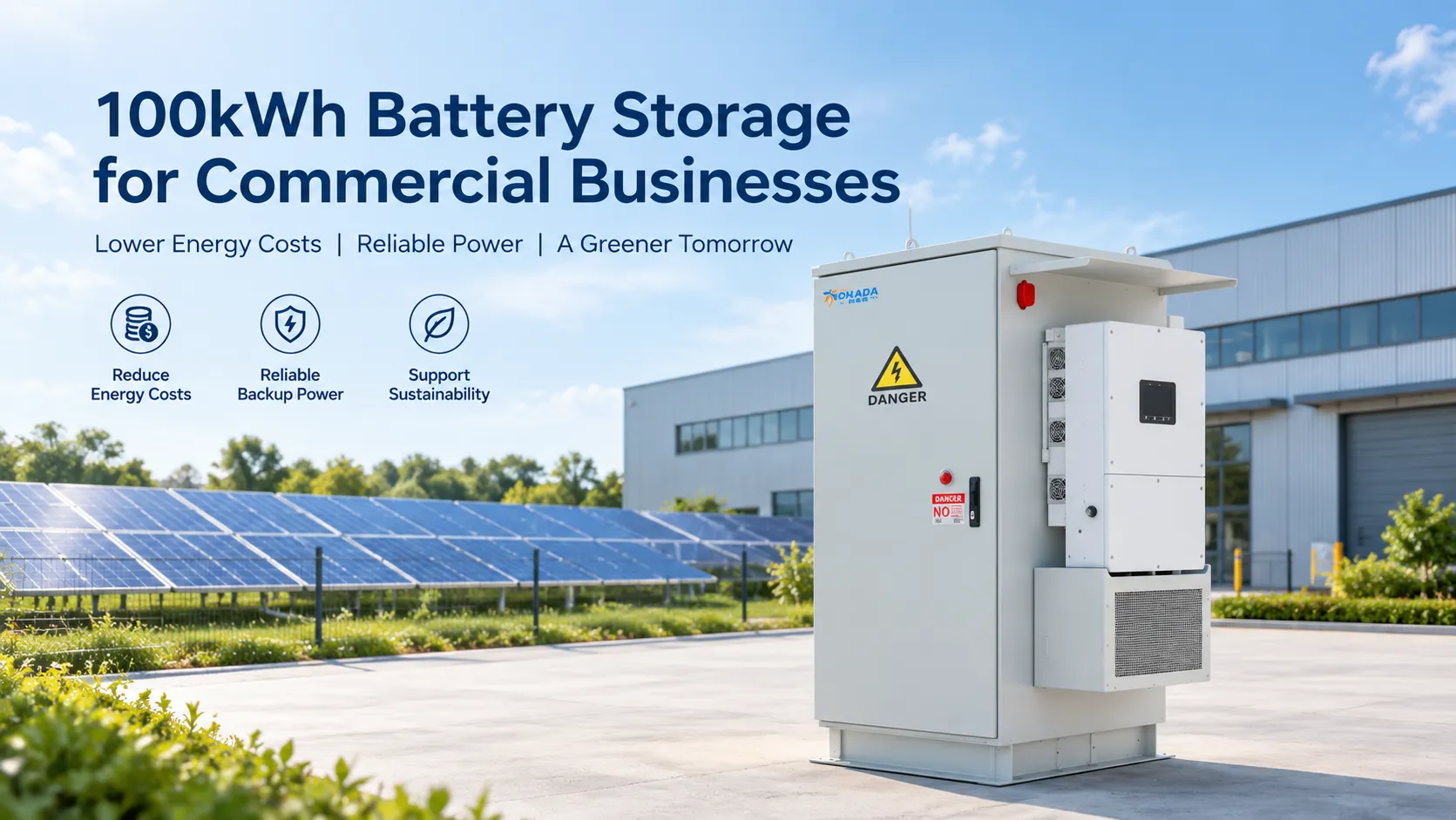
A 100kWh battery energy storage system (BESS) stores power and discharges it as needed. It differs from compact home batteries. Built for commercial use, it handles larger loads, pairs with commercial solar panels and helps businesses manage peak power consumption.
So which businesses are a good fit for this 100kWh storage capacity? Will it suit a factory, supermarket, hotel or EV charging station? And how does a business check if this system can bring worthwhile returns on its investment?
Understanding 100kWh Commercial Battery Energy Storage Systems (BESS)
What Is a 100kWh Commercial Energy Storage System?
You’re looking at a complete battery setup for business and factory use. It holds up to 100 kWh of electricity ready for on-site use.
It charges when power is low-priced or plentiful, and sends power out when your site needs it most. It can pull power from the local grid, solar panels, or other compatible power sources on location.
To give you a rough idea of what this system can support:
- A 10kW load running for around 10 hours.
- A 20kW load running for around 5 hours.
- A 50kW load running for around 2 hours.
Keep in mind these are simple theoretical figures. Real runtime shifts based on how much usable energy the battery has, inverter performance, conversion losses, discharge limits and the site’s actual power draw pattern.
It’s easy to mix these two terms up: kWh tells you total stored energy, while kW refers to instantaneous power output. A 100kWh battery won’t always push out 100kW at once. That peak output cap is set by its PCS, or power conversion system.
For most commercial users, 100kWh hits a sweet spot as an entry-level storage size for moderate energy needs. It works really well alongside solar arrays, for cutting peak demand charges and emergency backup power.
Core System Architecture: BESS, PCS, BMS, and EMS
People often think commercial battery storage is nothing but battery cells. In fact, many separate parts work side by side. They keep the unit safe, handle power conversion well and manage energy flexibly.
| Component | Main Function |
|---|---|
| Battery System | Stores power for future use. We mainly use LiFePO4 cells for this part. |
| PCS | Turns battery DC power into AC, and allows power to flow both ways. |
| BMS | Watches cell voltage, temperature, current and SOC, and protects batteries. |
| EMS | Decides when to charge or discharge, based on loads, electricity price and available power. |
| Thermal Management | Controls working temperature. Air cooling or liquid cooling can be adopted. |
All these parts work as one whole. This makes the storage system much more than a simple backup battery bank.
All-in-One vs. Modular Commercial Battery Systems
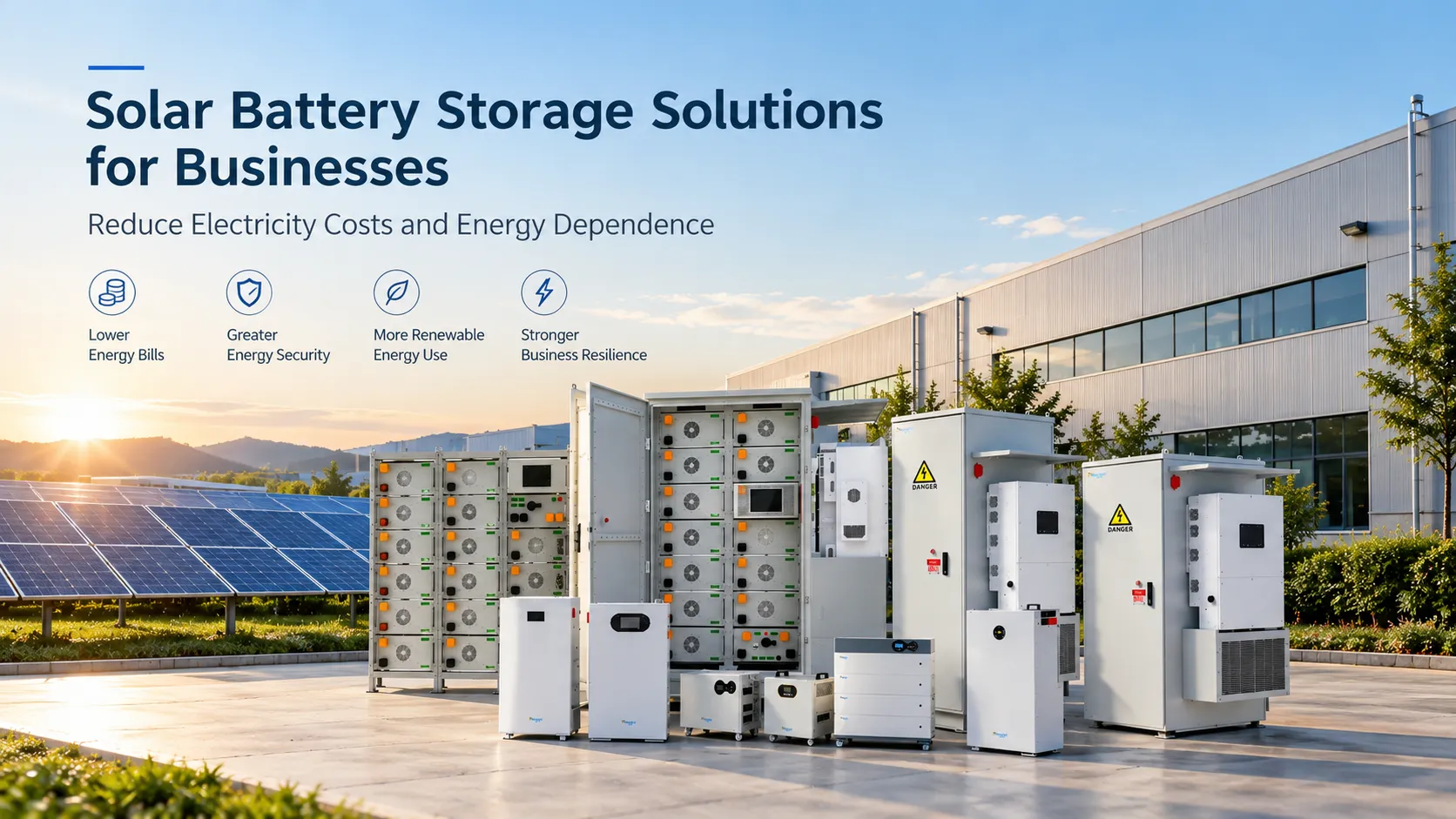
If you’re shopping for a 100kWh commercial battery, you’ll mostly run into two types: all‑in‑one units and modular setups.
All-in-one BESS: Everything you need — battery packs, PCS, controls and cooling parts — comes built inside one cabinet. You won’t need to hunt down and match separate parts on your own, which makes site installation easier.
Key plus points:
- All parts work together with pre-tuned controls.
- Quicker to install and get running on site.
- Takes up less room, fits well inside factories and commercial premises.
- One place to check status and carry out service work.
Modular battery systems: They are made up of separate battery cabinets or blocks. You link them up to hit the storage size you need.
This option suits companies that plan to scale up later. You may start at 100kWh, then add more storage later when power demand rises. This only works if your inverter, control setup, protection gear and site layout are ready for expansion.
Your final pick comes down to how much space you have, future upgrade plans, budget limits and your project’s technical needs.
Key Technical Features and Benefits
High Safety and Long Cycle Life with LiFePO4 Chemistry
Cell type matters a ton when you source batteries for your site.
LiFePO4, short for LFP, is our go-to for stationary storage. It won’t run hot easily, can take repeated cycling, and stands up to daily charge and discharge.
Here’s how LFP stacks up against other lithium cells:
- Thermal stability: It’s far less prone to thermal runaway than nickel-heavy lithium cells.
- Long service life: Well-built LFP cells can go through thousands of cycles.
- High operating reliability: Ideal if you cycle the battery every day.
- Reduced dependence on cobalt and nickel: Its cathode needs no cobalt or nickel.
Even with good LFP cells, safety is never guaranteed. Cell grade, protection circuits, BMS layout, cabinet quality, cooling and fire safeguards all play their part.
Don’t judge the system just by cell specs. Look at the full package before you decide.
Intelligent Thermal Management and System Efficiency
Batteries act differently when temperatures shift. It affects charging, output, and how many years the unit stays usable. People install these storage batteries inside workshops, out in the open, warehouses, and hot climate areas too.
We add thermal controls to keep cells from getting too hot or cold, staying inside the safe working range set by the factory.
Two common cooling ways are available: fan air cooling and liquid cooling. Liquid cooling does a better job keeping steady temps for tightly packed battery cabinets. Air cooling is simpler and fits some smaller commercial models.
Don’t forget to check round-trip efficiency. This figure shows how much power you can retrieve after storing it.
Simple case: you put 100kWh into the battery. At 90% round-trip efficiency, you will get around 90kWh out after one full charge and discharge run in standard tests.
That number won’t stay fixed. It changes with surrounding temperature, load demand, PCS status, battery age and the power the system itself consumes.
Scalability and Future-Proof System Expansion
Business power draw keeps changing all the time. A factory may add new production gear, a hotel could extend its premises, and EV charging operators often roll out more charging points later.
With an expandable battery setup, you can boost storage size when needed, no need to rip out the whole system.
Check these points before you place your order:
- Can you hook up extra battery cabinets or modules later?
- What’s the largest total capacity the system can handle?
- PCS output limits and whether multiple units can run in parallel.
- Will new battery modules work well with the ones you already own?
- EMS communication rules and what’s needed to link everything together.
Thinking ahead for upgrades at the start saves you from throwing away old gear and paying for extra installation work down the line.
Target Industries: Who Needs a 100kWh Commercial Battery Storage System?
One site’s power storage needs won’t match another. The 100kWh battery makes sense for businesses that use a medium amount of power, run heavy loads during the day, get hit with high peak rates, or have unstable grid supply.
Small to Medium Manufacturing and Industrial Facilities
Storage batteries are a solid pick for factory settings.
Production gear, compressors, motors, lights and ventilation all pull plenty of power. Many utility providers add demand charges, calculated from your biggest power spike in each billing cycle.
A 100kWh battery lets smaller factories handle sudden power surges, save power from roof solar panels, and keep important machines going if the grid cuts out.
Typical sites that use this setup:
- Small production workshops.
- Food processing and packaging plants.
- Textile and clothing factories.
- Plastic processing and assembly sites.
- Warehouses with refrigeration and material handling gear.
For factories picking the right size, remember to factor in motor startup current, peak draws, operating hours, and power needs of your key production machines.
Commercial Complexes, Supermarkets, and Retail Stores
Most commercial premises keep drawing power all day long. Aircon, fridges, lifts, lights, computers and other gear all add up to your regular power bills.
Supermarkets are a special case. Their refrigeration units have to run nonstop. If power cuts out, stock that can spoil gets put at risk, and daily work stops right away.
A 100kWh battery can keep your priority equipment running when the grid fails. You can also tap stored power when electricity rates jump higher.
Typical sites that use this solution:
- Supermarkets and grocery shops.
- Malls and retail plazas.
- Office blocks.
- Commercial kitchens and restaurants.
- Small hotels and business centres.
For bigger commercial buildings, 100kWh usually acts as one section of a larger storage setup, instead of covering the whole site’s power needs.
Electric Vehicle (EV) Charging Stations and Fleets
EV charging points open up good use cases for commercial battery storage.
Fast chargers pull a lot of power from the local grid. If the grid connection is weak or upgrading it costs a fortune, battery storage helps smooth out charging loads.
You can fill the 100kWh battery when power demand is low, then discharge it when many cars plug in to charge at the same time.
You get these key advantages:
- Cut down short sharp demand spikes on the grid.
- Run chargers even when your grid supply is tight.
- Make better use of power generated by on-site solar panels.
- Gain more flexibility when lots of vehicles need charging at once.
For a charging yard, the battery can top up grid power during busy hours. Just make sure the battery’s discharge output matches the total power your chargers need together.
Don’t assume a 100kWh battery can handle several high-power EV chargers by itself. You need to check both its energy size and PCS output rating.
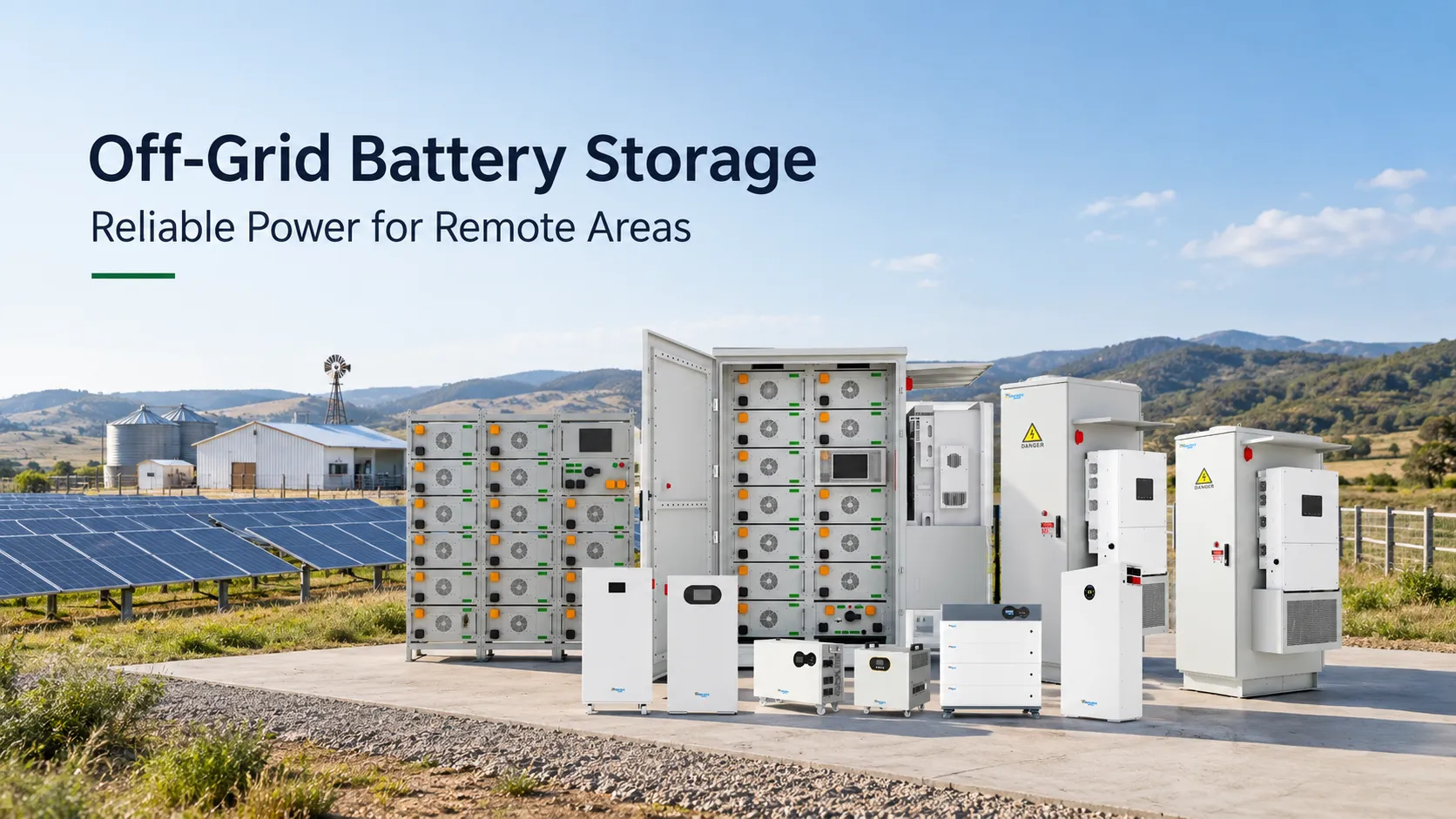
Off-Grid and Remote Microgrid Operations
When local power grids are unstable, battery storage often becomes critical to keep businesses running day-to-day.
Off-site industrial works, farm operations, telecom sites and rural shops often face frequent blackouts, or they only have weak grid access.
A 100kWh battery unit pairs well with solar panels, diesel generators and other power gear to build a hybrid power setup.
Common scenarios:
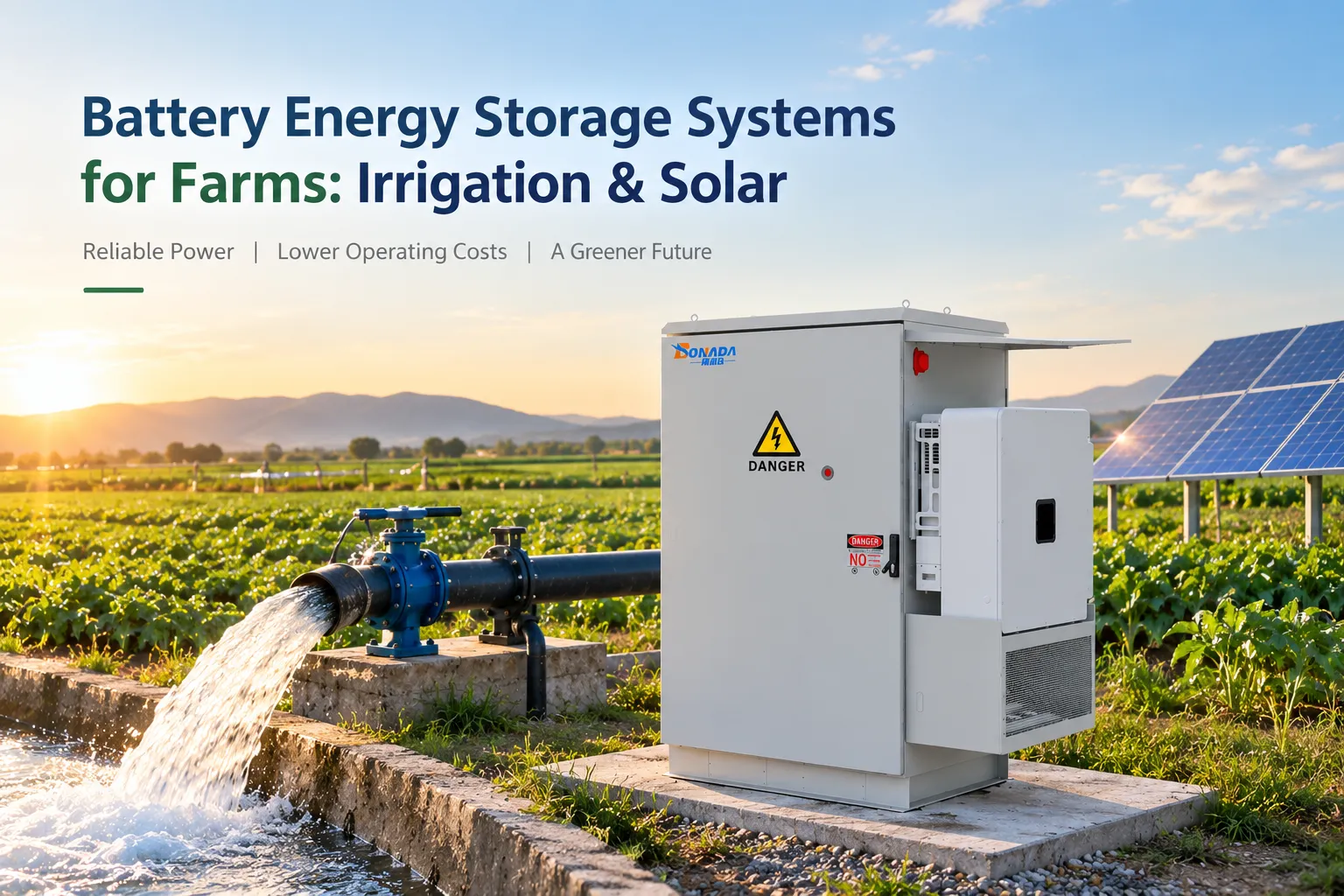
- Remote farm processing sites.
- Rural commercial premises.
- Mining and construction auxiliary sites.
- Telecom base stations and related hardware.
- Small industrial microgrid systems.
For solar-diesel-battery hybrid setups: solar handles daytime loads and tops up the battery. Saved power covers evening use, or kicks in when there’s no sunlight. The generator acts as extra backup if needed.
This setup cuts down diesel use, delivers more reliable power and lets you rely less on the public grid.
Core Applications: How a 100kWh BESS Delivers Value
Peak Shaving and Demand Charge Reduction
Peak shaving is a big reason businesses install battery storage.
Many power providers charge demand fees. They calculate this from your highest power pull in each billing cycle. Even a quick spike in usage can push your monthly bill higher.
The battery can send out stored power during those busy peaks, so you draw less power straight from the grid.
Take a factory as an example: it usually runs at 80kW, but jumps to 110kW when multiple machines start up at once. A well-set battery can cover part of that extra load and bring down the grid power draw.
How much you save hinges on your local tariff rules, how long peaks last, the battery’s output, and how often these spikes happen.
It’s wise to look at several months of your power usage records before working out possible returns.
Maximizing Commercial Solar PV Self-Consumption
Most commercial solar panels make the bulk of their power in daytime. But many businesses don’t use all that power right when it’s produced.
With no battery storage, extra solar power may feed back to the grid, or simply get cut off. It all depends on local grid rules and how much you get paid for exported power.
Toss in a 100kWh battery, and you can hold onto that surplus solar power to use later on.
Here’s how it usually works:
- Morning: Solar panels start producing power and feed the site’s running equipment.
- Midday: Once solar output outpaces usage, the extra power goes into charging the battery.
- Afternoon: Solar output drops, and the battery keeps the stored energy ready for later.
- Evening: Pull power from the battery to run key loads and cut how much you buy from the grid.
This setup helps you use more of your own solar power and buy less grid electricity, especially if your site uses plenty of power in the evening.
Emergency Backup Power and Grid Resilience
Sudden power outages hit businesses hard and cost real money. Lines halt, fridges stop working, and vital gear shuts off unexpectedly.
Your battery storage can kick in as backup power when the grid goes down. This only works if you have the right islanding protection, transfer switches, and an inverter built to run in backup mode.
A 100kWh unit can keep these things running:
- Emergency lights and security systems.
- IT hardware and communication gear.
- Chosen refrigeration units.
- Basic office workflows.
- Key production or monitoring devices.
It’s important to tell the difference between backing up an entire building and only covering priority loads. This 100kWh battery can run your essential gear for hours, yet it won’t have enough capacity to power every piece of equipment inside a large commercial site.
Time-of-Use (TOU) Electricity Arbitrage
Certain power suppliers run time-of-use rates. That means power prices shift at different hours each day.
Companies on this pricing plan can fill up their batteries when rates are cheap, then draw stored power when prices spike.
As one example: a site can charge the battery overnight, then rely on that stored energy during costly afternoon peak windows.
That said, price gaps alone don’t guarantee you’ll save money. You also need to factor in battery wear, round-trip losses, demand fees and running expenses.
A smart EMS can handle charge and discharge timings automatically. It follows tariff schedules and matches what power the site actually needs.
Sizing, Cost, and ROI Analysis for a 100kWh System
How to Audit Load Profiles to Determine Optimal Sizing
Don’t just pick a battery by looking only at your total daily power use. A real energy check needs to look at when you use power, how high your power draw gets, and which gear must keep running in a blackout.
Before settling on a 100kWh battery, gather these details first:
- Daily energy consumption: Total power you use, counted in kWh.
- Peak demand: Your highest power draw, measured in kW.
- Load profile: How your power use changes hour by hour all day.
- Backup duration: How long your vital machines need to stay on when grid power fails.
- Solar generation: Size and output of any existing or planned solar panels.
- Electricity tariffs: Rates for peak, off‑peak hours plus demand charge rules.
Take this case: a business has 30kW of critical loads and wants four hours of backup runtime.
The rough energy needed works out like this:
30kW × 4 hours = 120kWh
So a standard 100kWh battery can’t run that full load for four straight hours. Usable capacity is always less than the rated figure, and power conversion losses eat further into available energy.
For this scenario, the company will need a bigger battery bank, or cut down the loads it backs up during power cuts.
Estimated Investment Breakdown and Hidden Installation Costs
How much you pay for a 100kWh battery set varies. It ties to cell grade, system layout, PCS power level, cooling method, safety add-ons and what the supplier covers in their package.
Don’t forget: the battery cabinet is just one piece of the whole project spend.
| Cost Category | What It Includes |
|---|---|
| Battery Equipment | Cells, modules, mounting racks and outer cabinets. |
| Power Conversion | PCS, inverter and matching electrical parts. |
| Control Systems | BMS, EMS, monitoring tools and communication hardware. |
| Thermal and Fire Protection | Cooling units, smoke detection and fire suppression gear. |
| Installation | Wiring, cable runs, base work and system commissioning. |
| Grid Integration | Protection switches, metering gear and parts to meet local grid rules. |
You may also have other bills: freight, customs taxes, site prep, design work, permits and local grid upgrades.
To get a realistic budget, ask suppliers for a full quote. It should spell out all supplied hardware, who handles installation, warranty terms and what commissioning work covers.
Calculating ROI and Payback Periods for Commercial Storage
Whether a 100kWh battery pays off hinges on how well it cuts power bills or stops you from losing money during outages.
Here are the main ways you can save:
- Bring down expensive demand charges for power peaks.
- Buy less grid power when rates are high.
- Use more of the solar power you make on-site.
- Run your diesel generator less often in hybrid setups.
- Cut losses that happen when the power goes out.
You can work out simple payback like this:
Payback Period = Total Initial Investment ÷ Annual Net Savings
As an example: suppose the whole storage project costs $50,000 and saves you $12,500 each year. The simple payback comes out to four years.
Just a note: this is only for reference. It’s not a fixed price, and returns are never locked in. A full financial check needs to factor in battery wear, service fees, loan costs, future replacement, shifting power prices and how long the system is expected to last.
Utilizing Government Incentives and Tax Rebates
Some places offer government support, which helps make battery storage easier on your budget.
These benefits differ from one place to another. If your business meets the rules, you could get:
- Cash support when you invest in renewables.
- Grants made for commercial battery systems.
- Tax reductions or faster depreciation options.
- Cheap loan plans with low interest.
- Extra rewards when you combine solar and batteries.
These support programs and their rules change often. Don’t count subsidies toward your ROI until you check with local energy departments, tax consultants or experienced project contractors.
Key Factors to Consider When Choosing a 100kWh BESS Provider
Tier-1 Battery Quality and Safety Certifications
Picking a trustworthy supplier matters a lot for storage projects. How well the battery is built impacts safety, daily performance and how much you spend over the years.
Here’s what you need to check:
- Who makes the cells and which model they use.
- How they keep cell quality steady and run checks on the production line.
- Test data showing cycle life and the test setup they used.
- What protection and tracking features the BMS comes with.
- Safety certificates for the battery and full system.
- Factory quality controls and traceability for every unit.
Common standards you might run into: IEC 62619 for lithium cell safety in industry, the IEC 62933 set for energy storage, UL 1973 for stationary batteries, UL 9540 for full storage systems, and UL 9540A for thermal runaway fire tests.
UN 38.3 covers lithium battery transit testing. If you sell into Europe, you will likely need CE marking, subject to local rules.
One key point: these certificates do not replace each other. A cell certification alone does not mean the whole cabinet meets all site safety codes in your area.
Grid Interconnection and Local Compliance Standards
Battery storage gear for commercial use has to follow local electrical and safety rules in the country you deploy it.
Rules change from market to market. They cover grid hook‑up, inverter safeguards, wiring work, fire control and system permits.
Double-check these points before you order:
- Does it match local grid voltage and frequency?
- Single phase or three phase, which one you need.
- PCS grid protection and anti-islanding features.
- Approval from the local power company to connect.
- Electrical codes and fire standards that apply there.
- Can it talk with your existing solar or EMS setup?
It helps a lot to team up with a local EPC that knows the area. They make sure the design and installation fit regional rules.
Warranty Terms, Lifecycle Support, and Maintenance
Battery storage is something you invest in for years. Don’t just compare the upfront cost; find out what help you can get after purchase.
Make sure you ask about these things:
- How many years does the warranty run?
- Does it count by time, charge cycles, total energy passed, or a mix?
- What’s the minimum capacity they guarantee to hold?
- Can they log in remotely and sort out faults online?
- Are spare parts and technical help easy to source later?
- Will they assist with setup, commissioning and linking all parts together?
A trustworthy supplier will give you simple technical files, clear warranty rules, service guides, and quick support when troubles pop up.
Frequently Asked Questions About 100kWh Commercial Batteries
How Long Can a 100kWh Battery Power a Commercial Business?
How long the battery lasts comes down to how much load you run and how much usable energy you can pull from it.
Here’s a simple rough case: run a steady 10kW load, and a 100kWh battery could in theory keep going for 10 hours. If your load jumps to 20kW, that number drops to five hours on paper.
Real-world run time is always less. You have to account for usable capacity caps, inverter waste, power used by the battery’s own accessories and site conditions. Always use your real load readings to work out backup time, don’t just rely on the battery’s rated size.
Can a 100kWh Battery System Be Scaled to Larger Capacities?
Sure. Lots of these commercial batteries are made to be expanded. You just hook up extra modules or whole cabinets.
Say you start with 100kWh. If the whole setup is designed for it, you can add on later to hit 200kWh or 300kWh.
Ask the supplier about this before you place the order. Make sure the PCS, communication, battery voltage and parallel limits all support future additions.
What Is the Expected Lifespan of a 100kWh Commercial ESS?
How long the unit lasts depends on cell type, working temperature, how deeply you drain it, how often you cycle it, and how well you maintain it.
Most LFP commercial batteries are built to handle thousands of charge cycles. Some models list over 6,000 cycles based on lab testing.
Don’t take that cycle number alone. You also need to check the test rules: discharge level, temperature, charging speed and the minimum capacity mark for end of life.
One important note: the warranty period does not equal how long the battery will actually stay usable.
What Electrical Infrastructure Is Required to Connect a 100kWh BESS?
What you need to set it up changes based on its voltage, PCS power, grid setup, and whether it runs tied to grid, hybrid or fully off-grid.
You’ll usually need these parts:
- AC or DC wiring that matches the system specs.
- PCS or hybrid inverter units.
- Circuit breakers and disconnect switches for safety.
- Protection relays and proper earth grounding.
- Data lines so BMS and EMS can talk to each other.
- Enough room to place the unit, plus venting or cooling.
Most commercial sites use three-phase power. Still, the final layout has to come from engineering work and follow local electrical codes.
Does a 100kWh Commercial Battery Require Special Fire Safety and Certifications?
It does. When you install lithium batteries for business use, you need to sort out fire and electrical safety properly.
What rules apply varies with the cell type, cabinet build, where you place it, and local codes.
Safety setups can cover cell temperature tracking, smoke or gas sensors, quick shut-off features, temperature control, fire suppression, and enough space between units.
Ask your supplier for test papers and full safety files. Also make sure the installation and emergency plans follow local rules.
Conclusion: Is a 100kWh Commercial Battery System Right for Your Business?
The 100kWh battery brings real benefits if your firm struggles with expensive power bills, spotty grid supply, rising energy use, or extra power from your solar panels.
Factories rely on it to cut peak charges and keep key lines running during outages. Shops and supermarkets gain more stable power. EV charging operators smooth sudden power spikes. Sites in remote areas pair it with solar and generators for a more dependable hybrid power setup.
That said, this size won’t fit every case. Your ideal battery size comes down to real power usage, peak load, how long you need backup, and how you plan to run the system day to day.
If you’re ready to invest in storage, picking a solid supplier matters just as much as picking the right capacity. A good setup uses stable LFP cells, properly rated PCS, smart BMS and EMS controls, solid cooling design, and consistent after-sales help.
Is a 100kWh BESS Right for Your Business?
Not sure whether 100kWh is the right capacity for your facility? Share your daily energy consumption, peak power demand, and backup requirements with our technical team. Bonada can help evaluate your storage needs and recommend a suitable commercial battery configuration for your project.
Discuss Your BESS Project
Off Grid Energy Storage Solutions for Remote Areas Without Reliable Power
Related Article