Industrial BESS Solutions for Mining Operations and Remote Sites
A mine runs on electricity. Crushers, conveyors, pumps, ventilation, safety systems, the processing chain, none of it moves without power that stays on. The problem is where these operations sit. Many mining projects are a long way from a proper grid, so diesel generators end up carrying the whole site, and diesel is an expensive way to buy reliability.
Diesel brings its own headaches. Fuel has to be trucked in, sometimes over roads that barely qualify as roads. Generators need servicing on a schedule that has nothing to do with your production schedule. And when the load jumps, the gensets lag behind, which shows up as voltage dips and equipment tripping when it should not. None of that stays inside the power house. It lands on throughput and on the bottom line.
An industrial battery energy storage system (BESS) gives a mine another way to run. It sits alongside the solar PV array, the diesel fleet and whatever grid connection exists, and the controller decides which source carries the load at any given moment. The payoff is fairly concrete: fewer litres burned, heavy loads handled without brownouts, cleaner power, and a reserve that keeps critical equipment alive when something fails.
These are not standby batteries waiting for a blackout. The units used in mining work every day. They follow the load, absorb surplus solar, and tell the gensets when to come on and when to shut down. That coordination is what separates a working microgrid from a pile of expensive equipment.
Key Benefits of BESS in Harsh Mining Environments
Diesel Fuel Reduction and Lower Levelized Cost of Energy (LCOE)
Gensets have long been the backbone of power at remote mines, and they do deliver dispatchable power on demand. The trouble is the running cost. Fuel hauled across difficult terrain, or over long distances, is where the money goes, and it goes there every week of the year.
A BESS cuts that dependence two ways. It stores what the PV array makes, and it lets the generators run near their efficient point instead of chasing every load swing. When demand spikes, the battery covers it. When demand drops, the battery takes the surplus rather than forcing a generator down into a bad fuel curve.
In a solar-storage-diesel microgrid the sequence is roughly this:
- PV feeds the mining equipment directly while the sun is up.
- Whatever is left over charges the battery.
- When PV fades or demand climbs, the battery discharges into the load.
- The gensets pick up whatever the first two cannot cover.
Do that well and three things follow: generator hours come down, fuel is burned closer to its best efficiency, and the fleet stops idling at low load for no reason. The qualifier matters, though. This only works when the control strategy is built for the site, not copied from the last project.
Judge the economics on LCOE, not on the battery price tag. The purchase cost is one line in a much longer list:
- Battery storage, PCS, and the electrical equipment around them.
- Diesel prices, plus what it costs to get the fuel to site.
- Round-trip efficiency of the battery.
- Degradation, and eventual replacement.
- PV yield, and how much of it the site genuinely uses.
- Generator maintenance and running hours.
- The cost of interrupted production and unstable power.
Where fuel logistics are expensive and the sun is good, storage usually pays. How much depends on consumption, how efficient the existing generators are, the solar resource, the battery configuration, and the way the system gets run. Nobody can quote a savings figure before those four are measured.
Handling Heavy Inductive Loads, Peak Shaving, and Grid Stability
Mine loads are brutal in a way an office building never is. Crushers, conveyors, pumps, compressors and ventilation fans draw power in big uneven chunks, and the demand line on the chart looks like a saw blade.
Motors are the hard part. A large induction motor can pull several times its rated current for the few seconds it takes to spin up. Start two or three at once and the voltage sags, the frequency wanders, and every generator on site feels it.
A properly configured BESS answers that in milliseconds through its PCS. It injects real power to cover the surge and, where the inverter supports it, reactive power as well to hold voltage up. The gensets never see the full step.
What that looks like in practice:
- Peak shaving: the battery covers the top of the demand curve, so the grid connection or the generator fleet does not have to.
- Load support: extra power when a shovel, mill or crusher starts, or when the plant ramps up.
- Frequency regulation: fast active-power response that keeps frequency inside its band.
- Voltage support: reactive power injection, where the PCS and system design allow it.
- Power smoothing: filtering the jitter that comes from variable loads and passing cloud.
Keep energy and power separate in your head. A mine often needs a lot of kW for a few seconds and very little kWh. Sizing a huge battery to catch one motor start is an easy way to overspend on a mining project.
For real numbers, work through motor ratings, how each one starts, inrush current, ramp time, power factor, and how many run at the same time. On the heavy end you may still need VFDs, soft starters, or a load-shedding scheme that stops three machines from starting together.
Maximizing Solar PV Penetration and Reducing Energy Curtailment
Remote mines usually have excellent solar. What they do not have is a utility to buy from or sell to. PV cuts diesel use, but its output rises and falls with the day and the weather, and that shape rarely matches the load.
With no storage and no flexible load, midday PV goes above what the plant can absorb. Inverters get curtailed and free energy is thrown away because there is nowhere to put it.
Storage fixes exactly that. Charge hard through the strong hours, discharge into the evening shift, the night shift, or the afternoon when cloud rolls in. Same electrons, better timing.
Getting more out of the array buys you:
- Less diesel burned during daylight hours.
- Solar kWh captured instead of curtailed.
- A more dependable renewable supply.
- Fewer generator hours when the battery has reserve.
- Room to add PV later without rebuilding the plant.
How much PV per kWh of battery is a site-by-site answer. Load profile, seasonal irradiation, charging limits and backup duration all move the ratio. Run an hourly, or half-hourly, simulation before fixing the configuration. Rules of thumb tend to be wrong in both directions.
Reliable Backup Power for Critical Mining Equipment and Operations
An outage underground is not just an inconvenience. Ventilation, dewatering pumps, comms, control systems and emergency lighting have to keep running when everything else has stopped, and several of those loads are safety-critical.
A BESS bridges that gap. It picks up the critical bus in milliseconds while the standby set comes up to speed, which a diesel generator simply cannot do. Nothing on the load side sees the dip.
Typical critical list:
- Ventilation and essential environmental control.
- Dewatering and drainage pumps.
- Control rooms, monitoring and communication equipment.
- Emergency lighting and safety-related circuits.
- Processing equipment that needs a controlled shutdown.
Split the board at design stage. Essential loads on one side, everything else on the other, and the battery only feeds the essential side. Do that and a modest battery covers several hours. Skip it and the same battery is gone in minutes.
Pin down four things during engineering: how long the backup must last, how fast the transfer happens, whether the system can island, and whether it can black-start. Safety-critical circuits may need a separate backup path of their own, and mining regulations usually have something to say about that.
Core BESS Applications in Mining and Remote Sites
Off-Grid Solar-Storage-Diesel Hybrid Microgrids
The off-grid hybrid microgrid is the workhorse application. PV, batteries, gensets and an EMS run as one plant with no utility behind it, and the site gets a supply it controls end to end.
Daylight does most of the work: PV feeds the loads, surplus charges the battery, and the generators stay quiet. As the sun drops or the plant ramps up, the battery takes over. The gensets come in for the third act, when renewables and stored energy both run short.
The pieces:
- Solar PV system: the generation source, sized to the daytime load and the charging headroom available.
- Industrial BESS: the buffer that makes the timing work.
- Diesel generators: the dispatchable backstop.
- PCS and inverters: the AC/DC interface, and the part that handles active and reactive power.
- Energy Management System: the controller that decides who runs and when.
For gold, copper and mineral processing sites far from anywhere, this cuts how much fuel has to be hauled in and how exposed the operation is to a missed delivery.
The EMS watches state of charge (SOC), demand, PV output and generator status continuously, then decides each minute whether the battery charges, discharges, or holds in reserve. That decision logic is really what you are buying when you buy the system.
None of it is plug-and-play, though. Minimum generator loading, spinning reserve, charging limits, transient response and protocol compatibility have to be engineered together. Get the communications wrong and the best controller on the market sits there doing nothing.
Heavy Machinery and Electric Mining Truck (BEV) Fast Charging
Electrifying the fleet changes the load picture. Battery-electric haul trucks, loaders and drills want serious charging power, and they tend to want it in the same window.
Several trucks on the chargers at once can blow past what the connection or the genset fleet can supply. Upgrading that infrastructure at a remote site is slow and expensive, and the utility is usually not in a hurry either.
A BESS is the cheaper way through. Charge it while the plant is quiet, dump it into the trucks when they show up.
What you get:
- No sudden peak when half the fleet plugs in together.
- A smaller grid connection or generator capacity than the chargers alone would demand.
- High-power charging where the grid cannot deliver it.
- Solar energy going into trucks after dark.
- Charging that flexes with the shift plan instead of fighting it.
Shift change is the classic case. Several haul trucks come back at once, and the connection does not have to carry that whole peak because the battery carries part of it.
Size it on charger ratings, session length, arrival patterns, daily kWh, and how much time the battery gets to refill.
Power and energy again, and they are not the same thing. A 1MW charging station does not automatically need 1MWh of storage. What it needs depends on how long you want that 1MW and how much you can put back between sessions. Confusing the two is how projects end up with a battery twice the size they actually needed.
Mobile and Containerized BESS for Temporary Exploration Sites
Mines move through stages. Exploration camp first, then drilling, then construction, then production, and the power requirement changes at every step. Early on you need reliable electricity before there is any permanent infrastructure to plug into.
Building permanent power infrastructure for a camp that moves again in a year or two is expensive and slow. A containerised BESS arrives as a finished unit: modules, conversion, controls, all inside one enclosure you can lift, move and reconnect.
Inside a typical unit:
- High-capacity LFP battery modules.
- Battery Management System (BMS).
- Power Conversion System and electrical protection equipment.
- Thermal management and fire detection.
- Energy management and remote monitoring interfaces.
Drop it on site, connect it to PV, a generator or the local network, and it runs. Because it is modular, capacity grows with the project: what starts as a camp supply can become part of the permanent plant later.
Before picking an enclosure, check transport dimensions, lifting arrangements, foundation requirements, cable connections and how commissioning will actually be done in the field. All five have a habit of turning into problems on a Monday morning.
Protection matters more than the brochure suggests. Dust, vibration, high ambient temperatures, humidity and corrosive conditions all shorten equipment life. Specify for the site you have, not for the indoor conditions the datasheet was written against.
How to Select the Right Industrial BESS for Mining
Sizing Battery Capacity and PCS Power for High Inrush Currents and 24/7 Duty Cycles
Sizing decides whether the project works at all. Too small and it cannot hold the peak or last the outage. Too large and you spend capital that never earns anything back.
Two separate numbers, kept apart: battery energy capacity in kilowatt-hours (kWh) or megawatt-hours (MWh), and PCS power rating in kilowatts (kW) or megawatts (MW). For a reference to available high-voltage rack-mounted energy storage batteries, review the relevant product specifications.
Capacity sets how much energy you can store and how long it lasts. PCS sets how fast that energy moves.
For a mine, sizing starts with the load. There is no shortcut around it.
Step 1: Analyze the electrical load profile.
Pull hourly data, ideally 15-minute, covering normal operating demand, maximum demand, shift changes, seasonal variation and every equipment starting event. Then mark which loads are critical and which can be dropped during a peak.
Step 2: Define the required discharge duration.
Decide how long the battery has to carry the load. Peak shaving might need minutes to an hour. An off-grid mining microgrid usually needs several hours, sometimes the whole night.
Step 3: Calculate the required nominal battery capacity.
A preliminary sizing formula:
Required Battery Capacity (kWh) = Load Power (kW) × Discharge Time (h) ÷ (Usable DoD × Discharge Efficiency)
Say the site needs 500 kW of battery support for four hours, with 80% usable depth of discharge (DoD) and 95% discharge efficiency:
500 × 4 ÷ (0.80 × 0.95) = 2,632 kWh
That puts nominal capacity at roughly 2.63 MWh. Add margin on top for battery aging, temperature, reserve SOC, auxiliary consumption and whatever the plant will grow into. Quote the raw number and you will be short inside three years.
Step 4: Determine the appropriate PCS power rating.
Size the PCS for the highest power the system must take in or push out. On a mine that means transient loads, motor starting requirements, reactive power demand, and how much equipment runs simultaneously.
Step 5: Evaluate continuous operation and redundancy.
Mines run around the clock, so check the duty cycle honestly: how many cycles a day, when the unit actually gets to recharge, the thermal conditions, maintenance intervals, and what a week of downtime does to production.
Before anyone can put a BESS proposal together, collect:
- Maximum electrical demand in kW or MW.
- Daily electricity consumption in kWh or MWh.
- Motor ratings, starting currents and starting methods.
- Required backup duration and critical load capacity.
- Daily operating schedules and production shifts.
- Existing grid connections and diesel generator capacity.
- Installed or planned solar PV capacity.
A proper feasibility study goes past the arithmetic: system losses, battery degradation, power quality, fault levels and operating reserve. Simplified energy math is fine for a first pass and dangerous as a final answer.
Environmental Protection: IP Rating, Corrosion Resistance, Dust Protection, and Thermal Management
Mine sites punish electrical equipment. Depending on where you are, the cabinet may face extreme ambient temperatures, fine abrasive dust, high humidity, salt air, constant vibration and process gases that eat paint.
All of it hits battery lifespan, inverter output, terminals and control gear. Specifying protection properly is cheaper than replacing a unit in year four.
IP protection rating: match it to where the cabinet actually sits. At a mine the main threat is dust, because particles find their way into cooling paths and onto live parts. Decide the rating from the installation location and the standard that applies, not from a catalogue page.
Corrosion resistance: coastal mines and processing plants put equipment in salt-laden air, moisture and chemical vapours. Coatings, material choice and surface treatment are what keep a cabinet usable for ten years instead of three.
Thermal management: cells want to live inside a narrow temperature band. Liquid cooling, or properly designed air conditioning, is what holds them there, and the larger the container the less forgiving the job gets.
Dust and vibration protection: air filtration, sealed electrical compartments, mounts that do not loosen, and terminals that stay tight after a year of haul-truck traffic.
Before selecting an industrial BESS, project developers should verify:
- Specified operating and storage temperature ranges.
- Enclosure IP ratings for indoor and outdoor installation.
- Corrosion protection requirements and coating specifications.
- Cooling system performance at maximum site ambient temperature.
- Permitted humidity and altitude conditions.
- Compliance with the relevant electrical and environmental standards.
At altitude, thin air cools less and some electrical equipment loses output. Ask the manufacturer for the derating figures at your elevation, in writing, before the design is frozen.
Grid-Forming and Grid-Following Capabilities for Weak-Grid and Off-Grid Systems
PCS operating mode is the decision people most often skip, and it is the one that decides whether an off-grid site can run at all. Not every battery inverter is built to do the same job.
Grid-following PCS follows something else. It locks onto an existing voltage and frequency reference, so a grid, a generator or another grid-forming source has to be holding the network up already.
Grid-following systems are commonly used for:
- Peak shaving on grid-connected mining sites.
- Solar self-consumption and PV energy shifting.
- Frequency and power regulation on an established network.
- Demand peak reduction alongside existing generators.
Grid-forming PCS creates the reference itself. Voltage and frequency come out of the inverter, which is what allows an islanded microgrid to exist in the first place.
For a remote mine with no dependable utility, this is the capability that matters. Depending on design, a grid-forming BESS can carry:
- Off-grid solar-storage microgrids.
- Diesel-generator and battery hybrid systems.
- Islanded operation during grid outages.
- Stable running when renewable generation fluctuates.
- Black-start functions, where the system specifically supports them.
On a real mine this is not a line item on an inverter datasheet. Someone has to work through generator synchronisation, protection coordination, short-circuit behaviour, load rejection, transient response, and how multiple sources behave when they interact.
If the site has to move between grid-connected and islanded operation without a blink, the whole system must be designed and tested for that mode. Buying a grid-forming inverter does not by itself give you a bumpless transfer or a black start, and vendors who imply otherwise are overselling.
LFP Battery Safety, BMS Protection, and Thermal Runaway Prevention
Safety carries more weight at a mine than at a warehouse. Where emergency response resources are thin, the system has to defend itself.
Lithium iron phosphate (LFP) dominates stationary storage for good reasons. It tolerates heat better than most lithium-ion chemistries, cycles well, and does not mind being charged and discharged daily. Better is not the same as immune, though. LFP cells can still go into thermal runaway, and an electrical fault does not care what the chemistry is.
A reliable industrial BESS layers its protection rather than relying on the chemistry alone.
Battery Management System (BMS)
The BMS watches individual cells and modules and keeps them inside their limits. What it typically handles:
- Cell voltage monitoring and overvoltage protection.
- Undervoltage and over-discharge protection.
- Battery temperature monitoring.
- Overcurrent and short-circuit protection.
- Cell balancing and SOC estimation.
- Communication with the PCS and EMS.
Thermal Management and Fire Protection
Thermal management keeps cell temperature below the specified limits. Beyond that, protection usually means smoke detection, heat detection, gas detection, alarm integration and suppression engineered for the enclosure.
Fire design follows the chemistry, the layout, the local code and the manufacturer's documentation. Ventilation, gas management, emergency shutdown and separation distances all belong in that drawing set.
Relevant Certifications and Standards
Ask for the test and certification documents, not a logo on a page. Depending on the market and the project, the standards that come up are:
- IEC 62619: Safety requirements for secondary lithium cells and batteries used in industrial applications.
- UL 1973: Safety requirements for batteries used in stationary and other specified applications.
- UL 9540: Safety standard covering energy storage systems and equipment.
- UL 9540A: Test method for evaluating thermal runaway fire propagation in battery energy storage systems.
- UN 38.3: Transport testing requirements for lithium batteries.
They cover different ground and do not substitute for one another. Check the exact model covered, the system configuration, the report numbers, and what your market actually requires before you buy.
Modular Scalability for Phased Mine Expansion
Mines do not stay one size. Exploration needs very little power. Commercial production adds crushing, pumping, processing and haulage, and the load grows with every one of them.
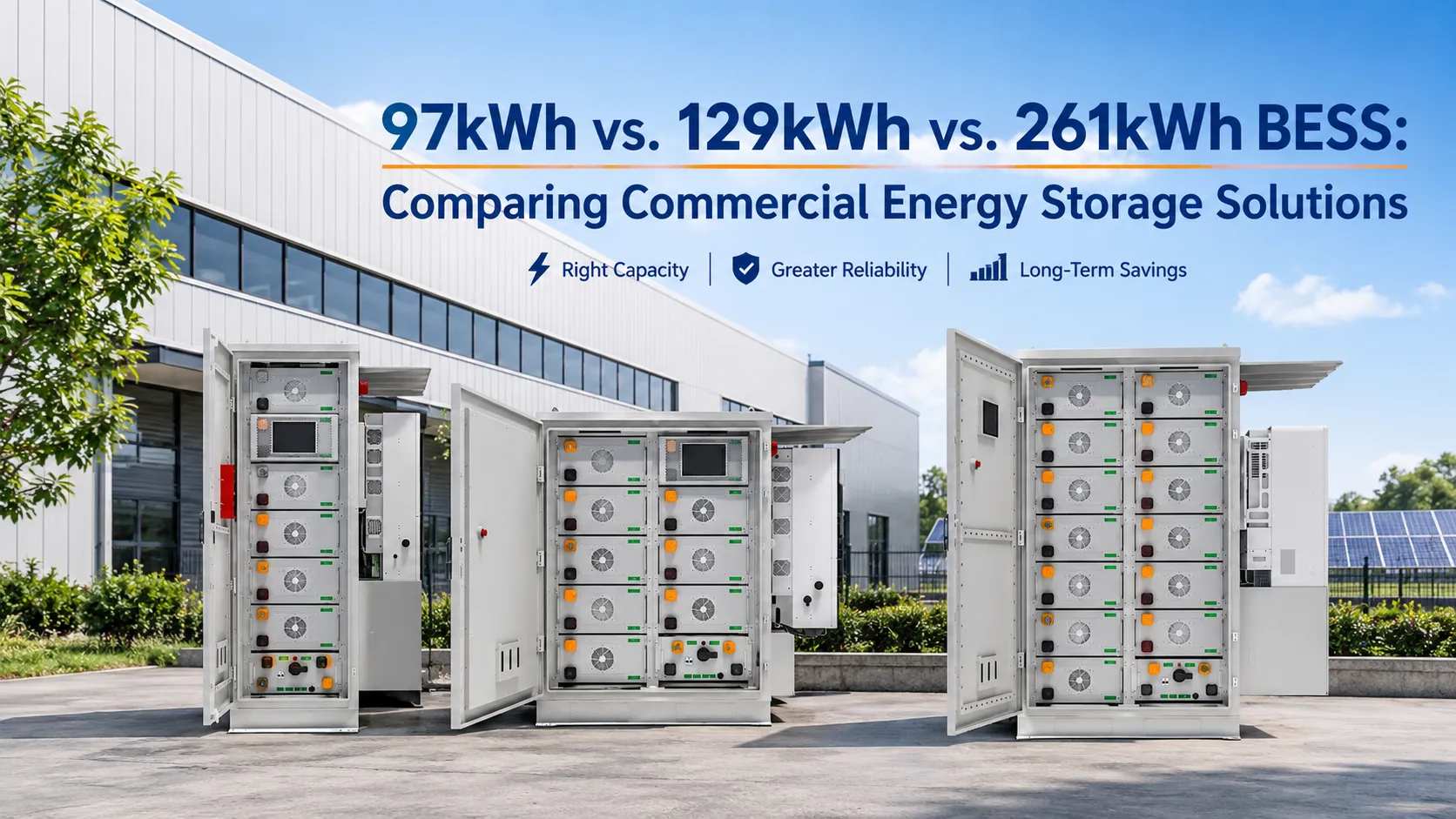
Modular storage grows with that curve. Bonada offers 97kWh outdoor energy storage cabinets and larger 261kWh commercial and industrial BESS systems as product references; the suitable configuration for a mine must still be determined from its load and operating conditions.
You buy what year one needs, then add cabinets, racks or containerised units when demand increases, instead of paying for the final capacity up front.
The gains:
- Lower initial capital outlay where expansion timing is uncertain.
- Capacity that tracks production demand.
- Less disruption during expansion when it is planned properly.
- Configurations matched to each development stage.
- Energy spend that follows actual production need.
This only works if the first design leaves room for it. PCS capacity, transformer ratings, busbar arrangements, protection devices, EMS communication and physical installation space all have to accommodate the expansion you may not have announced yet.
Modules bought two years apart have different operating histories and different remaining capacity. The manufacturer has to spell out compatibility requirements and how to integrate them, because mixing packs without that guidance is how a balanced system quietly becomes an unbalanced one.
Proven Case Studies and Real-World Mining BESS Applications
The scenarios below show how storage fits different mining settings. They are worked engineering examples rather than claims about specific commissioned customer projects, and any real configuration has to come out of site measurements and a technical feasibility study.
Off-Grid Gold Mine Solar-Plus-Storage Microgrids
Take a remote gold mine a long way from the nearest utility. Diesel carries the whole site: ore processing, water pumping, ventilation, lighting, the accommodation block.
Trucking diesel in is a large monthly expense. The sun, on the other hand, is excellent, and there is space for a substantial PV array.
A solar-plus-storage-diesel microgrid is the alternative to running everything on diesel generation.
Illustrative system configuration:
- Solar PV capacity: 2 MWp.
- Battery energy storage capacity: 4 MWh.
- PCS rated power: 1 MW.
- Diesel generation: existing generator fleet retained as dispatchable backup.
- Energy management: hybrid microgrid controller coordinating battery and generator operation.
Through the daylight hours, PV supplies the mine's loads and puts the surplus into the battery. As production falls away, the BESS discharges into the evening and the overnight shift.
The generators stay available when renewable output and battery reserves cannot meet demand. The EMS dispatches them so each unit stays out of its inefficient range while the site keeps the reserve capacity it needs.
Potential project benefits:
- Lower diesel fuel consumption.
- More renewable electricity actually used on site.
- Fewer generator running hours where conditions allow.
- Less exposure to fuel delivery disruption.
- Room to add renewables later.
How much fuel actually comes off depends on irradiation, the mine's load characteristics, dispatch strategy, generator efficiency and reserve rules. Run the simulation before anyone writes a savings figure into a business case.
Critical Backup and Diesel-Hybrid Mining Operations
Not every site has the space, the solar resource or the budget for a large PV installation. Plenty of operations keep diesel as the primary source and simply want the power to stop wobbling.
In that case, a BESS goes in beside the existing electrical infrastructure instead of replacing the generator fleet.
Picture a copper processing facility where the large pumps, the crushers and the conveyors all land at once. Every one of those steps hits the generators, and voltage and frequency start moving around.
A battery system absorbs the step, and the network settles instead of hunting.
A typical configuration may include:
- Existing diesel generators as the primary dispatchable source.
- Industrial LFP battery cabinets or containerised BESS.
- PCS with the grid-forming or grid-following behaviour the site needs.
- EMS for coordinated generator and battery dispatch.
- Protection and monitoring for critical electrical loads.
Normally the generators carry most of the site's demand. When the load jumps, the battery tops it up. When things go quiet, the battery recharges at whatever rate keeps the running generators healthy.
If a generator drops out, the BESS can hold selected critical loads while standby generation starts or another supply arrangement comes on, provided the islanding and transition functions were engineered in. That proviso is doing a lot of work in that sentence.
For a mine that wants steadier power and less wear on the fleet without rebuilding the whole plant, this is the practical route.
Choosing the Right Industrial BESS Manufacturing Partner
Picking the BESS manufacturing partner matters as much as picking the capacity. Mining loads are complex, the environment is unforgiving, and the duty cycle never stops. You need a supplier who can answer technical questions, not one who ships a catalogue unit and disappears.
Before committing, EPC contractors and mining project developers should check:
- Battery technology: chemistry, cell specification, the conditions behind the cycle-life claim, and the capacities actually available.
- System integration: does the BMS talk to the PCS, does the PCS talk to the EMS, does the EMS talk to the transformers and the existing generators.
- Environmental adaptability: temperature limits, enclosure protection, cooling design, corrosion resistance.
- Safety documentation: product certificates, test reports, fire documentation, and the model numbers they really cover.
- Customization: can they change capacity, voltage, cabinet layout and communication interfaces, or is the specification fixed.
- Technical support: engineering help, commissioning guidance, troubleshooting, and who answers the phone at two in the morning.
- Warranty and lifecycle support: term, operating conditions, capacity retention terms, replacement arrangements.
A partner who knows the product takes work off an EPC's plate: configuration, documentation, procurement, delivery. Where operating voltages, capacities and climates vary from one project to the next, customisation stops being a nice-to-have and becomes the reason you picked them.
Bonada (Fujian) New Energy Technology Co., Ltd. builds lithium battery storage for residential, commercial and industrial use, including C&I systems configured around specific project requirements rather than one fixed package.
For mining and remote-site work, the right configuration follows five inputs: the site's load profile, its energy consumption, the generation available on site, the environmental conditions, and the backup duration required.
Off-grid microgrid, industrial peak shaving, critical backup, it all starts the same way. Send the electrical load data and the project requirements, and a workable configuration can be built from there.
Conclusion: Building More Reliable and Cost-Efficient Mining Power Systems
Industrial BESS is now a normal part of mine power design, not an experiment. Put batteries alongside PV, generators and the existing grid connection and four things improve together: reliability, fuel burn, the ability to carry hard loads, and readiness for an electrified fleet.
What storage does not do is pick the capacity for you. PCS power, motor starting characteristics, grid-forming behaviour, thermal design, battery safety and environmental protection all have to be settled during system design, and any one of them left open comes back later as a change order.
Engineered properly, the same technology covers a very wide range: a remote exploration camp, an off-grid gold mine, a large mineral processing plant, an electric truck charging bay.
For EPC contractors, system integrators and mining project developers, choosing a manufacturer with real experience in this environment is the step that most affects how the system performs in year five, not just on commissioning day.
Frequently Asked Questions About Industrial BESS for Mining Operations
1. Can an industrial BESS completely replace diesel generators at an off-grid mining site?
Not necessarily, and that is not a failure of the technology. For most remote mines the hybrid is the practical answer: PV and the battery carry the load, and the generators sit behind them for extended low-sun periods or heavy demand. How close you get to zero diesel depends on the solar resource, battery capacity, the load, and whether the economics hold. A site with a good array, large storage and a modest load can run the generators very few hours. A 24/7 processing plant with heavy motors will keep them in the mix.
2. How do I calculate the required BESS capacity for a mining operation?
Sizing needs more than the daily kWh figure, which is where a lot of proposals start and stop. What you actually need is maximum demand, the hour-by-hour load profile, the critical equipment list, motor starting currents, and how long the battery must carry the load. Energy (kWh or MWh) sets duration. Power (kW or MW) sets how fast the system responds. Do that analysis properly and you avoid both the undersized system and the oversized invoice.
3. Can a battery energy storage system handle the high starting currents of mining equipment?
Yes, if the PCS is chosen for it. The inverter has to be sized against starting currents, transient demand, reactive power and how long each start lasts. Crushers, large pumps, compressors and conveyors often still need soft starters or VFDs, because no battery replaces good motor practice. Evaluate the whole electrical system before anyone confirms compatibility.
4. Is an industrial LFP battery suitable for remote mining environments with extreme temperatures and heavy dust?
LFP is the usual choice for industrial storage because it handles heat better than most lithium-ion chemistries and cycles well. What it will not do is survive a mine on its own. Enclosure rating, corrosion protection, temperature control, dust sealing, BMS behaviour, fire detection and emergency shutdown all have to be specified for the site. The chemistry gets you most of the way. Packaging and engineering do the rest.
5. Can an industrial BESS support fast charging for electric mining trucks and heavy-duty vehicles?
Yes, and it is one of the cleaner use cases. The battery charges while the plant is quiet and discharges when several vehicles plug in together, which keeps the connection or the generator fleet from having to carry the whole charging peak. Sizing runs off charger ratings, session length, vehicle arrival schedules, daily energy requirements and the time available to refill the battery.
Planning a BESS Project for Mining Operations?
Get the configuration right for your site. Talk directly with Bonada’s engineering team: send the load profile, generator capacity, PV plans and site conditions, and the sizing can be worked through from there. We help EPC contractors and mining developers evaluate battery capacity, PCS power and system configuration for remote or off-grid operations.
Discuss Your Mining BESS Project
97kWh vs. 129kWh vs. 261kWh BESS: Comparing Commercial Energy Storage Solutions
Related Article