
What is commercial energy storage
2025-06-07
With the development of energy transformation and smart grid, industrial and commercial energy storage, as an important part of user-side energy storage, is gradually becoming a key technology to improve energy utilization efficiency, optimize power demand management, and promote the use of clean energy. Bonada will conduct a comprehensive and in-depth analysis of industrial and commercial energy storage from multiple dimensions such as energy storage classification, application scenarios, business models and revenue models.

1. What is industrial and commercial energy storage
Industrial and commercial energy storage technology is mainly divided into power supply side, grid side and user side energy storage according to application scenarios. Among them, power supply side and grid side energy storage are collectively referred to as pre-meter energy storage or large storage, while user-side energy storage is subdivided into industrial and commercial energy storage and household energy storage. It is worth noting that in recent years, my country's user-side energy storage market has been dominated by industrial and commercial energy storage.
2. Four major application scenarios of industrial and commercial energy storage
- Factories and shopping malls: These places have significant electricity consumption characteristics. By installing energy storage systems to achieve peak shaving and valley filling and demand management, electricity costs can be effectively reduced, and they can serve as emergency backup power sources.
- Photovoltaic charging station: Combine photovoltaic power generation and energy storage to provide energy for electric vehicle charging stations. At the same time, the energy storage system helps to smooth the impact of high-power charging on the power grid.
- Microgrid: Microgrids have the flexibility of grid-connected and off-grid operation. They are mainly used in industrial parks, islands and remote areas. Energy storage plays a key role in balancing power generation and power load.
- New application scenarios: Industrial and commercial energy storage is actively exploring new areas, such as data centers, 5G base stations, battery-swapped heavy trucks, port shore power, etc., showing a wide range of application potential.
Depending on whether it is accompanied by industrial and commercial photovoltaic installation, industrial and commercial energy storage is further divided into photovoltaic supporting and non-photovoltaic supporting.
- Photovoltaic supporting industrial and commercial energy storage: Through photovoltaic + energy storage, electricity is generated and used by itself, photovoltaic power generation output is optimized, clean energy utilization is improved, and peak-valley arbitrage is achieved.
- Non-photovoltaic supporting industrial and commercial energy storage: For places that are not suitable for installing large-scale distributed photovoltaics, such as commercial buildings, schools, hospitals, etc., independent energy storage systems can reduce electricity costs by shaving peaks and filling valleys and peak-valley arbitrage.
3. Four major business models of industrial and commercial energy storage
- Direct investment by owners: Industrial and commercial users install energy storage systems by themselves and directly enjoy the cost savings brought by peak shaving and valley filling, but they need to bear the initial investment and operation and maintenance costs.
- Contract energy management: Energy service providers invest in energy storage systems and provide them to users in the form of energy services. Both parties share the benefits according to the agreed proportion to reduce the financial pressure of owners.
- Financial leasing + contract energy management: Introduce financial leasing companies as lessors of energy storage equipment to further reduce financial pressure. During the lease period, the ownership of the equipment belongs to the financial leasing party, and the owner has the right to use it.
- Pure leasing: The owner pays a fixed rent to the lessor and enjoys the benefits brought by energy storage. After the lease expires, he can choose to return or buy out the equipment. This model is suitable for enterprises with light asset operations or temporary electricity needs.
4. Five major income models of industrial and commercial energy storage
- Peak-valley price difference arbitrage: Take advantage of the difference in electricity prices, charge when the electricity price is low, discharge when the electricity price is peak, and reduce electricity costs.
- Increase the proportion of photovoltaic self-use: Optimize the time mismatch between photovoltaic power generation and load consumption through energy storage system, and reduce the high-priced electricity purchase cost.
- Demand management: For large industrial electricity consumption, the energy storage system supplies the load during peak electricity consumption, reducing the electricity cost of transformer capacity demand.
- Power spot trading: Participate in power spot trading through virtual power plant aggregation to expand the source of income.
- Power auxiliary services: According to the grid dispatching instructions, provide power auxiliary services such as peak load regulation and frequency regulation to obtain corresponding income. In the future, the expansion of income sources will rely on the construction of power spot market and virtual power plants.
Solar Heating Systems: 4 Key Advantages (Energy Independence & More)
Top 30 Battery & Energy Storage Companies 2025: Global Rankings
Related Article
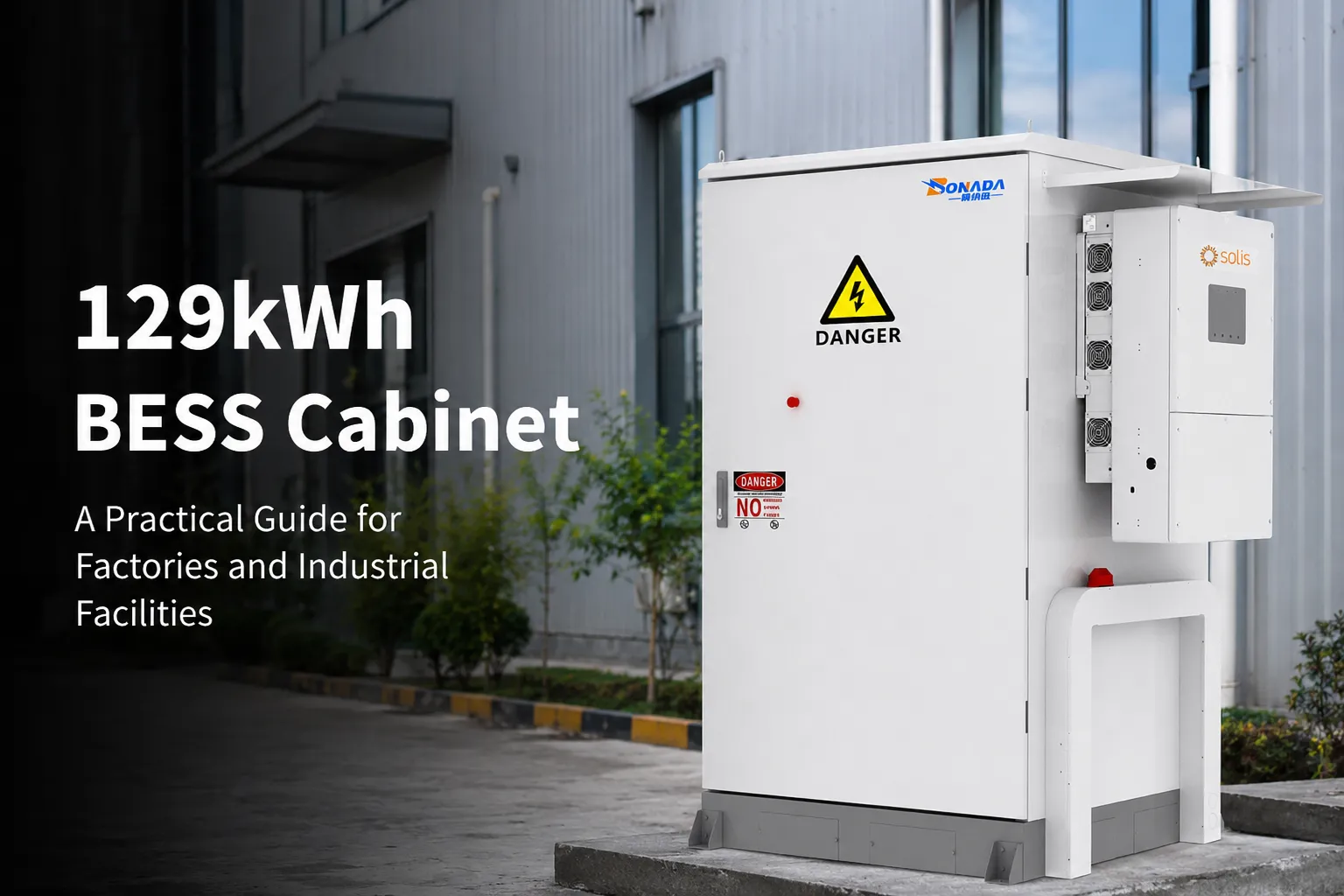
Electricity is one of the largest operating expenses for many factories. The problem is not always the total amount of electricity a facility consumes. In many markets, a factory can face significantly higher charges simply because its power demand reaches a high level for a short period.
129kWh BESS Cabinet: Complete Guide to Capacity, Components, Applications and Sizing
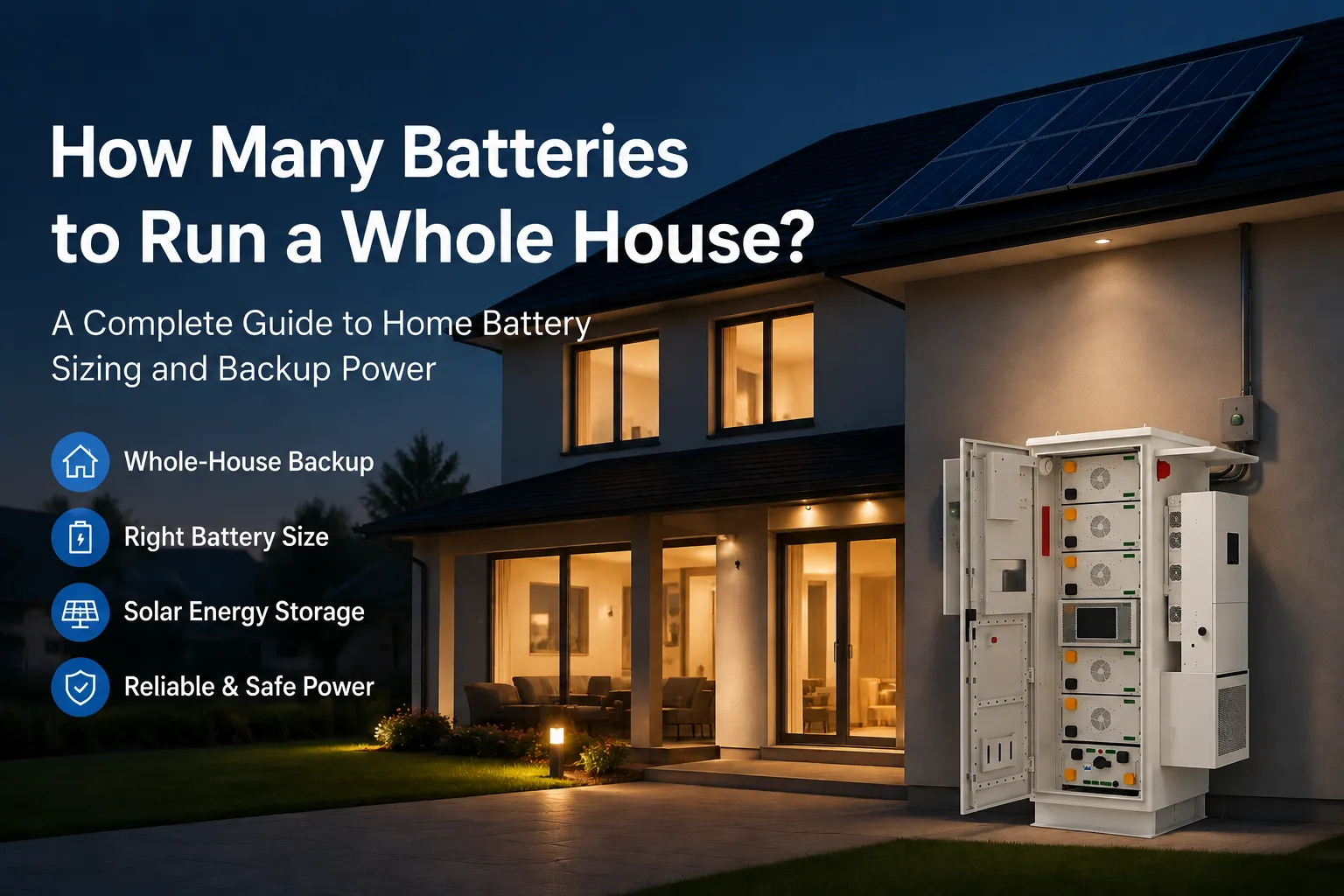
One of the first questions homeowners ask when considering solar storage or backup power is: How many batteries to run a whole house? It sounds like a simple question, but the answer is different for every home. A battery system that works well for a small house with basic backup needs may not be enough for a larger property running air conditioning, electric heating, or an EV charger.
How Many Batteries to Run a Whole House? A Practical Home Battery Sizing Guide
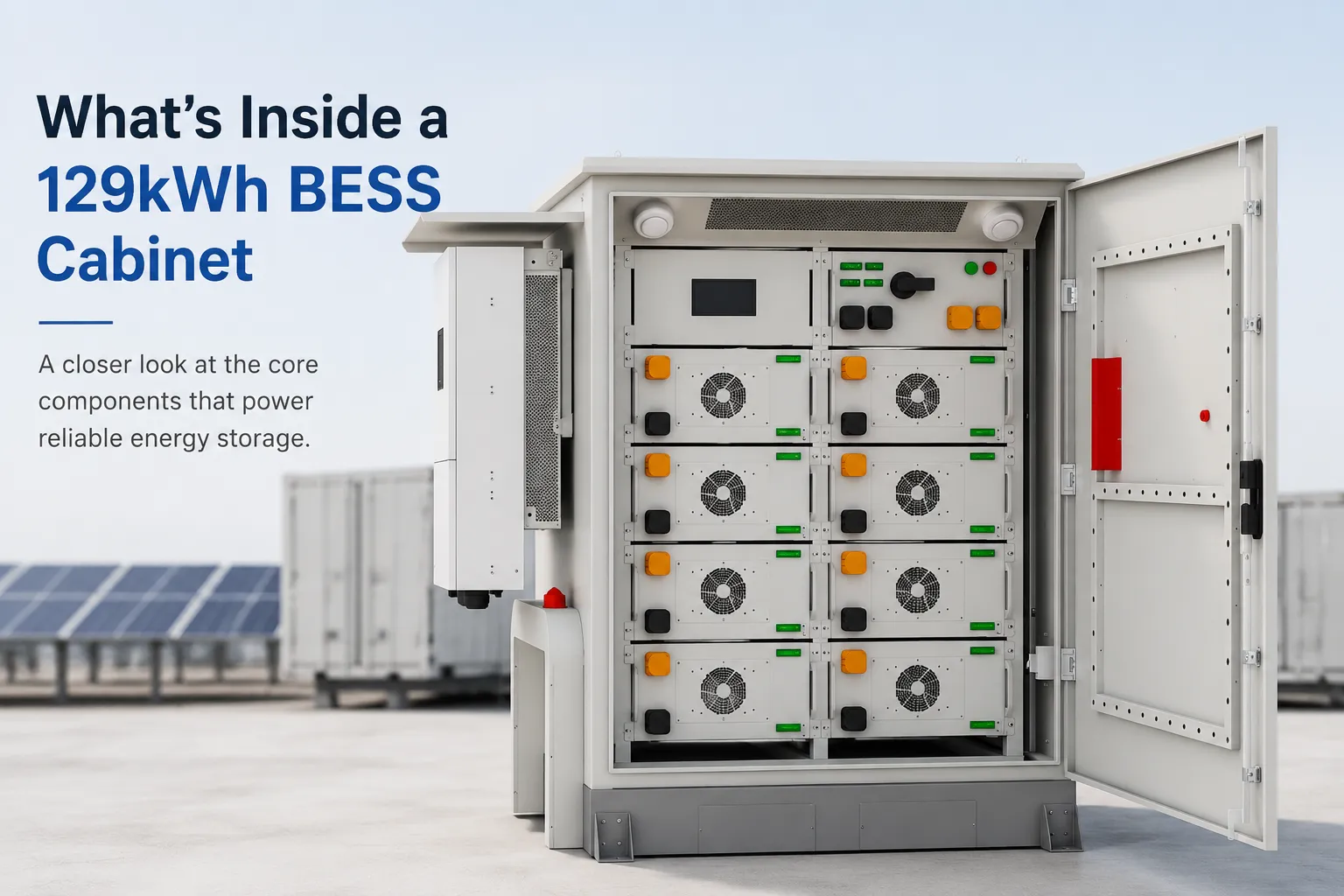
A typical 129kWh BESS cabinet contains much more than battery cells. Inside the enclosure, multiple systems work together, including battery modules, Battery Management System (BMS), high-voltage protection units, Energy Management System (EMS), cooling equipment, fire protection devices, and communication components. Each part has a specific role in maintaining safe and stable energy storage operation.
What's Inside a 129kWh BESS Cabinet? A Complete Breakdown of Internal Components
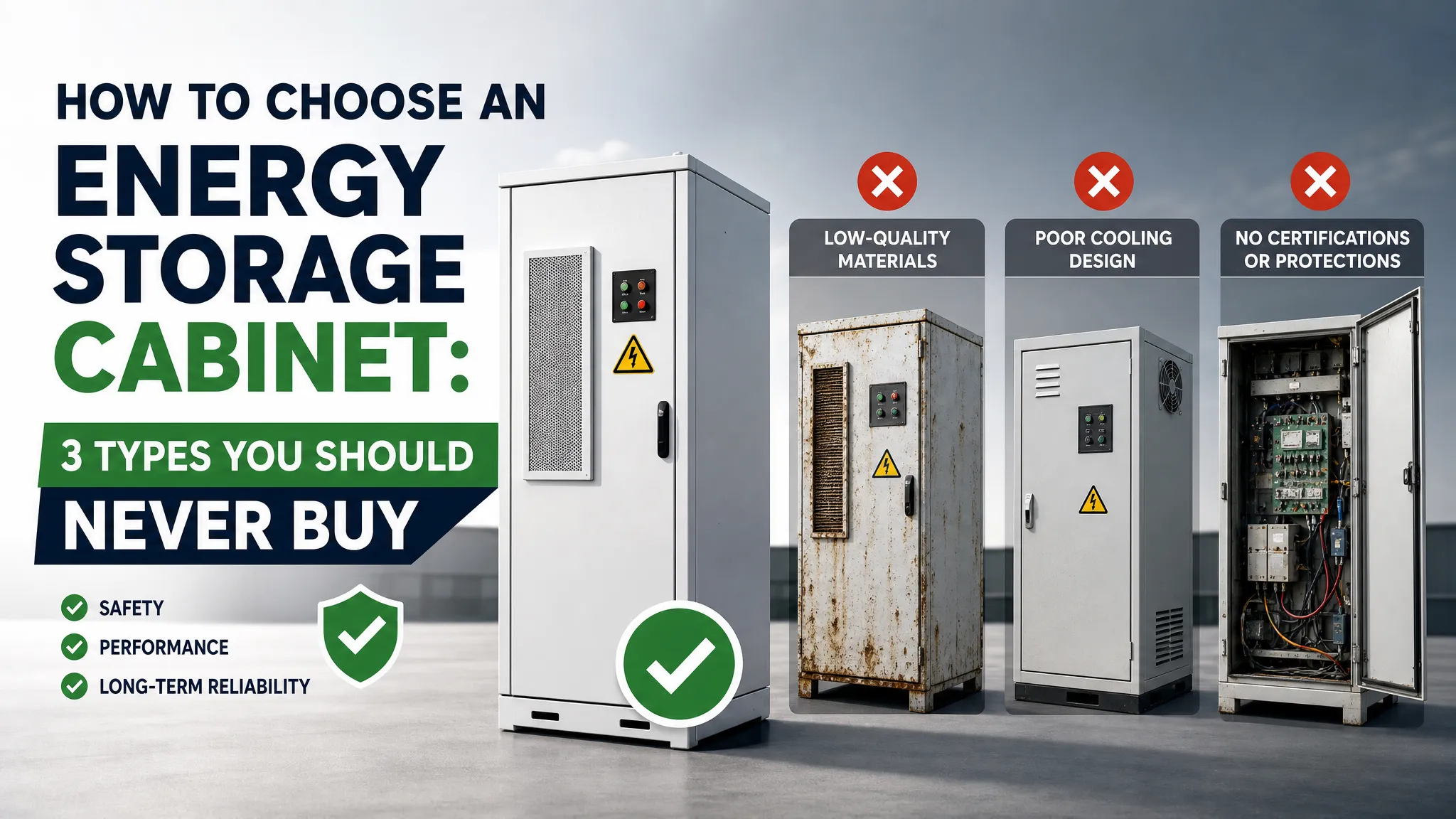
When sourcing a Battery Energy Storage System (BESS), most buyers obsess over cell capacity, inverter brands, and price per kilowatt-hour. The enclosure? It’s usually an afterthought—treated as a simple metal box. That is a massive financial and operational mistake.
How to Choose an Energy Storage Cabinet: 3 Types You Should Never Buy