How to Size a Solar PV System for a Villa (Real-World Method That Actually Works)
When people ask how big their solar system should be, the first thing I usually tell them is: don’t start with the roof, and don’t start with what the installer suggests. Start with your electricity bill. That’s the only number that doesn’t lie. In most villa projects I’ve worked on, the system size ends up being wrong not because of bad equipment, but because someone guessed the load.

Look at a Full Year, Not One Month
If you only check one or two bills, you’ll miss the real pattern. Air conditioning alone can double your consumption in certain months. I’ve seen villas that average 25 kWh/day in winter jump to 50+ kWh/day in summer. So the safer way is: Take 12 months of data, add everything up, and divide by 365. That gives you a number you can actually design around.
Solar Output Is More Limited Than People Think
A lot of people assume if they install a 10 kW system, it somehow produces 10 kW all day. That’s not how it works. In reality, you only get a few effective hours per day where the system is near its rated output—usually somewhere around 4 to 5 hours depending on your location. So if your villa uses 40 kWh per day, you’re trying to produce most of that in a much shorter window.
The Quick Calculation I Use
Nothing fancy here, just a practical shortcut: Take your daily usage and divide it by your usable sun hours, then adjust for losses. Between heat, inverter conversion, dust, and wiring, you’re not getting 100% of what the panels are rated for. In most real installations, I assume about 80% efficiency. So if we use the 40 kWh/day example: 40 ÷ 4 hours = 10 kW. Then account for losses → roughly 12–13 kW system. That’s usually much closer to reality than brochure numbers.
Where Installations Often Go Sideways
A few things come up again and again. Some proposals look great on paper but rely on ideal conditions that don't exist. Another factor is ignoring heat—panels get hot on villa rooftops, and output drops. Then there’s future load: people install solar, and a year later they add an EV charger or upgrade their cooling system, making the system feel undersized.
There’s Also a Technical Limit People Don’t See
Panels are connected in series strings, and the voltage adds up. Early in the morning, when temperatures are low, that voltage actually goes higher than normal. If the string is too long, it can exceed the 1000V DC safety limit that your inverter can handle. Even if your total system size is correct, the way it’s wired—ensuring you don't exceed voltage limits while maintaining enough current—is a critical technical detail.
Should You Oversize a Bit?
In most cases, yes—but not blindly. Adding a small buffer (10–20%) is reasonable if you expect higher usage later. But I’ve also seen systems oversized to the point where energy just gets exported at low rates, which makes little financial sense. It’s a balance, not a “bigger is better” situation.
If You’re Using a Battery, Think Differently
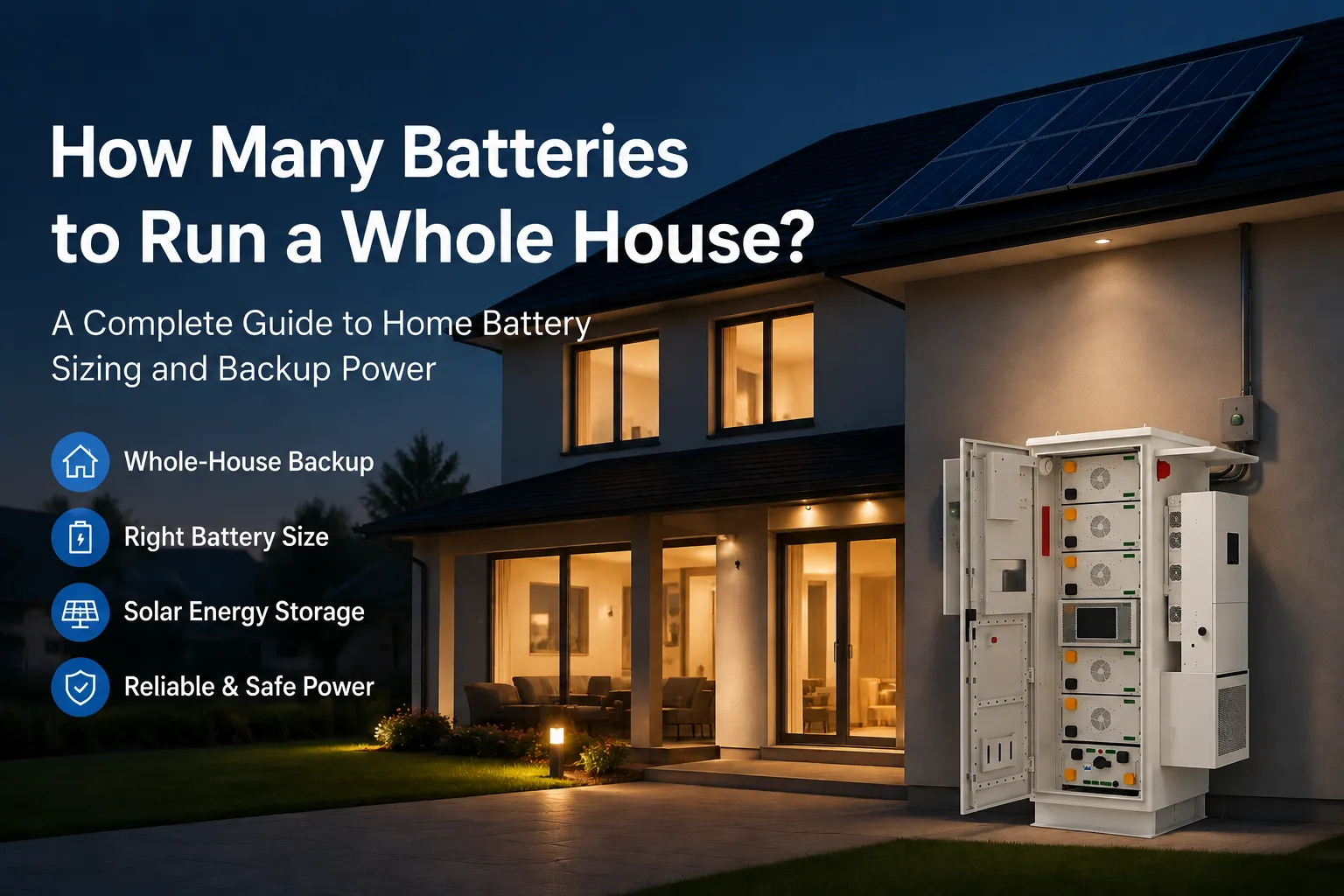
Once a battery is involved, the goal shifts. It’s not just about producing enough energy—it’s about when you use it. For a typical villa, solar covers daytime usage, extra energy charges the battery, and the battery covers the evening. If your daily usage is around 40 kWh, a battery in the 40–80 kWh range is common, depending on how much independence you want from the grid.
Friendly reminder
There isn’t a universal “correct” system size for a villa. But if you base your system on real consumption, use realistic solar assumptions, and leave a bit of room for future changes, you’ll avoid most of the problems I see in poorly sized systems. Everything else—equipment choice, layout, even brand—comes after that.
Expert Engineering FAQ: Sizing Reality for Villas
1. "Why did my installer suggest a 10kW system when my utility bill says I use 40kWh/day?"
Installers often use "annual averages," which is a dangerous trap. If your villa consumes 40kWh/day, a 10kW system only produces that much power under perfect conditions (usually 4–5 hours of peak sun). If you have shading, cloud cover, or heavy AC usage in the summer, your 10kW system will fall short. Most high-performance villa designs actually require 12–13kW of installed capacity to account for real-world inverter conversion losses and soiling.
2. "Can I just add more panels to my string later if my power usage increases?"
Not without serious risk. Every inverter has a strict 1000V DC ceiling. If you add panels to an existing string, you increase the Open Circuit Voltage (Voc). On a cold, sunny morning, the voltage can spike and exceed that 1000V limit, instantly blowing the inverter’s internal DC components. You aren't just adding hardware; you are changing the electrical physics of the entire loop.
3. "Is 'Oversizing' my PV system a waste of money?"
"Oversizing" (adding 10–20% buffer) is actually the best insurance policy for a villa. Between future EV charging, pool pumps, and the gradual degradation of panel efficiency (0.5% per year), a "perfectly sized" system today will be "undersized" in three years. However, don't go overboard—if you export 80% of your power at low rates, your ROI will plummet. The goal is to maximize **Self-Consumption**.
4. "How does the battery size relate to my daily 40kWh consumption?"
Think of the battery as a bridge for the night. If you use 40kWh a day, you don't necessarily need a 40kWh battery, because you use some energy while the sun is still out. For most villas, a battery bank between 40kWh and 80kWh is the sweet spot. It provides enough capacity to cover your evening peaks and emergency loads without buying so much capacity that it never gets fully charged in winter.
5. "Do I really need to worry about the temperature effect on panel output?"
Yes, and this is where most DIY plans fail. Solar panels are rated at 25°C. When a villa rooftop hits 50°C in the summer, the voltage drops, and so does your total output. A professional design uses a **Temperature Coefficient** calculation to derate the panels. If you ignore this, you’ll find that on the hottest days—when you need your AC the most—your system is actually performing at 85% of its rated capacity.
Not Sure What Size Solar System Your Villa Needs?
Stop guessing based on rough estimates or installer suggestions. Share your actual electricity usage, and Bonada’s engineers will help you size a solar PV system that truly fits your daily load, accounts for real-world losses, and leaves room for future expansion. Get a practical, site-specific recommendation—not just theoretical numbers.
Get Your Custom Solar Sizing PlankVA vs kW Explained: How to Properly Size Inverters and BESS Systems
How to Choose Between Off-Grid and Grid-Tied Energy Storage Systems
Related Article