
Solar Panels Series vs Parallel: Comparison of Voltage, Current & Uses
2025-05-28
When building a solar system, you need to distinguish between series and parallel. These two connection methods affect the performance of voltage and current in the system: series connection does not increase the current flowing through the output line, but increases the total output power; parallel connection does not change the voltage, but increases the total output power by increasing the current value. Therefore, how to choose the connection method of solar panels in the system to maximize energy output and make solar energy investment more cost-effective becomes the key difference between choosing series and parallel connection.

solar panel series connection voltage
- Series connection means that the solar panels are connected end to end, and the positive pole of one panel is connected to the negative pole of the next panel. This setting will increase the voltage, but the current is the same as that of a single panel.
- Voltage and current performance: The voltage of each panel is added together, and the current remains unchanged.
- For example: If each panel can generate 20 volts and 5 amps, three panels connected in series will output 60 volts and 5 amps. Series connection is suitable when higher voltage is required, such as a system using a string inverter. Moreover, because the increase in voltage can reduce the energy loss caused by large current, series connection is also very efficient when transmitting over long distances.

solar panel parallel connection current
- Parallel connection connects all the positive poles of the solar panels together, and all the negative poles together. This connection method keeps the voltage the same as a single panel, but the current increases as the number of panels increases.
- Voltage and current performance: The voltage is the same as a single panel, and the current is cumulative.
- For example: 20 volts and 5 amps per panel, three panels in parallel will get 20 volts and 15 amps. If the application scenario requires higher current, such as a system with a maximum power point tracking (MPPT) charge controller, or an energy storage system like a battery that requires high current and fast charging, parallel connection is very suitable.
Core differences between series and parallel connection
Advantages of series connection
- Higher voltage: Series connection is particularly suitable for systems that require high voltage, such as grid-connected installations. If the system needs voltage more than high current, then series connection is the best choice.
- Thinner cables: The current is relatively small when connected in series, so compared with parallel connection, thinner cables can be used for wiring, and the cost is also lower.
- Good for long distances: Voltage is more efficient when transmitted over long distances, so series connection is more suitable if the installation location has long cable laying distances.
Disadvantages of series connection
- Sensitive to shadows: The output of the entire array depends on the performance of each panel. If a panel is shaded or damaged, it will affect the output of the entire system. So in places where there are frequent shadows, parallel or mixed connections may be better.
- High voltage risk: Series connection will increase the system voltage, which can be dangerous if not handled properly. It is best to find a professional to install high-voltage systems.

Advantages of parallel connection
- Increased current: Parallel connection will add up the current of each panel, which is useful if the system needs high current but does not want to increase the voltage.
- Less affected by shadows: In a parallel setting, if a panel is shaded, it will only reduce the output of this panel, and other panels will not be affected. So parallel connections are more tolerant to shadows.
- Constant voltage: No matter how many panels are added, the voltage of the parallel connection remains unchanged. This is useful for low-voltage systems and can also ensure that the inverter is not overloaded.
- Easy to expand: Adding more boards in parallel does not risk exceeding the inverter voltage capacity, making system expansion easier.
Disadvantages of parallel connection
- Lower efficiency: Parallel systems may be less efficient in large installations because of high currents and greater power losses over long distances.
- Sensitive to heat: Parallel connections are more susceptible to heat. As the current increases, the system becomes more sensitive to performance degradation caused by temperature changes.
- Thicker cables: Parallel wiring requires thicker cables to withstand high currents, which increases system costs and also increases energy losses over long distances.
Series or parallel: key decision factors affecting selection
System voltage requirements
-
Inverters/batteries have a clear voltage range:
-
If the voltage of a single board is insufficient → Series connection.
-
If low voltage is required (such as 12V/24V system) → Parallel or mixed connection.
Shadow shading problem
- Frequent shading (such as urban balconies, trees) → Prioritize parallel connection or use optimizer.
- No shading (open roof) → Series connection is more efficient.
Line loss and cost
- Long-distance transmission (such as large power stations) → series connection (high voltage reduces losses).
- Short-distance small system → Parallel connection is more flexible.
Scalability
-
Series expansion needs to match the voltage upper limit; parallel expansion is more free.
Hybrid solution: series + parallel connection
-
Series and parallel connection (such as 3 series and 2 parallel): balance voltage and current, take into account anti-shading ability and system efficiency, suitable for medium-sized power stations.

Safety and installation suggestions
When choosing a solar panel connection method, safety is the most important thing. Whether it is series, parallel or hybrid configuration, correct installation and electrical design are critical to ensure long-term stability and safe operation.
- Voltage management of series connection: Series connection will increase the output voltage, which requires components such as inverters, circuit breakers and cables to withstand high voltages to prevent safety hazards caused by overvoltage.
- Current management of parallel connection: Parallel connection will increase the current load, so the cable must meet the current carrying specifications and have overload protection devices to prevent overheating or fire hazards.
- Protection for hybrid series-parallel connections: Hybrid configurations are more complex and require balancing voltage and current characteristics. Installing overvoltage and overcurrent protection devices and a battery management system (BMS) can prevent faults from spreading and ensure system stability.
- Environmental and temperature effects: Environmental factors such as high temperature and high humidity can affect component performance. Using materials with good heat dissipation and waterproof design can ensure that the system operates safely under severe weather conditions.
Final Advice for B2B Buyers
In general, whether to connect solar panels in series or in parallel requires attention to several factors, including the specific needs of the system, the installation location, and the performance goals. Series connection can increase voltage and is suitable for systems with long wiring distances or limited space; parallel connection can increase current and is more suitable for scenarios where stable power output is prioritized. In fact, the correct configuration has a great impact on solar efficiency and overall system performance. To achieve the best results, you need to consult a professional to determine the most appropriate wiring settings based on your needs to ensure optimal energy output.
Do Solar Panels Work At Night
How Long Do Lithium Batteries Last? Charge Cycles Explained + Key Factors Affecting Lifespan
Related Article
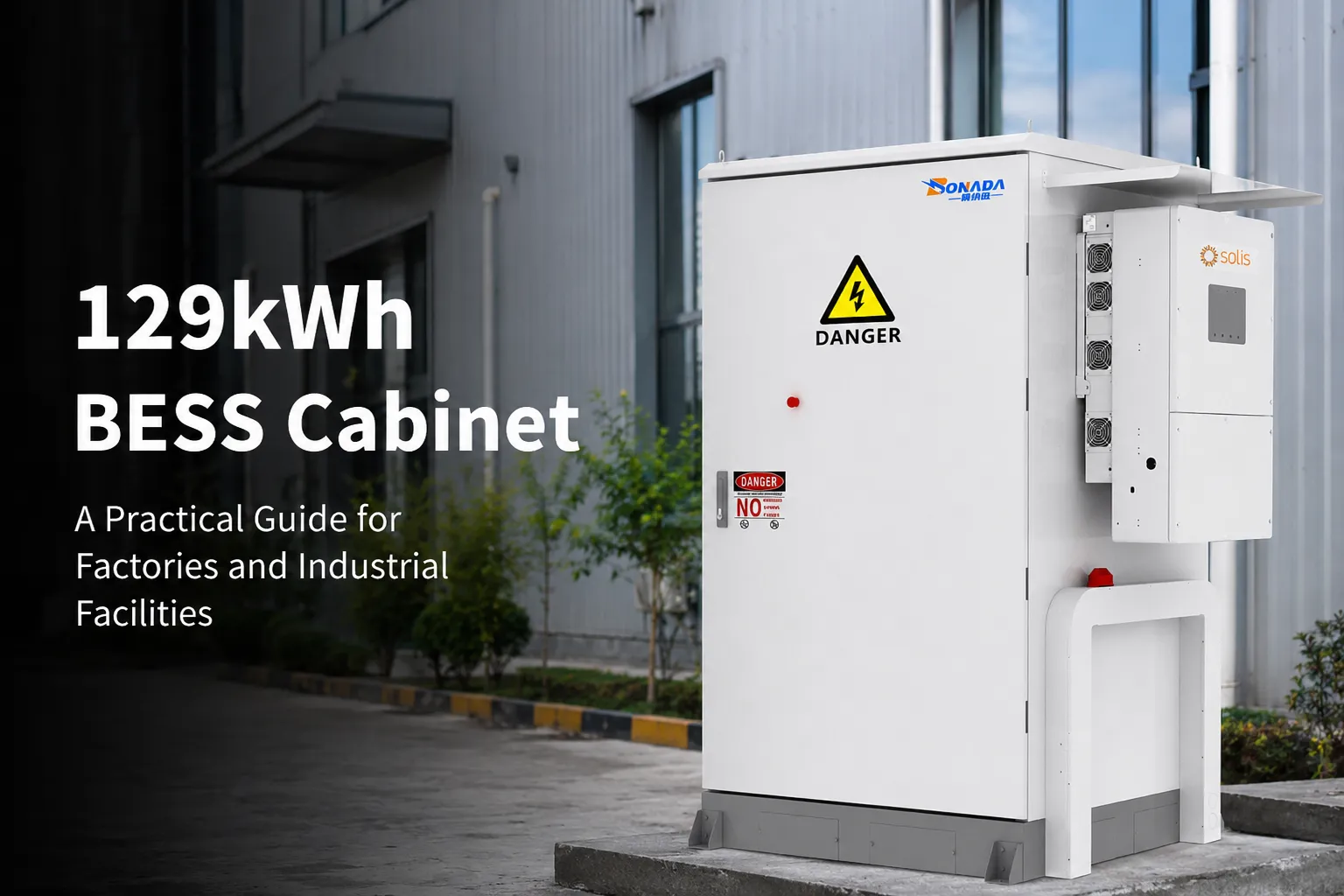
Electricity is one of the largest operating expenses for many factories. The problem is not always the total amount of electricity a facility consumes. In many markets, a factory can face significantly higher charges simply because its power demand reaches a high level for a short period.
129kWh BESS Cabinet: Complete Guide to Capacity, Components, Applications and Sizing
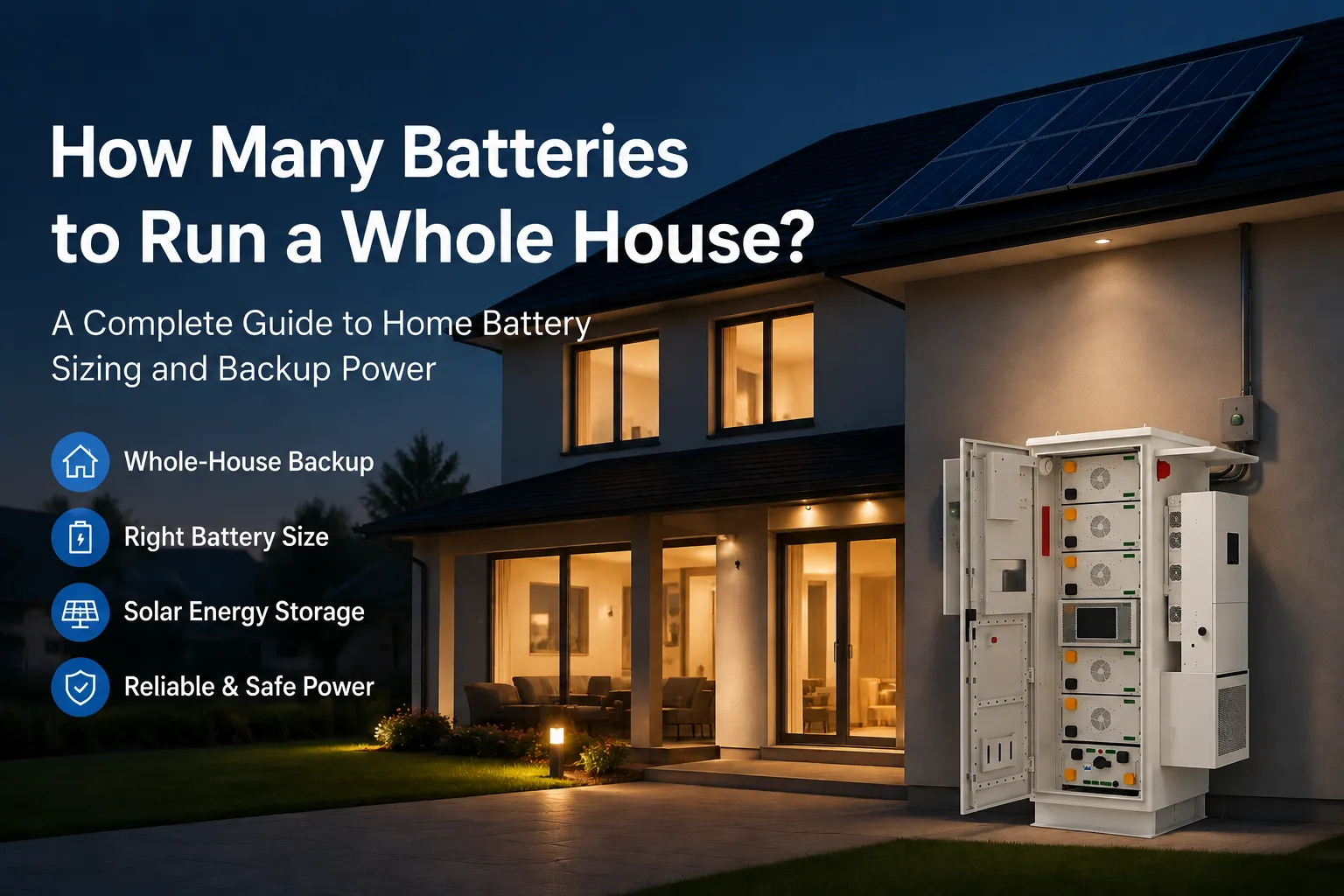
One of the first questions homeowners ask when considering solar storage or backup power is: How many batteries to run a whole house? It sounds like a simple question, but the answer is different for every home. A battery system that works well for a small house with basic backup needs may not be enough for a larger property running air conditioning, electric heating, or an EV charger.
How Many Batteries to Run a Whole House? A Practical Home Battery Sizing Guide
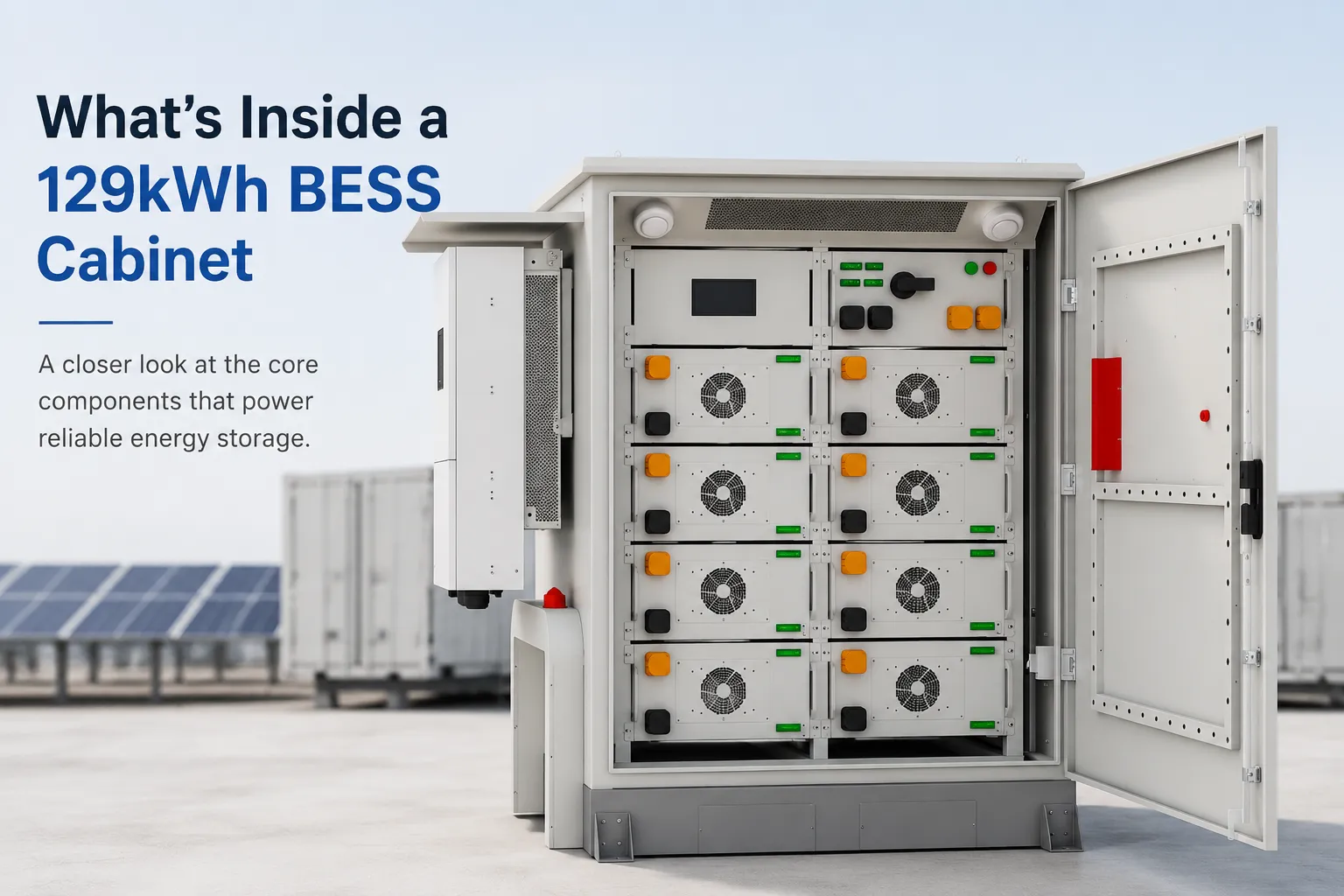
A typical 129kWh BESS cabinet contains much more than battery cells. Inside the enclosure, multiple systems work together, including battery modules, Battery Management System (BMS), high-voltage protection units, Energy Management System (EMS), cooling equipment, fire protection devices, and communication components. Each part has a specific role in maintaining safe and stable energy storage operation.
What's Inside a 129kWh BESS Cabinet? A Complete Breakdown of Internal Components
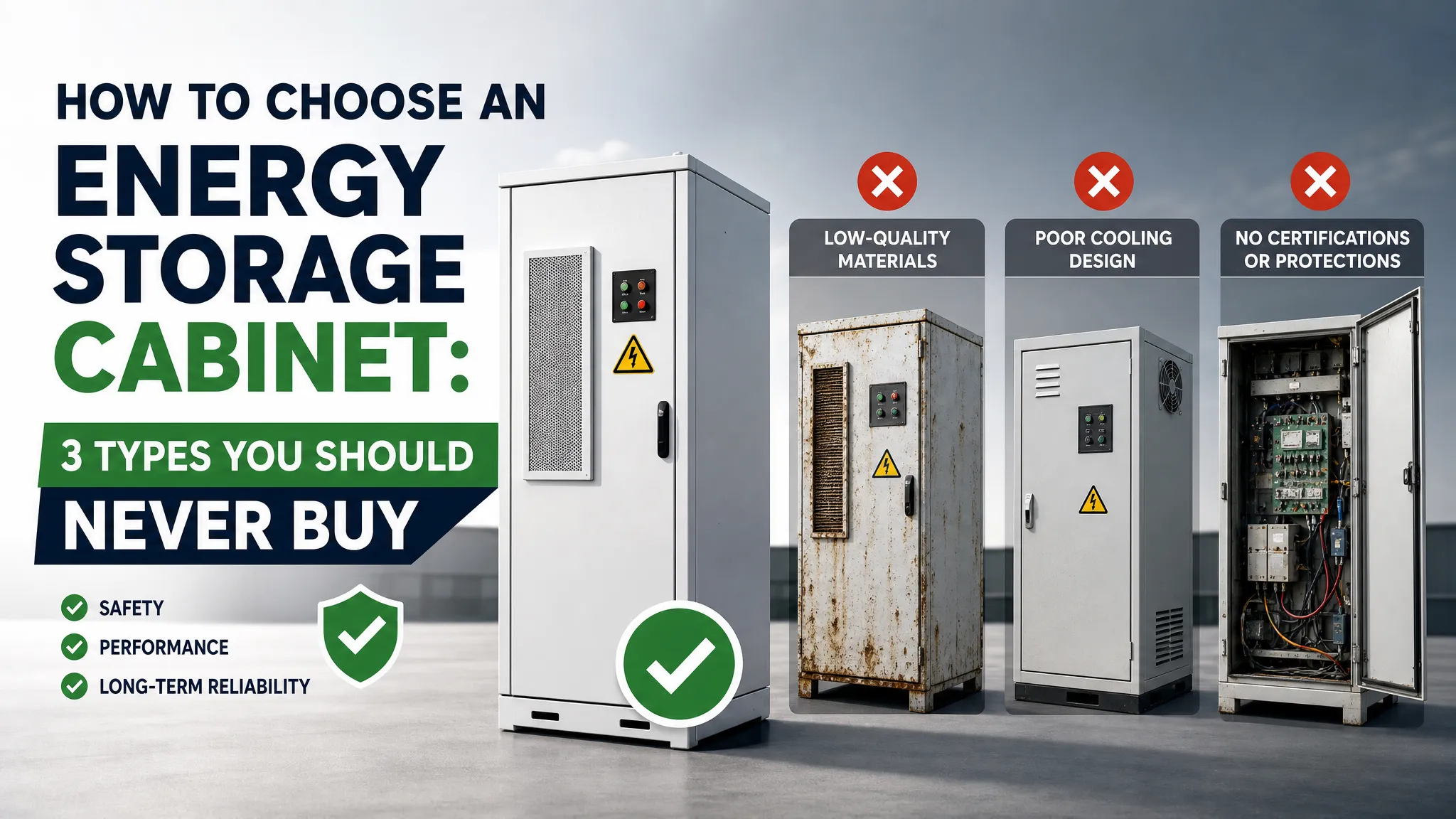
When sourcing a Battery Energy Storage System (BESS), most buyers obsess over cell capacity, inverter brands, and price per kilowatt-hour. The enclosure? It’s usually an afterthought—treated as a simple metal box. That is a massive financial and operational mistake.
How to Choose an Energy Storage Cabinet: 3 Types You Should Never Buy