
Home Energy Storage Systems: backup system installation cost & cheap best solutions
2025-09-05
Home energy storage systems typically operate in two modes: solar-first mode and AC-first mode. When discussing home energy storage system costs, we primarily focus on four cost areas: battery cell cost, energy storage inverter cost, module system cost, and installation cost.

- Battery Cell Cost: As the core of the energy storage system, the battery cell accounts for as much as 45-50% of the cost.
- Energy Storage Inverter Cost: The inverter is responsible for charge and discharge control and AC/DC conversion, accounting for approximately 10-15% of the cost.
- Module System Cost: The module system, also known as the photovoltaic system, is used for solar power generation and accounts for approximately 20-25% of the cost.
- Installation Cost: In recent years, installation costs have risen from 10,000 yuan in 2021 to approximately 20,000 yuan, accounting for 15-20% of the total cost.
- Cell cost is particularly noteworthy. Among energy storage battery technologies, lithium-ion batteries, lead-acid batteries, and flow batteries each have their own unique characteristics.
However, lithium iron phosphate (LiFePO4) batteries, due to their high safety and long cycle life, have gradually become the mainstream development path for energy storage batteries. Even Tesla's energy storage batteries are shifting from ternary to lithium iron phosphate (LiFePO4).
Cost Breakdown and Payback Period Calculation
| Component | Capacity | Factory Price | Installer's Selling Price |
|---|---|---|---|
| hybrid inverter | 5kw | ¥0.6 - 0.8 ten thousand | ¥0.9 - 1.5 ten thousand |
| battery pack | 10kwh | ¥1.8 - 2 ten thousand | ¥3.8 - 4.8 ten thousand |
| component system | 5kw | ¥1.3 - 1.4 ten thousand | ¥1.9 - 2.4 ten thousand |
| Comprehensive Price | ¥6.6 - 8.7 ten thousand yuan ≈ 10,000 - 13,000 euros | ||
| Electricity Price | 1,500 euros/year | ||
| Payback Period | About 6 - 9 years | ||
Bonada Home ESS Cheap Best Solution
Bonada Home ESS's residential solar-energy storage system solution enables real-time monitoring of photovoltaics, energy storage, and loads in a home, energy metering, energy consumption analysis, diagnostic alerts, comprehensive analysis, orderly management, and policy control, ensuring efficient, reliable, safe, and orderly household electricity use.
The household energy controller reads the operating data and status of household meters, solar-energy storage inverters, smart home devices, and other devices via RS485, Ethernet, and WiFi, supporting communication protocols such as Modbus RTU, Modbus TCP, and MQTT. The controller analyzes power generation and consumption data and usage time periods to optimize household energy regulation and achieve optimal economic operation. The system data is then transmitted to a cloud platform via WiFi, 4G, and Ethernet.
This enables monitoring and management of energy consumption for multiple households. At the same time, the household energy controller can store data locally when a network failure occurs, and continue uploading data from the interrupted location when the network is restored, ensuring that data on the server side is not lost.

Purchasing Tips and Trick Avoidance Guide
- Beware of inflated capacity claims: Focus on "usable capacity" rather than simply the nominal capacity. Some systems hide some reserved capacity.
- Pay attention to cycle life: Ask for the battery's cycle life guarantee under actual operating temperature conditions (e.g., -20°C), rather than just data under ideal laboratory conditions.
- Emphasis on BMS quality: A high-quality battery management system (BMS), especially one with active balancing, is crucial for extending the overall life of the battery pack.
- Confirm the complete cost: When requesting a quote, ask whether the price includes installation, auxiliary materials, and ongoing maintenance to avoid low-price traps.
- Consider brand and after-sales service: Choose a brand with strong technical capabilities, a good reputation, a long-term warranty (e.g., 10 years), and reliable after-sales service.
Key Factors Affecting Cost
- Technology: Currently, lithium iron phosphate batteries are the mainstream choice due to their safety and long cycle life (typically 4,000-6,000 cycles). New technologies such as sodium-ion batteries may lead to lower costs in the future. Brand and Configuration: All-in-one solar systems (integrated inverter and battery) are generally easier to install, but may require a slightly higher initial investment. Split solar systems (separate battery and inverter) offer more flexible configuration options. Internationally renowned brands (such as Tesla) typically command a higher brand premium than domestic products.
- Market and Region: Domestic and International Price Differences: The same product sold overseas (approximately 2.0-3.5 yuan/Wh) may be significantly higher than the domestic price (approximately 1.0-1.5 yuan/Wh), primarily due to distribution channels, logistics, tariffs, and local service costs. Distributor Markups: From manufacturer to end-user, through distributors and installers, each step can add a 30%-50% markup.
- Business Models: In addition to direct purchase, some regions have also introduced leasing or energy management contract models that can lower the initial investment threshold.
Benefit and Economic Analysis
Whether investing in household energy storage is cost-effective requires careful consideration based on local conditions:
- Overseas Markets: Especially in Europe (such as Germany and Italy), where electricity prices are high, residential electricity prices can reach as high as €0.40/kWh (approximately RMB 3/kWh or more). By saving money through self-generation and self-consumption, the payback period is typically 6-9 years, with an internal rate of return (IRR) exceeding 15%.
- Chinese Market: Currently, residential electricity prices are relatively low (approximately RMB 0.56-0.62/kWh). Relying solely on arbitrage between peak and valley prices is relatively uneconomical. Profitability depends largely on the local peak-valley price differential (generally considered to be above RMB 0.70/kWh for good economics) and the availability of local subsidy policies. Therefore, domestic manufacturers' household storage products are currently primarily targeted at overseas markets.
Photovoltaic Energy Storage System Maintenance Guide: Panels, Batteries & Equipment
Solar energy systems | Principle, Application, Installation, & Supporting facilities
Related Article
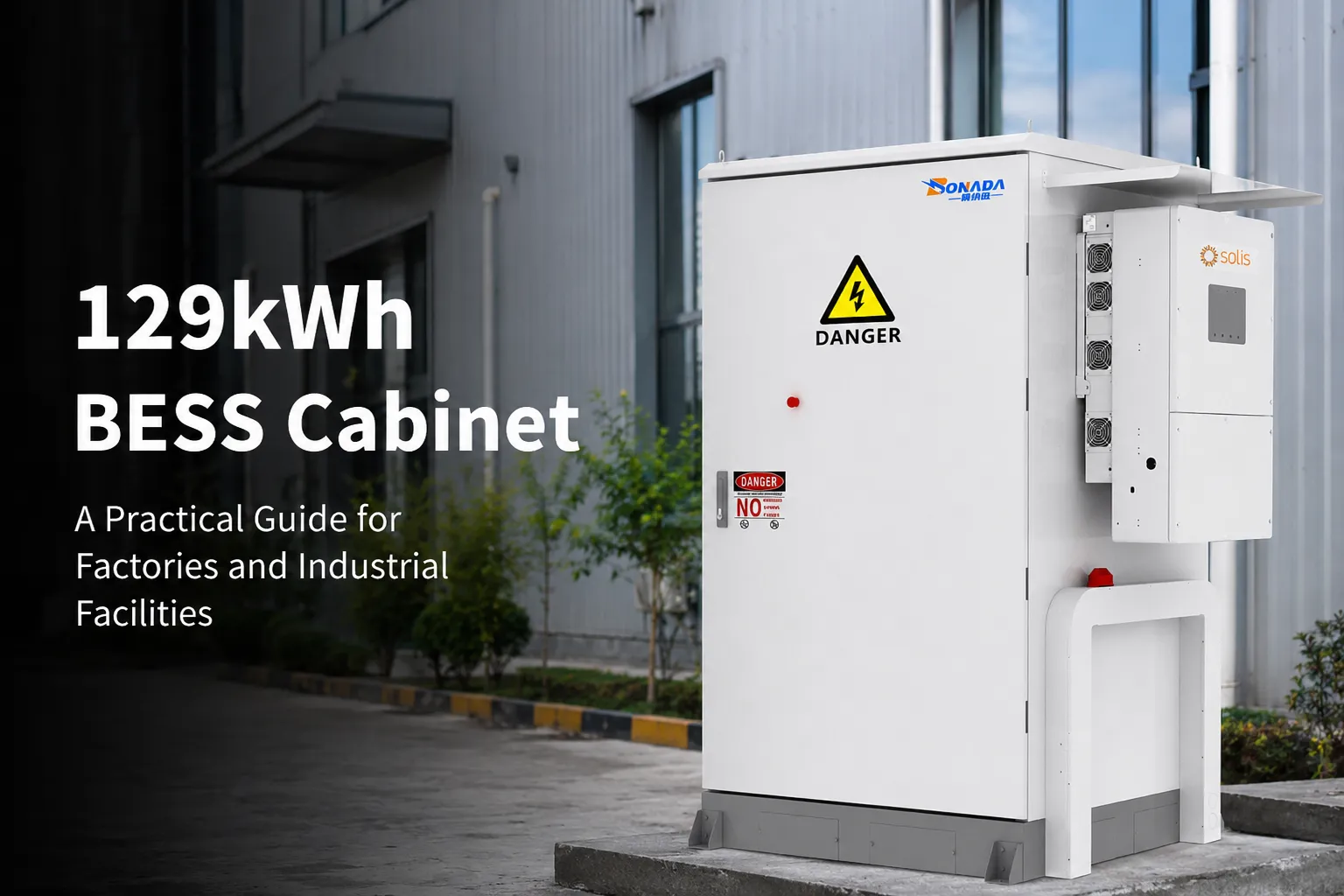
Electricity is one of the largest operating expenses for many factories. The problem is not always the total amount of electricity a facility consumes. In many markets, a factory can face significantly higher charges simply because its power demand reaches a high level for a short period.
129kWh BESS Cabinet: Complete Guide to Capacity, Components, Applications and Sizing
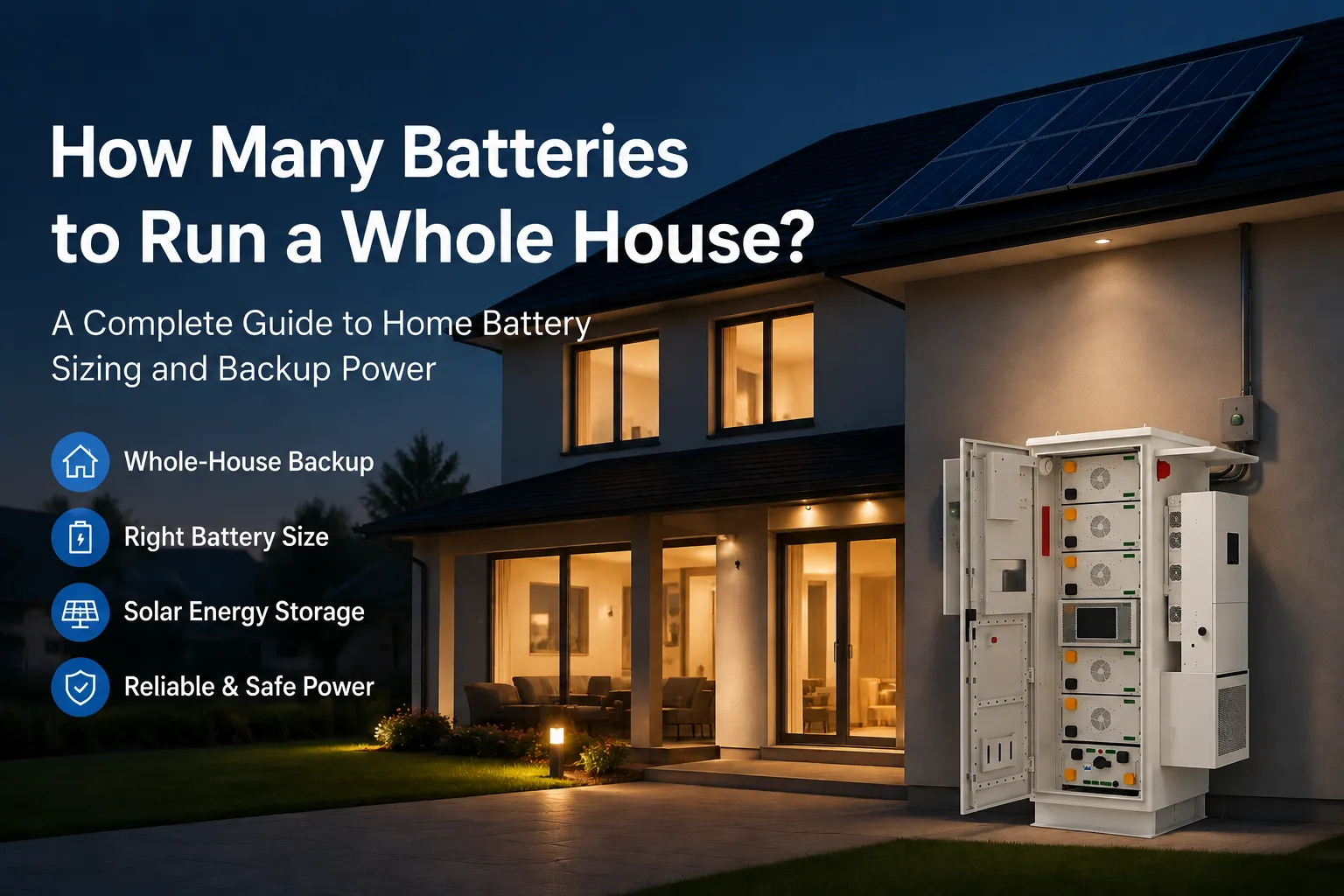
One of the first questions homeowners ask when considering solar storage or backup power is: How many batteries to run a whole house? It sounds like a simple question, but the answer is different for every home. A battery system that works well for a small house with basic backup needs may not be enough for a larger property running air conditioning, electric heating, or an EV charger.
How Many Batteries to Run a Whole House? A Practical Home Battery Sizing Guide
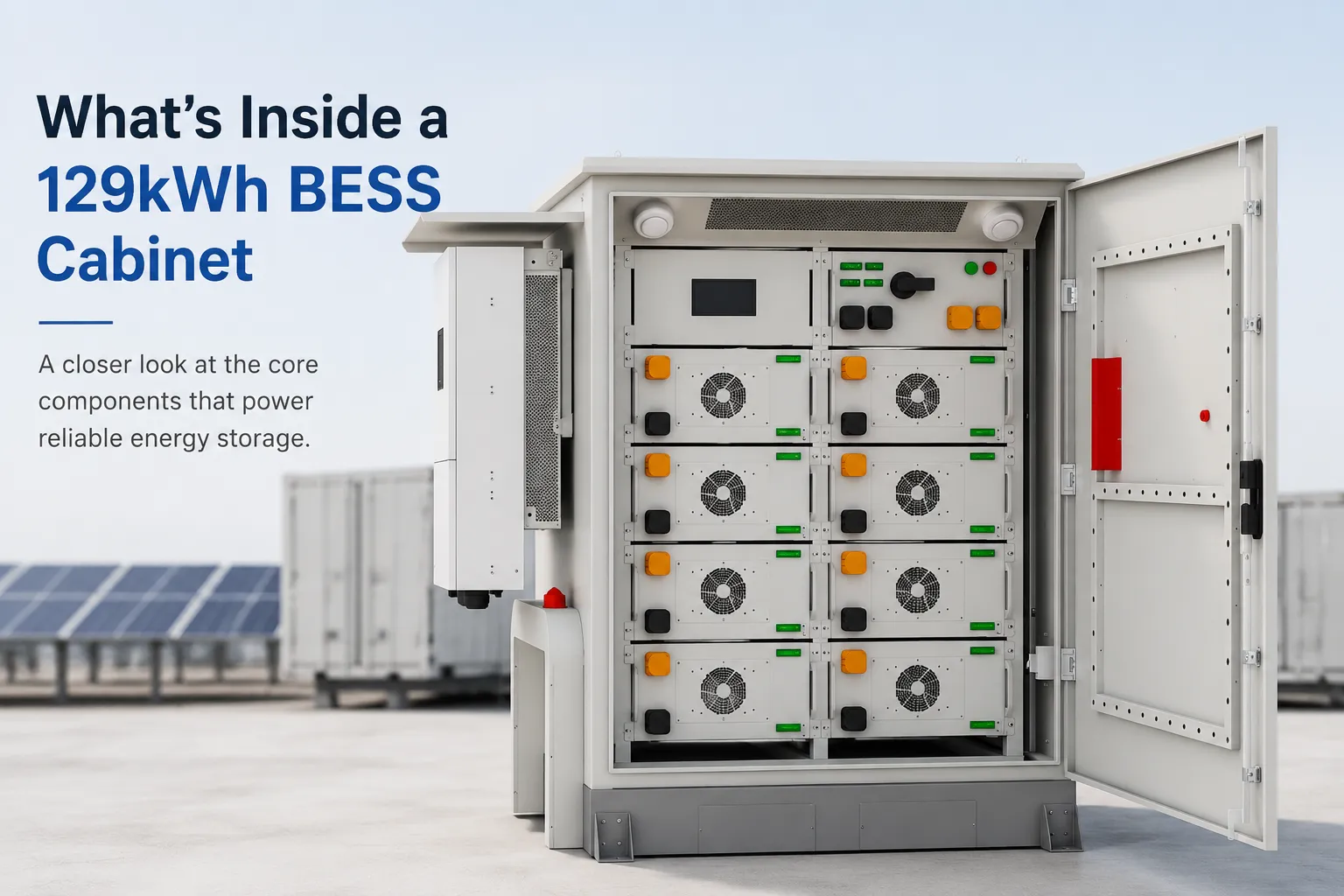
A typical 129kWh BESS cabinet contains much more than battery cells. Inside the enclosure, multiple systems work together, including battery modules, Battery Management System (BMS), high-voltage protection units, Energy Management System (EMS), cooling equipment, fire protection devices, and communication components. Each part has a specific role in maintaining safe and stable energy storage operation.
What's Inside a 129kWh BESS Cabinet? A Complete Breakdown of Internal Components
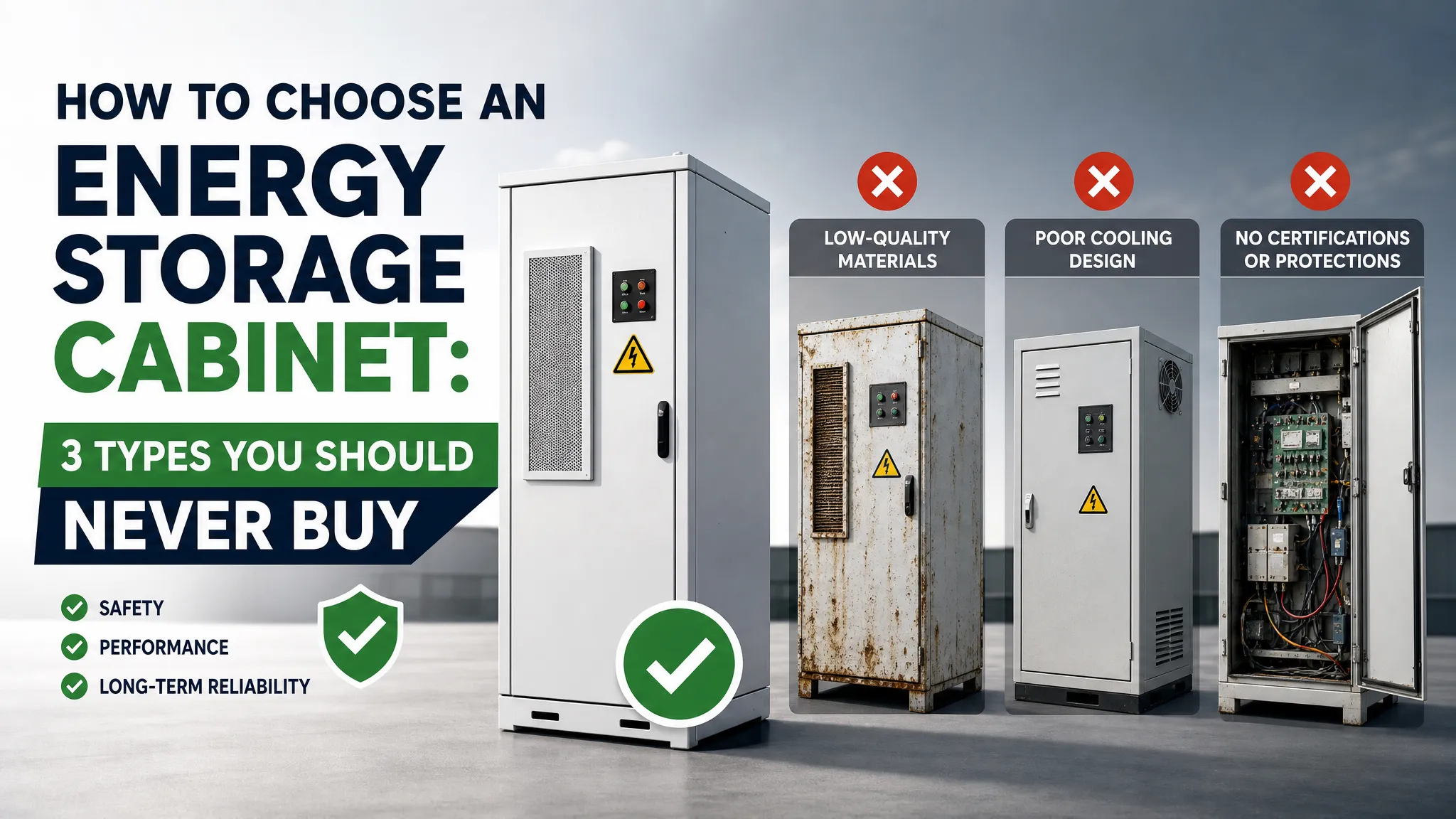
When sourcing a Battery Energy Storage System (BESS), most buyers obsess over cell capacity, inverter brands, and price per kilowatt-hour. The enclosure? It’s usually an afterthought—treated as a simple metal box. That is a massive financial and operational mistake.
How to Choose an Energy Storage Cabinet: 3 Types You Should Never Buy