
Industrial and Commercial Energy Storage Systems: A Complete Guide to Common Problems
2025-08-06
The industrial and commercial energy storage market is booming, and while the market size is rapidly expanding, ensuring the rationality, economy, and safety of energy storage project construction requires an understanding of energy storage systems and the design and construction process. Bonada summarizes common issues encountered in the design and construction of industrial and commercial energy storage systems for your reference.

Q1: What are the applications of industrial and commercial energy storage systems?
- Peak-valley arbitrage: Utilizing the price difference between peak and valley electricity, charging during valley and flat periods and discharging during peak and peak periods reduces corporate electricity costs.
- Demand-balanced electricity charges: Energy storage systems can smooth out peak loads, eliminate peak loads, smooth the electricity consumption curve, and reduce demand charges.
- Dynamic capacity expansion: Users' transformers have fixed capacity. Generally, if a user requires a transformer to operate at an excessive capacity during a certain period, the transformer needs to be expanded. However, installing a matching energy storage system allows for energy storage to discharge during these periods, reducing the transformer load and thus reducing the cost of transformer capacity expansion.
- Demand-side response: After installing an energy storage system, if the grid issues a demand response, customers avoid power rationing and the high electricity costs during that period. Instead, they may participate in demand response transactions through the energy storage system and receive additional compensation.
Q2: What are the investment models for industrial and commercial energy storage systems?
- Currently, there are two main operating models for industrial and commercial energy storage: Energy Management Contract (EMPC) and Owner-Invested.
- In the EMPC model, energy investors invest in and construct energy storage, sign energy service contracts with electricity users, and share the storage revenue. Typically, the energy investor and electricity user share the revenue in a ratio of 90%:10% or 85%:15%.
- In the Owner-Invested model, electricity users invest in and purchase energy storage, and receive all the revenue from their own investment.
Q3: What are the requirements for companies to install industrial and commercial energy storage power stations?
- Currently, the primary source of revenue for industrial and commercial energy storage is the difference between peak and off-peak electricity prices. Therefore, energy storage systems are only suitable for areas with large price differences between industrial and commercial electricity prices. The specific configuration requirements are as follows.
- Enterprise electricity consumption follows local time-of-use electricity pricing policies, meeting the dual charging and discharging requirements of energy storage, and with a significant average peak-to-valley price difference. A recommended price of 0.7 yuan/kWh or above is generally recommended.
- If the enterprise's electricity load period covers peak (and peak, if applicable) hours, installation is unsuitable if electricity is consumed entirely at night.
- During both valley and flat periods, after subtracting the enterprise's existing load, the transformer still has sufficient remaining capacity to charge the energy storage system.
- If the enterprise experiences few days of shutdown for maintenance and off-season, the annual utilization period of the energy storage system should be greater than 270 days. If the energy storage utilization period is low, the return rate will be low.
Q4: What information do I need about the electricity user before installing an energy storage power station?
- Basic information: electricity consumption type, basic electricity price, time-of-use period/time-of-use electricity price, and the enterprise's production suspension and shutdown status.
- Based on the electricity consumption type, time-of-use period, and electricity price, a preliminary determination of the energy storage time-of-use charging and discharging strategy will be made. Whether capacity-based or demand-based billing is required. The enterprise's production situation and the annual utilization period of the energy storage should also be understood.
- Load data: Power load data for the past year, average/maximum load power, and transformer capacity.
- Calculate energy storage capacity based on load data and transformer capacity. Detailed load curve data corresponding to each connected transformer is calculated for designing the system's charge and discharge time control logic and system economics.
- A primary power system diagram, plant layout, distribution room layout, cable trench routing, and reserved space are used to determine the energy storage system installation location, the connection transformer location, and design the connection plan.
Q5: How can I calculate energy storage capacity based on the company's power load information?
- The energy storage charging power plus the maximum load during the period must be less than 80% of the transformer capacity to prevent transformer overload during charging.
- The load during peak daytime electricity price periods must be greater than the peak energy storage discharge power.
- Providing only monthly/annual power consumption does not reflect the company's 24-hour power load, and therefore cannot be used to calculate energy storage capacity.
Q6: Can energy storage capacity be determined based on the company's total power load data and transformer capacity?
- Generally speaking, if a power user in a low-voltage grid-connected energy storage project has only one transformer, the provided power load data will be consistent with the transformer load data. In this case, the total load data and transformer capacity can be used to preliminarily determine the actual installed capacity.
- If a power user has multiple transformers operating simultaneously, the provided power load data represents the total load of the transformers and does not reflect the actual load of each transformer. Therefore, the load data for each transformer is required to determine the actual installed capacity.
Q7: Can photovoltaic-storage hybrid projects maximize the utilization of photovoltaic energy and improve energy efficiency?
- Currently, industrial and commercial photovoltaic-storage projects can be implemented through AC coupling of energy storage and photovoltaics. By monitoring and controlling the integrated energy storage cabinet and photovoltaic inverter and setting a "load priority" mode within the energy management system, energy utilization can be prioritized, increasing the utilization ratio of photovoltaic energy.
Q8: What are the site requirements for installing an energy storage power station?
- The site should be located outdoors, away from offices and crowded areas, and within 20 meters of hazardous chemical warehouses.
- A location close to the access point's power distribution room (recommended within 100 meters) and convenient for cable routing. Consider a hardened, load-bearing, and easily transportable site. The actual project should include safety and isolation passages according to local fire department requirements.
- For example, a single integrated energy storage cabinet occupies ≤1.7㎡, and a 1MWh energy storage system occupies approximately 8.5㎡. Considering fire escape routes and maintenance distances, the total footprint is approximately 27㎡.
Q9: What procedures are required to install an energy storage power station?
- Installing an energy storage power station requires project registration on the local Development and Reform Bureau's website and obtaining power connection approval from the power company. Furthermore, depending on local requirements, other review procedures may be involved, such as fire protection design review, environmental impact assessment report, and case evaluation report. Therefore, it is important to understand local requirements for industrial and commercial energy storage acceptance and approval, and prepare a preliminary project budget. All of these procedures are handled by the integrated operator, and the client only needs to provide the necessary documentation.
Q10: What is the construction process for an energy storage power station?
- How long does the construction period take? The construction process for commercial and industrial energy storage power stations includes preliminary fund collection and survey, scheme design, project filing, drawing design, connection approval, construction, equipment commissioning, and final acceptance. The overall construction period is determined by the time required for different project processes, and is approximately 1-1.5 months.
- Grid connection requires a short power outage. Depending on the project construction plan, to minimize the impact on the electricity user's production, the minimum outage construction time is generally about 2 hours.
Q11: Does the energy storage power station affect the company's basic electricity bill?
- The basic electricity bill for electricity users is mainly based on capacity or demand. For capacity-based billing, the basic electricity bill is fixed, and adding an energy storage system will not affect the basic electricity bill as long as the company's total transformer capacity is not exceeded.
- For demand-based billing, the basic electricity bill may be reduced due to the energy storage discharging taking on the load, reducing the maximum demand and thus the basic electricity bill. During periods of increased energy storage charging, energy storage capacity design typically aims to keep total demand within the maximum demand. If demand increases, the energy management system can be used to control overall storage output, or the excess can be deducted from revenue as a loss cost.
Industrial and commercial energy storage is one of the primary user-side application scenarios. Industrial and commercial energy storage projects vary widely in demand, have complex application environments, and offer diverse revenue paths. Furthermore, since installation, commissioning, and operation of industrial and commercial projects require on-site operations within enterprise parks, they require a high level of specialized expertise. Therefore, design considerations tailored to the specific project context are crucial during construction.
Home Solar Energy Storage: what are two drawbacks of solar energy
Solar Stackable Battery : Electronic Products for B2B Procurement
Related Article
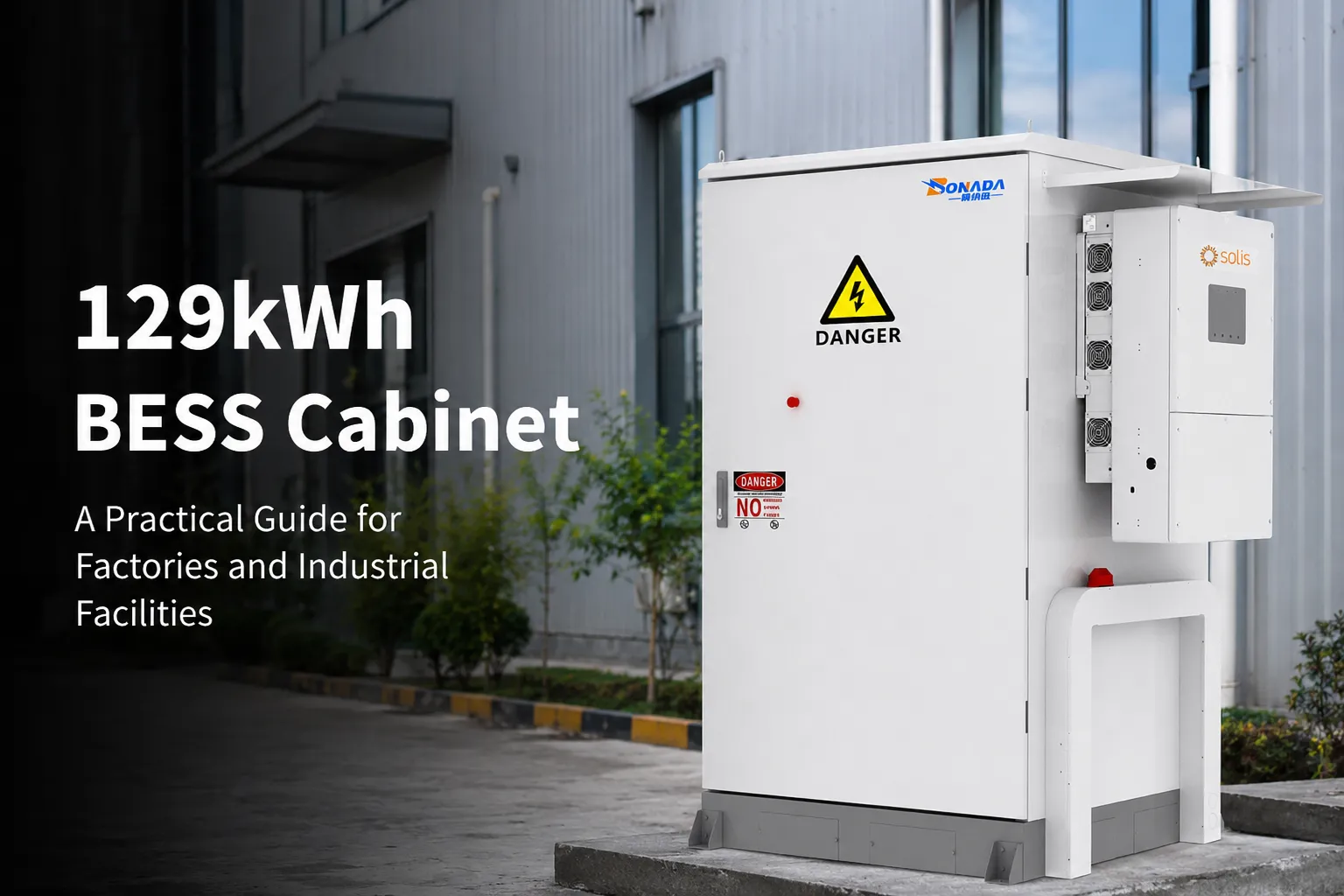
Electricity is one of the largest operating expenses for many factories. The problem is not always the total amount of electricity a facility consumes. In many markets, a factory can face significantly higher charges simply because its power demand reaches a high level for a short period.
129kWh BESS Cabinet: Complete Guide to Capacity, Components, Applications and Sizing
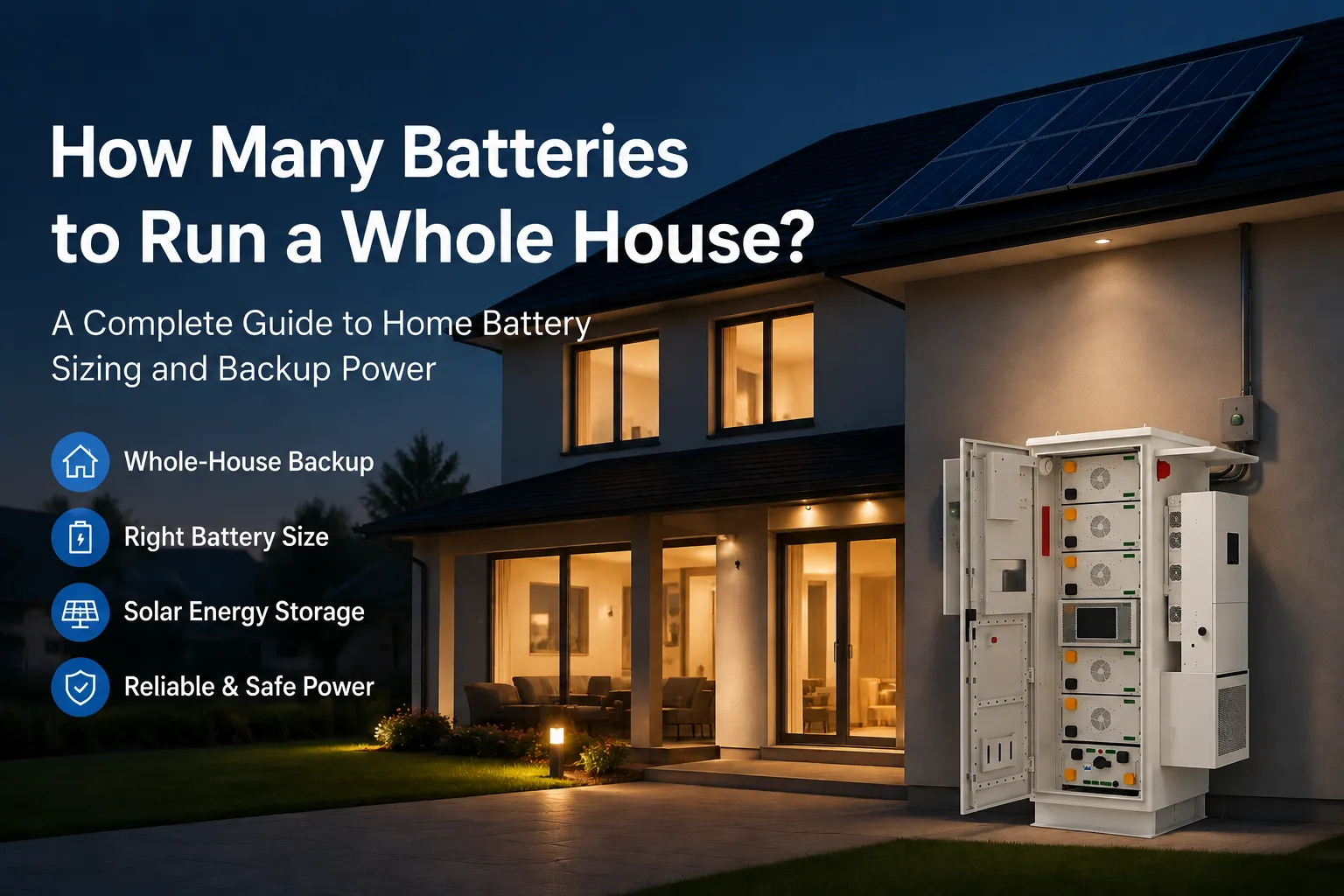
One of the first questions homeowners ask when considering solar storage or backup power is: How many batteries to run a whole house? It sounds like a simple question, but the answer is different for every home. A battery system that works well for a small house with basic backup needs may not be enough for a larger property running air conditioning, electric heating, or an EV charger.
How Many Batteries to Run a Whole House? A Practical Home Battery Sizing Guide
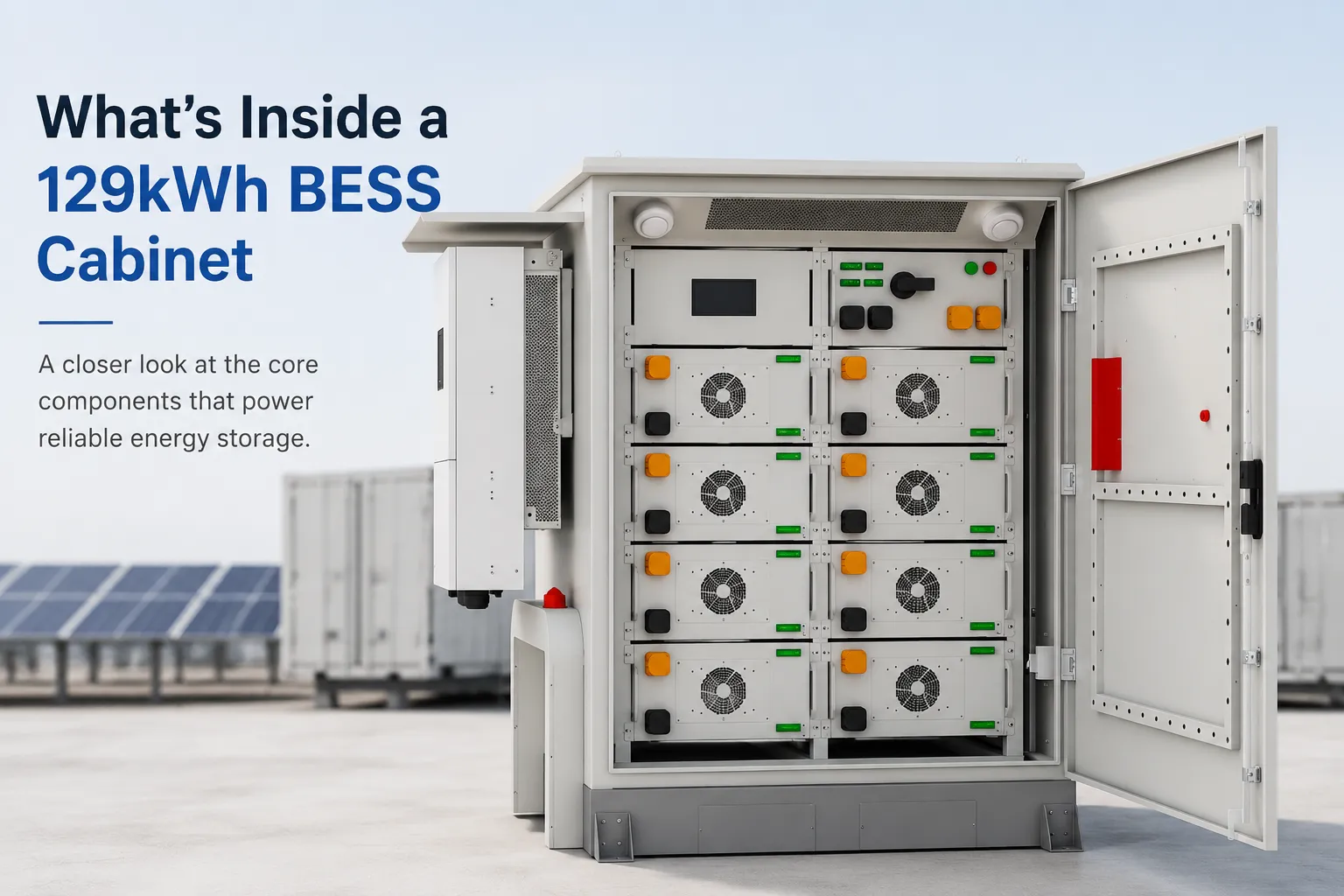
A typical 129kWh BESS cabinet contains much more than battery cells. Inside the enclosure, multiple systems work together, including battery modules, Battery Management System (BMS), high-voltage protection units, Energy Management System (EMS), cooling equipment, fire protection devices, and communication components. Each part has a specific role in maintaining safe and stable energy storage operation.
What's Inside a 129kWh BESS Cabinet? A Complete Breakdown of Internal Components
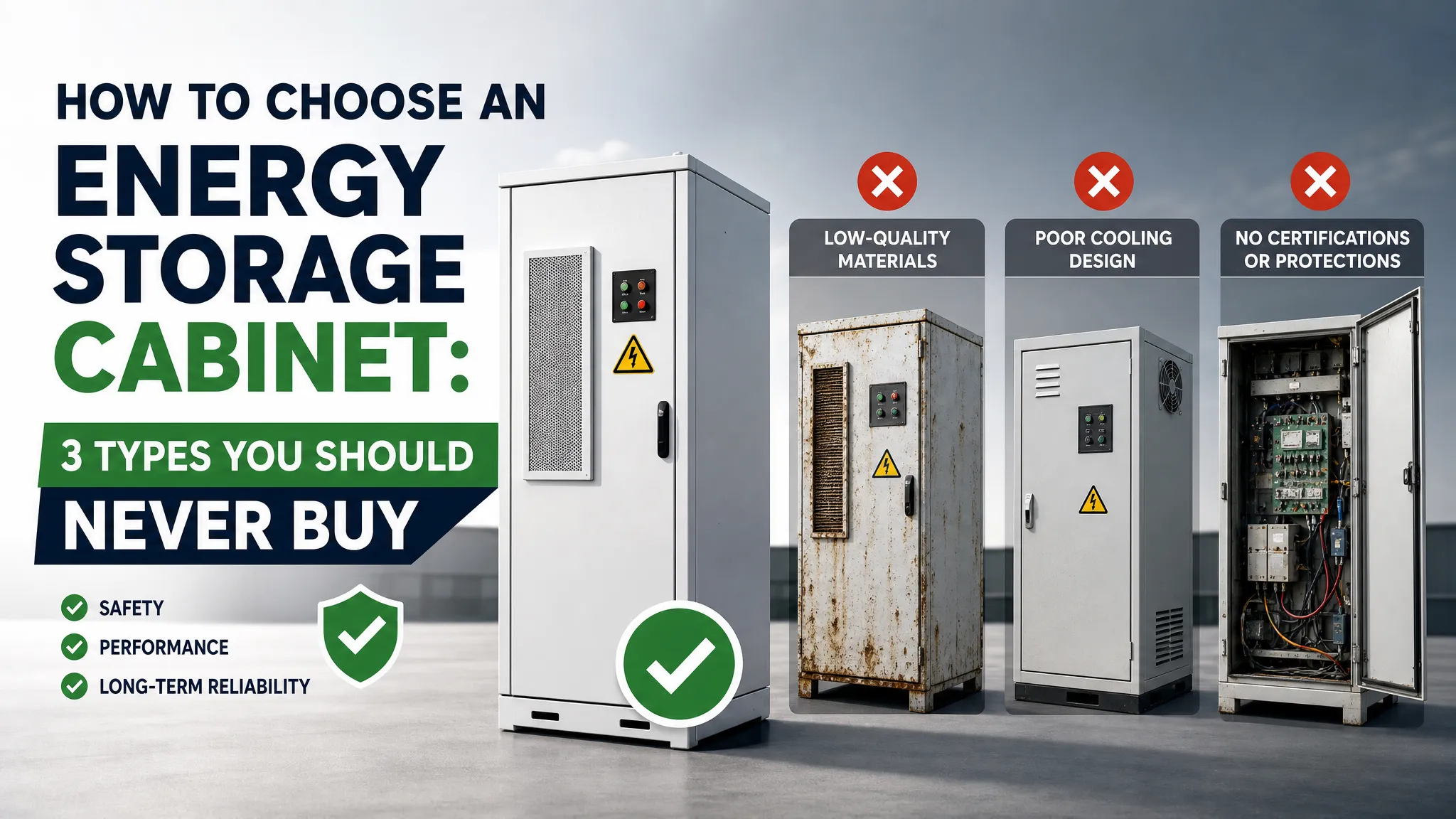
When sourcing a Battery Energy Storage System (BESS), most buyers obsess over cell capacity, inverter brands, and price per kilowatt-hour. The enclosure? It’s usually an afterthought—treated as a simple metal box. That is a massive financial and operational mistake.
How to Choose an Energy Storage Cabinet: 3 Types You Should Never Buy