Industrial BESS Guide 2026: How to Choose the Right Energy Storage Cabinet (Without Overpaying)
If you're planning tobuy an energy storage cabinet , the biggest mistake is choosing capacity blindly. you must first define your discharge duration and peak load requirements. In 2026, the industry standard focuses on balancing capacity with thermal safety. Start by calculating your daily energy throughput to ensure the cabinet's usable energy matches your goals for peak shaving or emergency backup. It is essential to choose Lithium Iron Phosphate (LiFePO4) chemistry for its superior cycle life and stability compared to NCM alternatives. Additionally, verify that the system's Power Conversion System (PCS) is compatible with your local grid codes and existing solar infrastructure. A successful purchase requires looking beyond the initial price tag to evaluate the total cost of ownership, including degradation rates and maintenance. By prioritizing high-quality components and robust software integration, you can ensure a reliable energy supply while maximizing the return on your investment.
How to Choose an Industrial Energy Storage Cabinet | BESS Guide 2026
Buying Smart Beats Buying Expensive
Price is a poor proxy for quality in the BESS market. Buying smart means matching the "C-rate" to your specific power needs. If your facility has high-surge equipment, a cabinet designed for low-current discharge will degrade rapidly or fail to start your machinery, regardless of its cost.
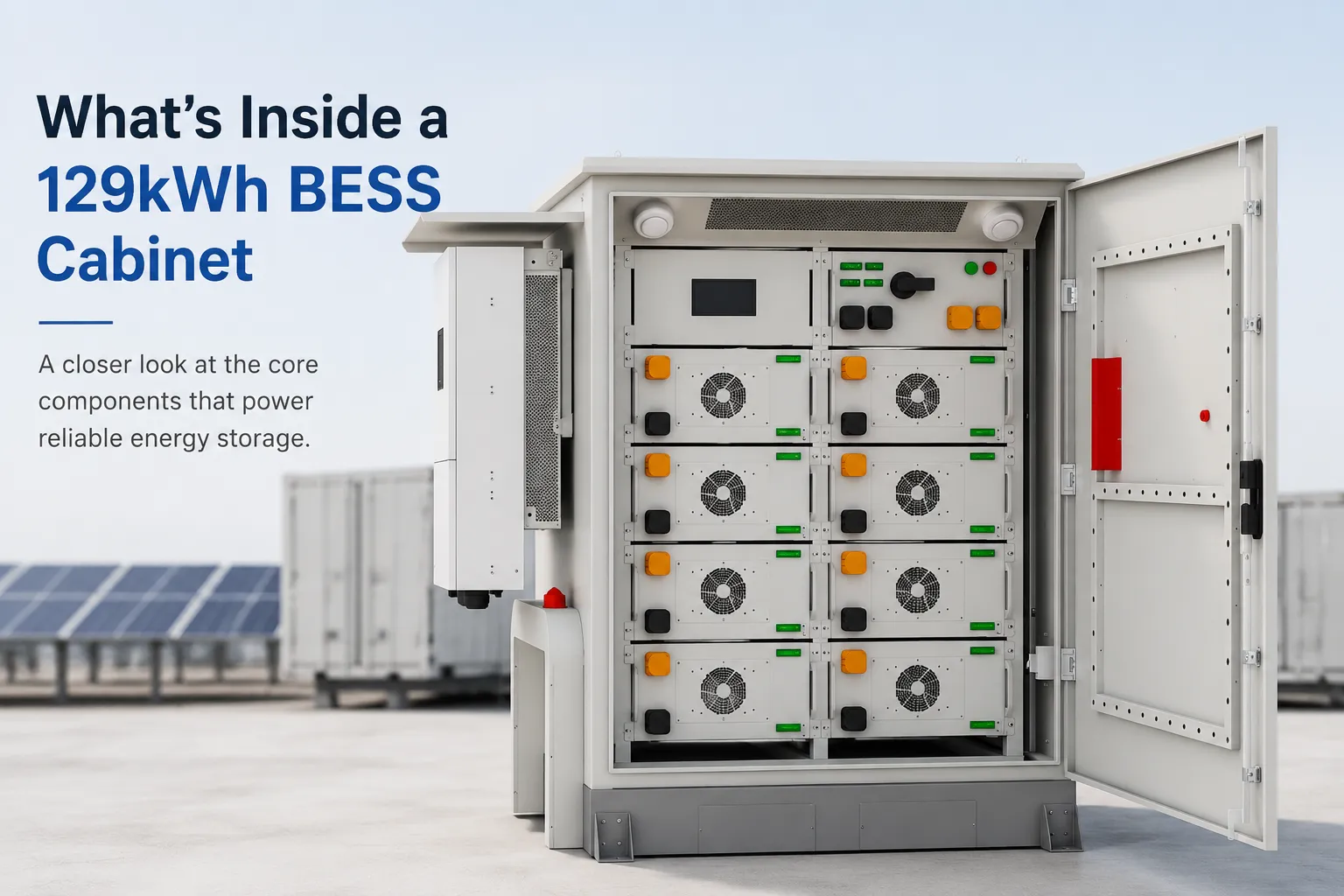
Understand the Core Components of an Energy Storage System
Think of the cabinet as a synchronized team where the performance is limited by the weakest link.
High-Quality Battery Cells Ensure System Reliability
The cells are the most significant investment. Ensure you are sourcing Grade-A cells from reputable manufacturers. These cells offer consistent internal resistance, which is vital for preventing the "weakest cell" effect that can shorten the life of an entire battery string.
The Inverter (PCS) Is Not an "Accessory"—It Is the "Brain"
The PCS is responsible for the critical task of AC/DC conversion. Technical Constraint: Modern high-efficiency cabinets often utilize a 1000V DC bus voltage. This high-voltage design allows the system to operate at a lower current for the same power output, reducing resistive heat losses and allowing for more compact internal wiring without sacrificing safety.
The BMS: Unseen, Yet Absolutely Critical
The Battery Management System (BMS) acts as the central nervous system, monitoring everything from cell-level voltage to module-level temperature. A reliable BMS will provide active balancing, ensuring that every cell in the cabinet works at its peak potential without overcharging.
Real-Time Monitoring and Alarming
Look for cabinets equipped with cloud-based EMS (Energy Management Systems). This allows for remote diagnostics and real-time alerts. If the system detects an unusual temperature rise, it can automatically isolate the affected rack before any damage occurs.
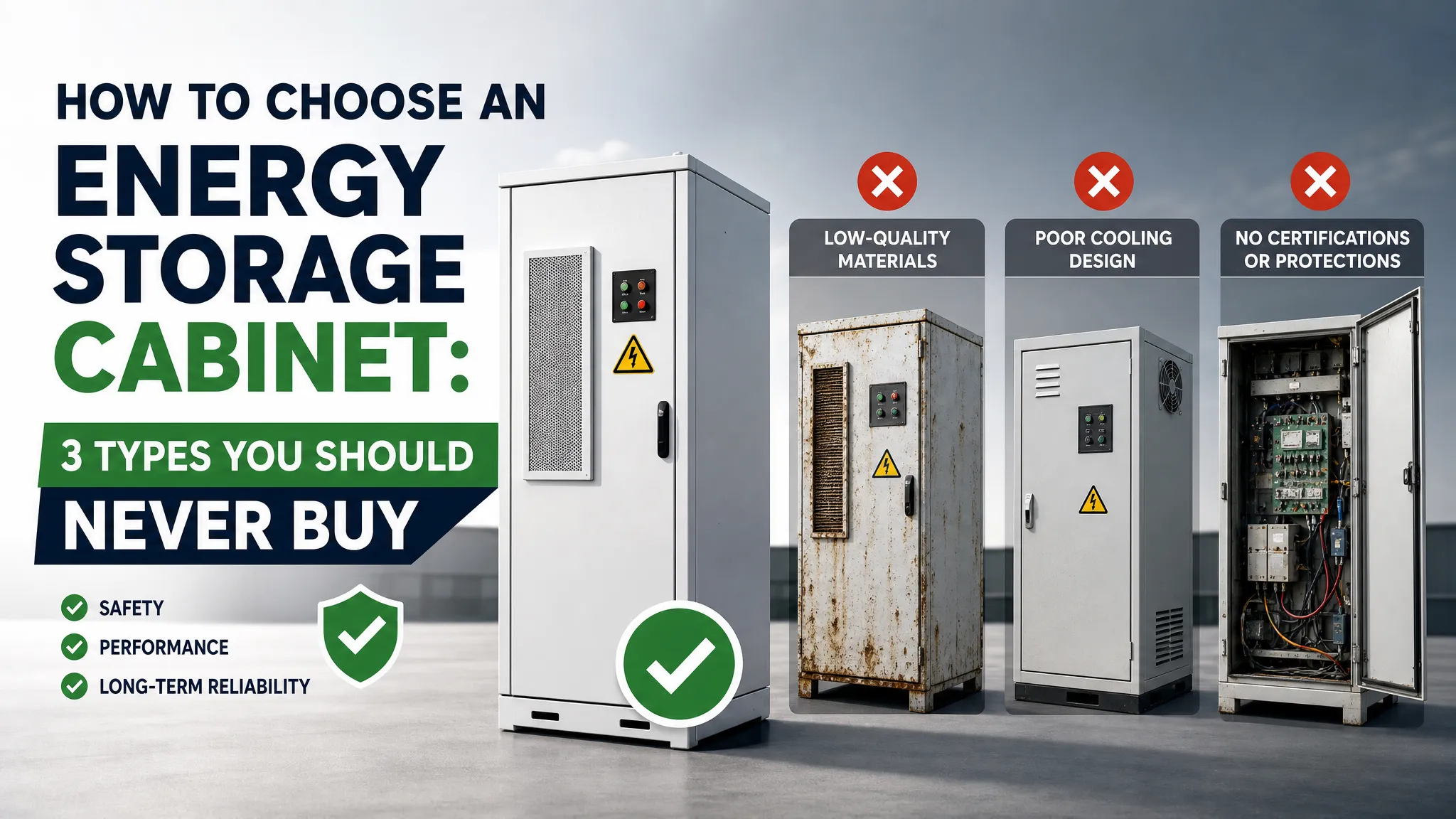
Beware of "unbranded" components. Some integrators use generic PCS or BMS units that lack local grid certification or firmware update support, which can make future repairs nearly impossible.
Pricing Traps and Cost Structures: How to Decipher a Quotation?
When you buy an energy storage cabinet, ask for a detailed breakdown. A professional quote should clearly separate the battery cost, the PCS, the fire suppression system (like aerosol or Novec 1230), and the commissioning fees. A lump-sum price often hides the use of inferior safety components.

How to Select a Manufacturer? — Four Key Principles to Remember
- Traceability: Can the manufacturer provide test reports for every battery module?
- Fire Safety: Does the cabinet meet UL9540 standards for system-level safety?
- Thermal Management: Liquid cooling is preferred for high-cycle industrial use to maintain uniform cell temperatures.
- Warranty Terms: Look for a performance guarantee that specifies at least 70% capacity retention over 10 years.
Key Points to Watch Out for When Signing Contracts
Ensure the contract includes "Interconnection Support." Many buyers forget that the cabinet must be approved by the local utility before it can go online. The manufacturer should provide all necessary single-line diagrams and certification documents to facilitate this process.
Friendly Reminder
To finalize your choice, follow this logic: Identify Application > Calculate C-Rate > Verify Safety Certifications > Assess After-Sales Support. A well-chosen energy storage cabinet isn't just a purchase; it's a 10-year asset for your energy independence.
FAQ: Expert Insights into Buying Energy Storage Cabinets
1. Why is 1000V DC preferred over 400V or 600V systems for industrial cabinets?
In high-capacity cabinets, moving to a 1000V DC architecture is a strategic efficiency move. By increasing the voltage, the current (Amperes) required to deliver the same power is significantly reduced. This minimizes the I²R (resistive) heat losses within the internal busbars and cabling. For the buyer, this means higher round-trip efficiency, less heat stress on the battery cells, and lower cooling costs over the system's life.
2. Can I mix different battery brands if I buy an additional storage cabinet later?
Technically, it is highly discouraged. Even if the nominal voltages match, different brands use unique BMS protocols and have varying internal resistance profiles. Mixing them can lead to "circulating currents" where one cabinet prematurely drains another. If you plan to expand, ensure your initial manufacturer provides a Master-Slave BMS architecture that supports future modular expansion with the same cell chemistry and firmware version.
3. What is the real-world difference between Liquid Cooling and Air Cooling?
Air cooling is cheaper upfront but often fails in high-cycling or high-ambient-temperature environments. Liquid cooling provides superior temperature uniformity (typically within ±2°C across all cells). This prevents "hot spots" which are the primary cause of premature cell degradation. If your project requires daily peak shaving (1+ cycles per day), liquid cooling will likely offer a better 10-year ROI through slower capacity fade.
4. How do I verify if a "100kWh" cabinet actually provides 100kWh of usable energy?
Always check the Depth of Discharge (DOD) settings. Many manufacturers advertise the "nameplate capacity." However, to protect the cells and fulfill warranty requirements, the BMS may limit you to 80% or 90% DOD. When you buy an energy storage cabinet, always ask for the "Net Usable Energy at End of Life (EOL)" to ensure you aren't under-sizing your backup needs.
5. Is a fire suppression system included by default, or is it an add-on?
This is a common pricing trap. Some low-cost quotations exclude the fire suppression system to make the price look more attractive. For industrial safety and insurance compliance, your cabinet must include a dedicated internal suppression system (such as Aerosol or Novec 1230) and smoke/gas sensors that can trigger an emergency stop via the BMS. Never sign a contract that lists fire safety as an "optional accessory."
Struggling with BESS Technical Specs?
Stop second-guessing your system configuration. Consult directly with Bonada’s Lead Engineers to bridge the gap between capacity requirements and grid compliance. We’ll provide a site-specific technical proposal and a custom CAD layout—built to your facility's exact load profile.
Chat with Bonada Engineers NowHow to Choose the Right Home Battery in 2026 (Avoid Costly Mistakes)
How to Wake Up a Sleeping LiFePO4 Battery (Safely)
Related Article