2026 C&I Energy Storage ROI: Grade A Cells vs. B-Grade Traps
If you are running a factory or an industrial park in 2026, you’ve likely felt the sting of "Demand Charge Snipers." That massive spike on your utility bill every time a heavy motor starts isn't just a cost—it's a leak in your bottom line. While most sales reps try to sell you "capacity," as an industry veteran with a decade on the shop floor, I’m here to tell you that capacity is a commodity; reliability is the asset.

Cutting Through the Noise: What Really Defines a C&I Storage System?
Forget the textbook definitions. A Commercial & Industrial (C&I) Energy Storage System is your factory’s Power Buffer. Its job is to swallow cheap grid power at night and spit it out during peak hours or heavy load starts. It’s the difference between paying a $50,000 "demand penalty" to the grid and keeping that capital in your operational budget. At Bonada, we don't build boxes; we build financial instruments that happen to contain lithium.
The "B-Grade" Epidemic: Why Your ROI Might Be at Risk
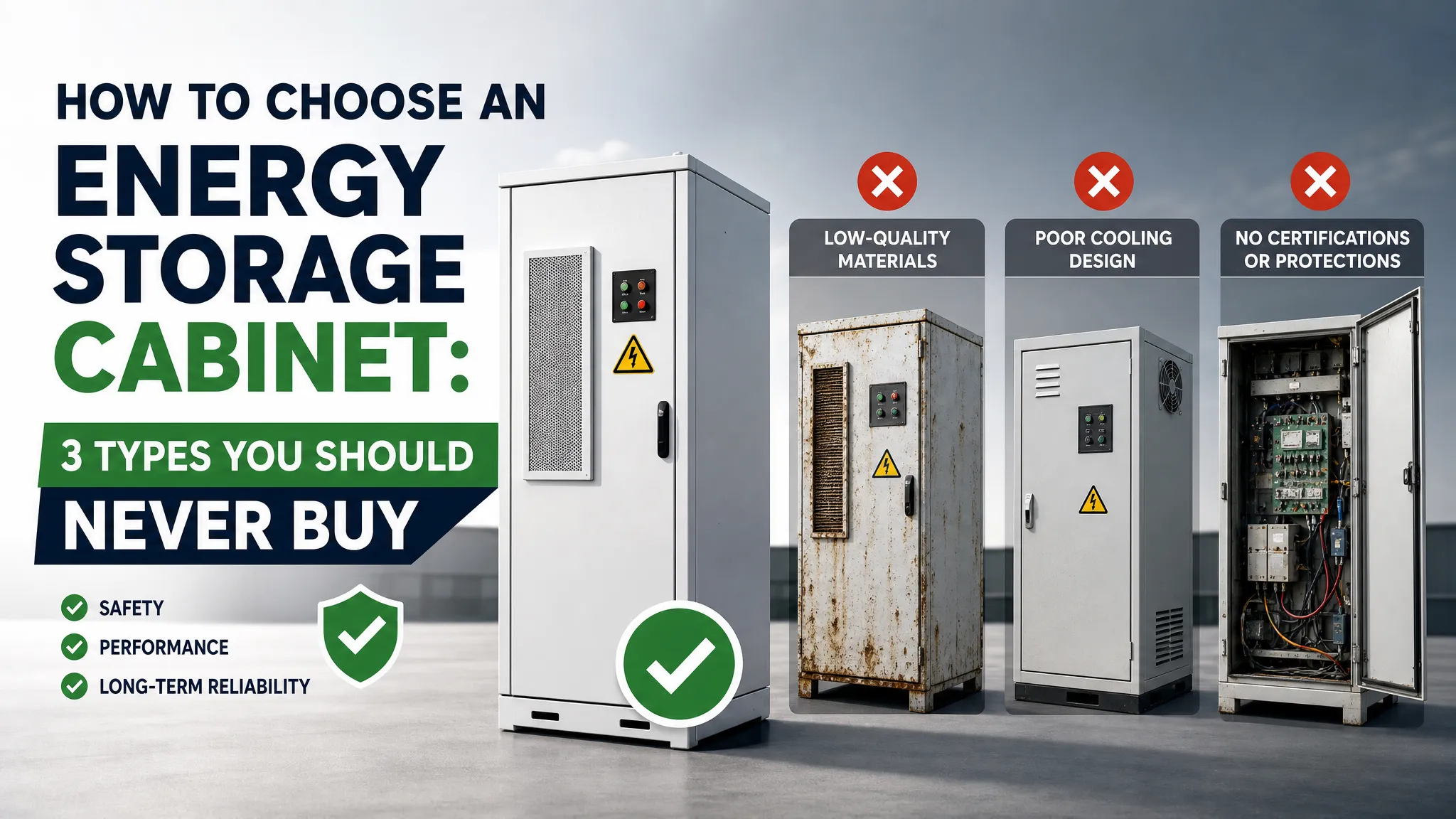
The biggest open secret in the solar battery industry is the recycling of "B-Grade" or decommissioned EV cells into "new" C&I cabinets. They look the same on a spec sheet, but after 18 months, the internal resistance spikes, and your 10-year ROI projection vanishes. Bonada’s hardline policy is 100% Brand New Grade A Cells. No exceptions. No "re-purposed" junk. We verify every cell's provenance before it hits the assembly line.
Most manufacturers treat the BMS like a simple fuse. That’s a recipe for disaster. Our Gold Electronic BMS utilizes predictive thermal algorithms. It doesn't just react to heat; it models the internal temperature of the cell core in real-time. By the time a cheap system starts its cooling fans, a Bonada system has already balanced the load to prevent the heat spike from ever happening. In the world of high-voltage C&I, prevention isn't just safer—it extends your battery life by up to 30%.
Optimized Air-Cooling: Engineering for Real-World Maintenance
While liquid cooling is a trendy buzzword, in a dusty factory environment, it’s often an over-engineered liability. Pumps fail, seals leak, and glycol degrades. Bonada’s Optimized Air-Cooling architecture uses CFD-modeled airflow to maintain cell delta-T within 3°C, without the mechanical complexity of liquid systems. It’s robust, it’s "set and forget," and it’s why our O&M costs are consistently lower.
| Feature | Bonada Industrial Solution | Typical "Budget" Assemblers |
|---|---|---|
| Cell Quality | Verified Grade A | B-Grade / Decommissioned EV Cells |
| BMS Logic | Gold Electronic BMS (Active Balancing) | Generic Passive BMS |
| Compliance | UL1973, CE, UN38.3 Certified | Self-Declared / Partial Testing |
| Integration | Direct Factory Firmware Support | Third-party Middleware (Laggy) |
FAQ: Solving Critical Industrial Storage Challenges
1. Will LFP batteries actually work in freezing climates?
Charging LFP batteries below 0°C causes lithium plating, which permanently damages the cells. Bonada systems integrate internal thermal management that pre-heats the battery bank using the Gold BMS logic before allowing charging to commence. Do not trust claims of sub-zero charging without an active heating core.
2. How do I spot fake "Grade A" cells without an X-ray machine?
Check the terminals and QR codes. Genuine Grade A cells have pristine, factory-polished terminals. If you notice grinding marks, secondary laser weld spots, or scratched-off QR codes, you are likely dealing with used B-grade or decommissioned cells. Bonada provides full traceability for every unit.
3. Is 6,000 cycles a real number or marketing fluff?
Standard market claims of 6,000 cycles often rely on 0.2C rates and shallow Depth of Discharge (DoD). Bonada’s ratings are based on 0.5C/0.5C at 80% DoD, reflecting real-world industrial usage rather than idealized laboratory conditions.
4. Will your BMS communicate with my existing solar inverter?
Our Gold BMS supports industrial-standard CAN and RS485 protocols. Because we control the firmware, we can map custom registers for specific inverter brands within days, ensuring seamless integration and eliminating "communication lost" errors.
5. Why choose factory-direct support over a local distributor?
Working factory-direct with Bonada means you have direct access to the engineers who wrote the BMS code. Local distributors often lack the technical depth to solve firmware-level communication issues, whereas we provide Tier-1 Technical Support directly from the source.
Final Takeaway: Your 2026 Strategy for Industrial Energy
In 2026, the industrial energy storage landscape is defined by the shift from basic backup to active revenue generation through peak shaving and demand management. The main benefit of adopting a high-spec system today is the immediate elimination of peak power surcharges and the avoidance of expensive transformer upgrades. To move forward, stop budgeting for energy spikes and start managing them. Send our engineering team your last 3 months of utility data, and we will build a simulation showing exactly how much a Bonada Grade A system can shave off your peak demand. No fluff, just the math. Visit www.fjbnd.com and let's get to work.
How to Set Up a Freezer Storage PV Energy Storage System
What Minimum Temperature Can the Battery Operate Normally? 2026 Cold-Weather Guide
Related Article