
How Many Homes Does 1 MW Power? Calculations, Scenarios & Trends
2025-09-20
Wondering how many homes 1 MW of power can supply? The answer varies by energy type (solar, gas, wind), household energy use, and efficiency. Bonada breaks down 1 MW basics, provides a step-by-step calculation formula, and analyzes real scenarios (urban vs. rural, summer vs. winter) to help you get accurate estimates.
What Is 1 Megawatt?
A megawatt measures instantaneous power, not actual generation. Conversion: 1 MW = 1,000 kW = 1 million W. A 1 MW device theoretically produces 1,000 kWh (units) hourly at full load, but real output depends on energy type:
- Photovoltaic (PV): ~8 hours daily effective sunlight, 30% system loss → 2,400 units/day, 876,000 units/year.
- Gas/Coal Generators: 24-hour operation (minus maintenance) → ~24,000 units/day.
- Wind: 2,000-3,000 annual utilization hours → 2-3 million units/year, high volatility.

Formula for calculating the number of households supplied by 1 MW
Core Formula:Number of Homes = (Annual Generation of 1 MW × Transmission Efficiency) ÷ Annual Household Energy Use
Variable Explanations:
- Annual Generation of 1 MW:Depends on energy type (e.g., 876,000 kWh/year for solar; 21,024,000 kWh/year for gas generators).
- Transmission Efficiency:Typically 85%-95% (smart grids reach 92%+).
- Annual Household Energy Use:3,650 kWh (US urban, 10 kWh/day) to 2,190 kWh (UK rural, 6 kWh/day).
Practical Example:1 MW solar (876,000 kWh/year) + 90% efficiency + 3,650 kWh/household/year = (876,000 × 0.9) ÷ 3,650 = 216 homes.
Key Factors Affecting Household Coverage
1 MW's reach depends on three variables
Real Scenarios:
- Ideal: No loss, 10 units/household → 240 households.
- Summer (15% loss, 12 units/household) → ~170 households (-30%).
- Rural (10% loss, 6 units/household) → 360 households.
Regional scenario cases
Asia (e.g., China):
Annual household use: 2,920 kWh (8 kWh/day). 1 MW solar (876,000 kWh/year, 90% efficiency) covers (876,000×0.9)÷2,920 ≈ 270 homes.
Nordic Countries (e.g., Sweden):
Annual household use: 2,555 kWh (7 kWh/day, due to efficient heating). 1 MW wind (2,500,000 kWh/year, 92% efficiency) covers (2,500,000×0.92)÷2,555 ≈ 900 homes.
Tropical Regions (e.g., Florida):
Annual household use: 4,380 kWh (12 kWh/day, high AC use). 1 MW solar covers (876,000×0.9)÷4,380 ≈ 180 homes.
Time nodes and actual benefits
Generation Efficiency
- Solar module efficiency will reach 28% by 2027 (from 26% in 2025), increasing 1 MW solar annual generation to 950,000 kWh—covering 20 more homes (10 kWh/household/day) than current levels.
Transmission Tech
- Global smart grid adoption will hit 60% by 2030, cutting transmission loss to 7% (from 15% in 2025). 1 MW solar will cover 235 homes (vs. 170 now) with 93% efficiency.
User Side
- Home Storage (e.g., Tesla Powerwall): 30% lower grid demand → more households covered.
- Time-of-Use Pricing: Shifts peak use → 15-20% higher equipment use.
Why Theory vs. Reality Differs
- Stats Scope: 1 MW often covers commercial/public use (30% → 30% fewer households).
- Seasons: Summer AC doubles use → 240 to 120 households (PV).
- Regions: Florida (4,000 units/year/household) → 562 households (1 MW wind); Nordic (2,500 units) → 900 households (+60%).
Formula: Households = (Annual Generation × Efficiency) / (Household Annual Use). Example: 1 MW hydropower (3M units/year, 90% efficiency, 3,650 units/household) → ~739 households.
Conclusion
1 MW powers 100-900 households, depending on energy type, efficiency, and demand. Tech and management will keep this number rising, delivering stable, clean power.
FAQ
Q1: Does 1 MW of solar power cover the same number of homes year-round?
A1: No. Summer AC use increases household demand (e.g., 12 kWh/day vs. 8 kWh/day in winter), so 1 MW solar may cover 180 homes in summer vs. 270 in winter (US urban).
Q2: Can 1 MW of power cover commercial buildings too?
A2: Yes, but it reduces household coverage. A small office uses ~100 kWh/day (equivalent to 10 households), so 1 MW solar (2,400 kWh/day) covering 1 office would only power 220 homes (vs. 240 without the office).
Q3: How does home energy storage affect 1 MW coverage?
A3: Home storage (e.g., Tesla Powerwall) cuts grid demand by 30%—1 MW solar that once covered 200 homes can cover ~260 homes with widespread storage adoption.
How to Choose a Reliable Home Energy Storage System: Guide with Key Factors & FAQs
How to Find a China Energy Storage System Manufacturer: A Practical Guide
Related Article
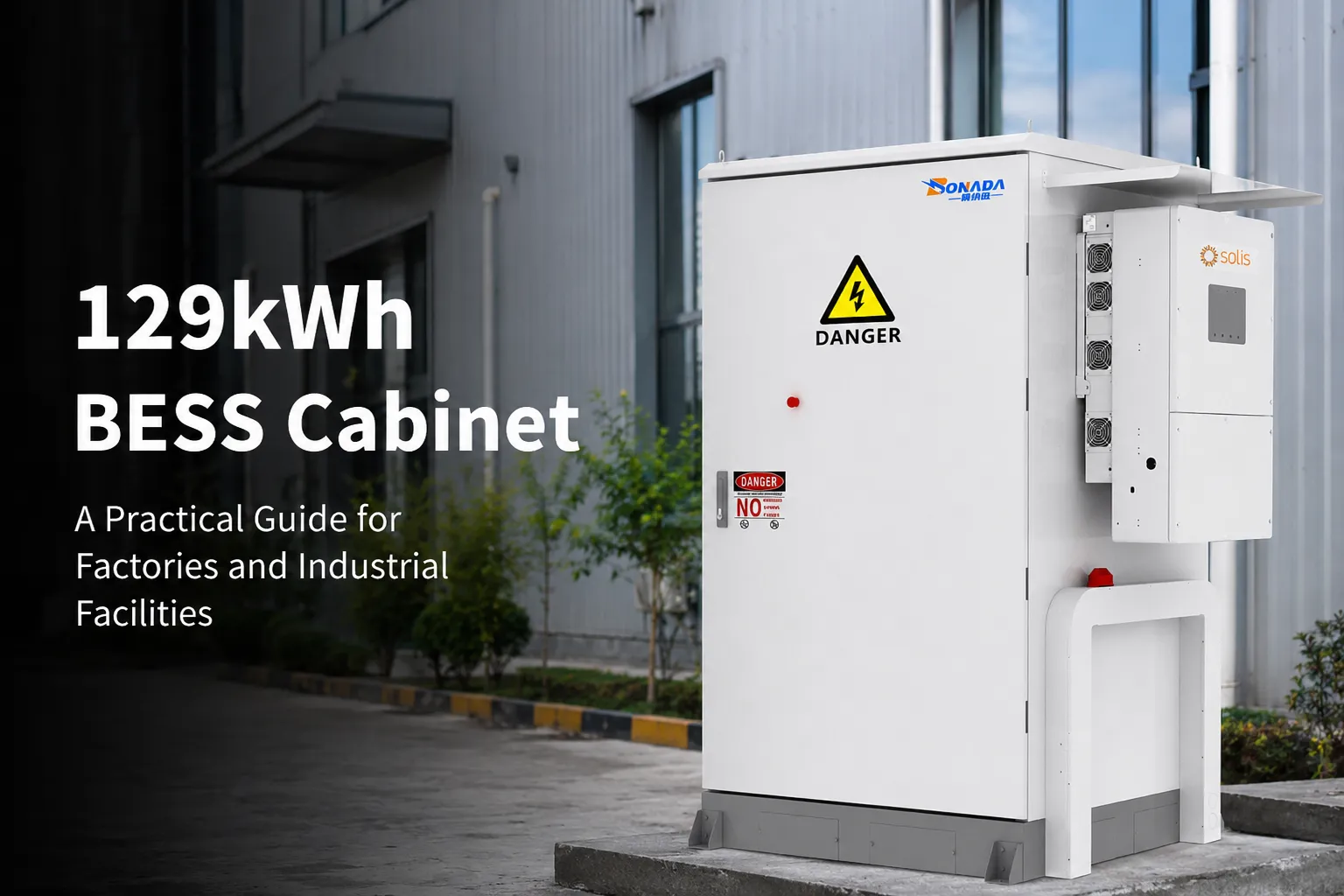
Electricity is one of the largest operating expenses for many factories. The problem is not always the total amount of electricity a facility consumes. In many markets, a factory can face significantly higher charges simply because its power demand reaches a high level for a short period.
129kWh BESS Cabinet: Complete Guide to Capacity, Components, Applications and Sizing
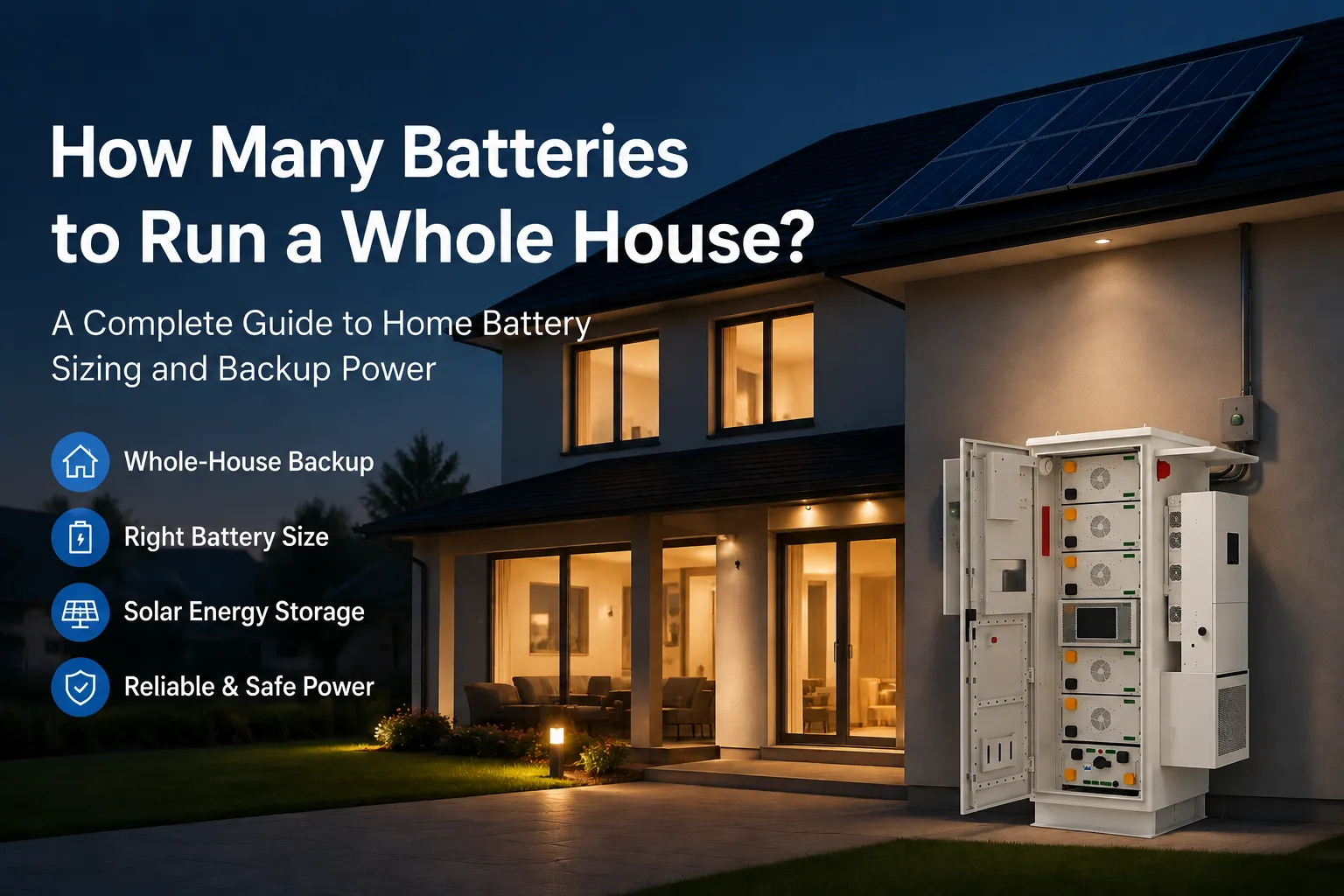
One of the first questions homeowners ask when considering solar storage or backup power is: How many batteries to run a whole house? It sounds like a simple question, but the answer is different for every home. A battery system that works well for a small house with basic backup needs may not be enough for a larger property running air conditioning, electric heating, or an EV charger.
How Many Batteries to Run a Whole House? A Practical Home Battery Sizing Guide
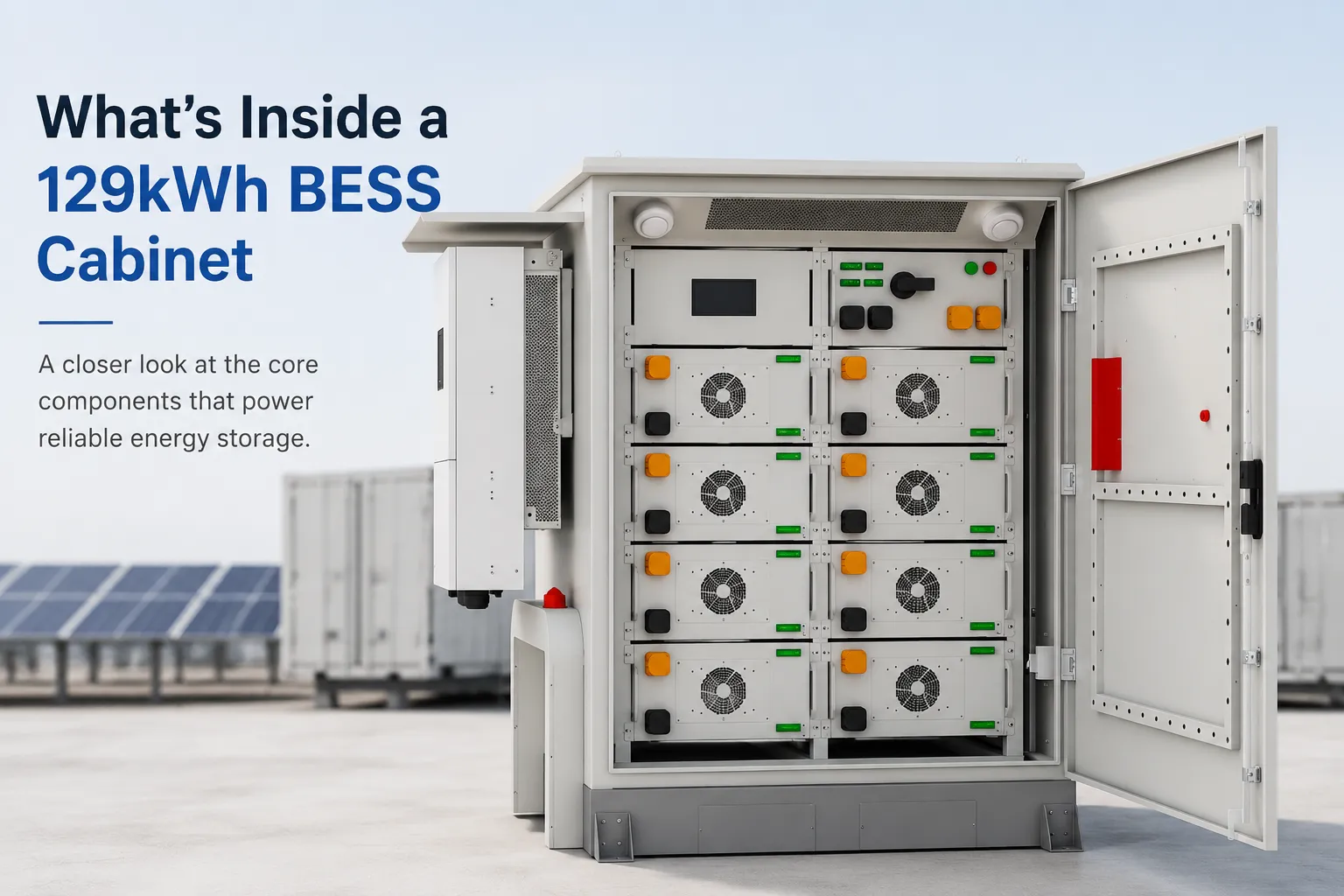
A typical 129kWh BESS cabinet contains much more than battery cells. Inside the enclosure, multiple systems work together, including battery modules, Battery Management System (BMS), high-voltage protection units, Energy Management System (EMS), cooling equipment, fire protection devices, and communication components. Each part has a specific role in maintaining safe and stable energy storage operation.
What's Inside a 129kWh BESS Cabinet? A Complete Breakdown of Internal Components
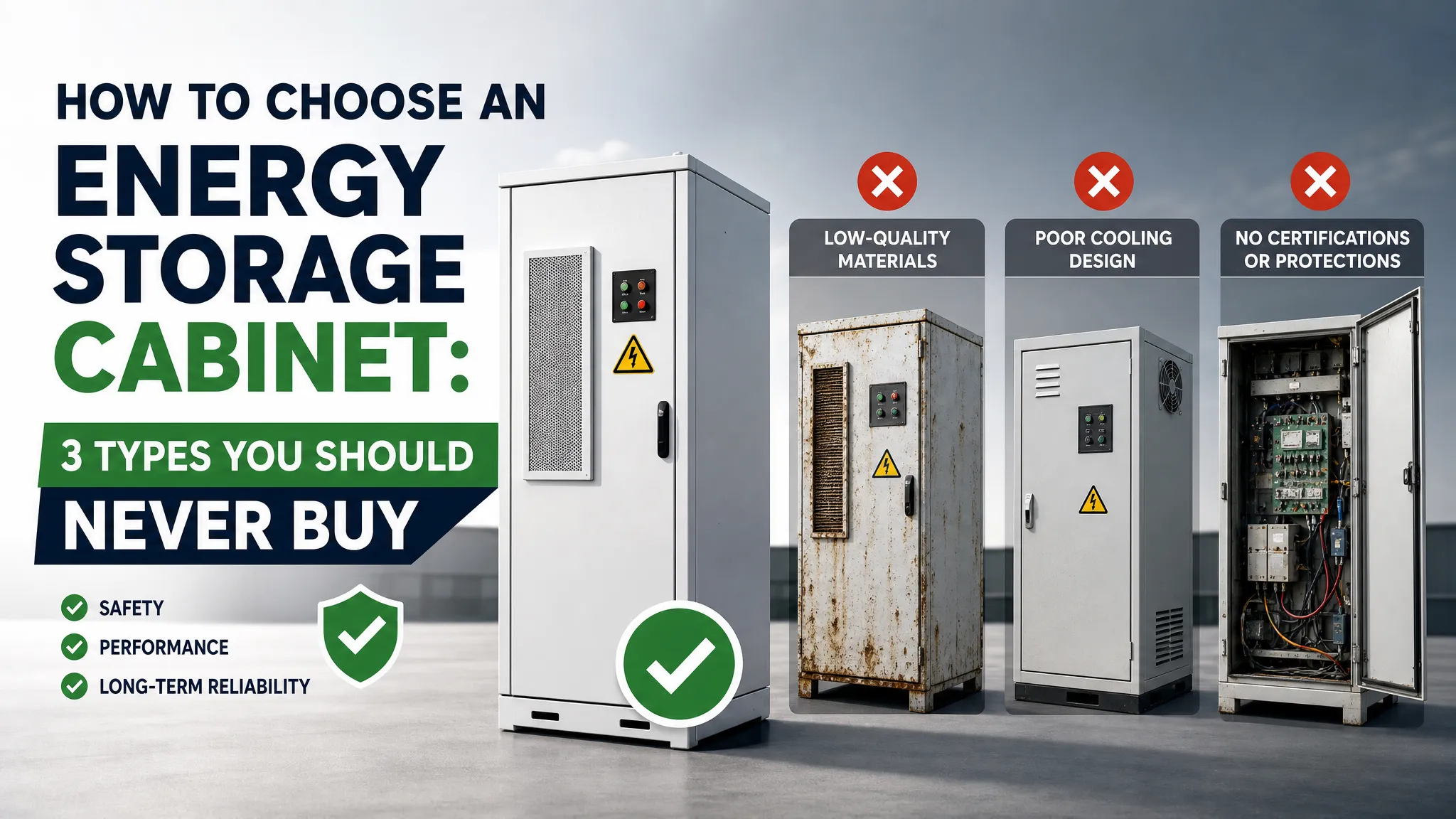
When sourcing a Battery Energy Storage System (BESS), most buyers obsess over cell capacity, inverter brands, and price per kilowatt-hour. The enclosure? It’s usually an afterthought—treated as a simple metal box. That is a massive financial and operational mistake.
How to Choose an Energy Storage Cabinet: 3 Types You Should Never Buy