
How Office Buildings Can Save Energy with Battery Energy Storage Systems
2026-10-10
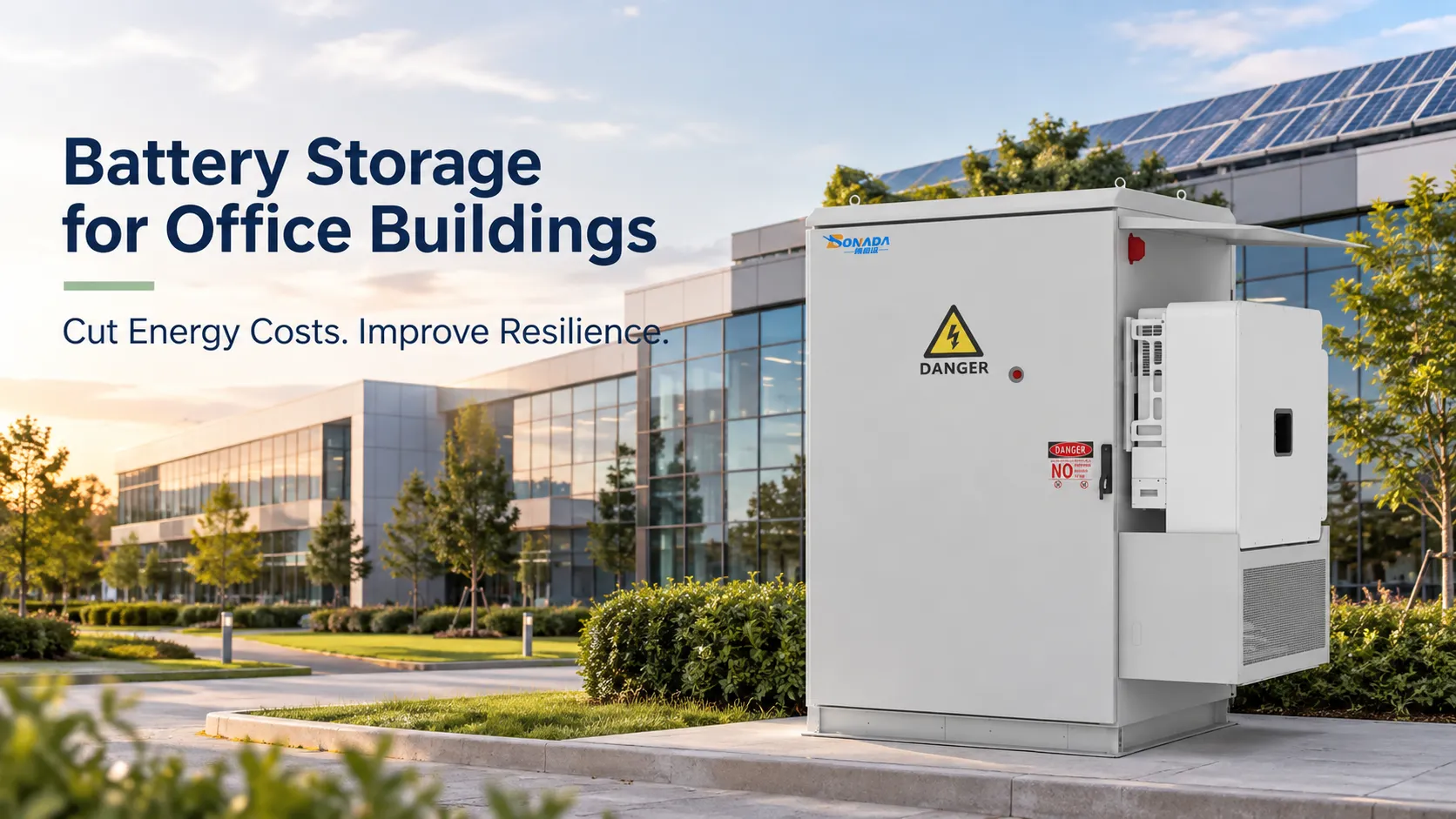
Office buildings consume a ton of electricity, around the clock, to power all of the HVAC, lighting, and equipment systems. For commercial properties, escalating utility rates and costs to power the grid means high electricity expenses which eats into the bottom line. A battery energy storage system (BESS) provides property owners and facility managers the ability to control when and how energy is consumed. Many office buildings employ a BESS to help shave peak utility demand and lower utility expenses. By storing and using energy during peak demand times, the BESS helps to keep the lights on during a power outage. Pairing a BESS with a solar and smart energy management system further helps to control energy costs and protect the bottom line.
Understanding Battery Energy Storage Systems (BESS) for Office Buildings
What Is a Commercial Battery Energy Storage System?
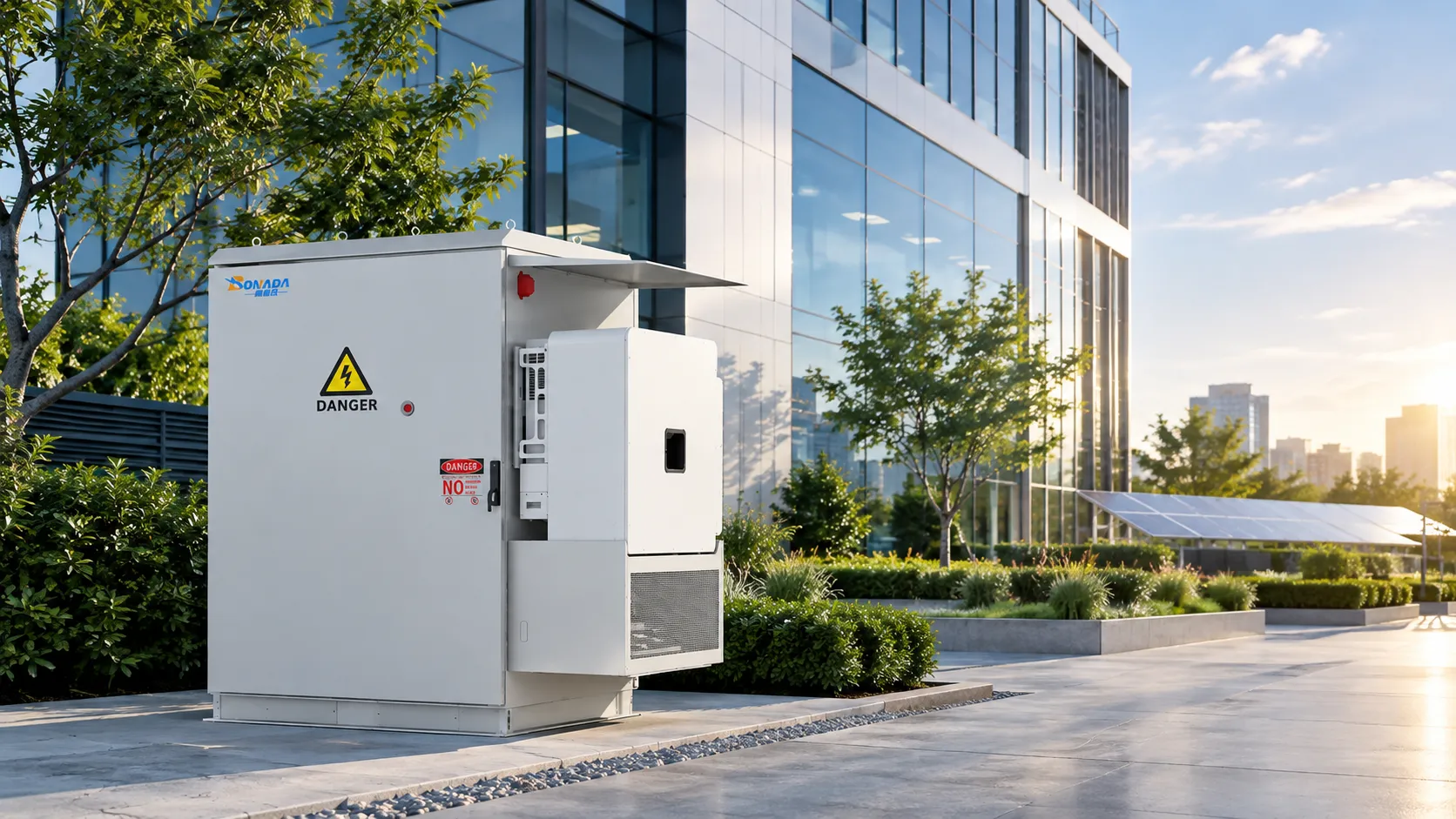
At its core, a commercial BESS bundles rechargeable batteries, power conversion electronics, control software, and robust safety mechanisms into a unified package designed to store and release electricity on demand. Unlike a loud diesel backup generator that burns fossil fuels the moment the grid drops, a battery system simply hoards electrical power sourced from the local grid, rooftop solar arrays, or alternative renewables. When deployed in office complexes, a BESS serves several distinct functions:- Electricity bill reduction: Discharging stored juice during expensive peak-rate windows.
- Solar energy utilization: Capturing midday PV surplus so it isn't wasted or exported for pennies, saving it for the evening load.
- Backup power: Keeping critical workstations and servers alive when utility power fails (assuming the system is configured for islanding).
- Load management: Smoothing out sudden spikes in power draw to keep baseline consumption stable.
- Grid services: Earning extra revenue by jumping into local demand response programs, where local regulations allow.
Key Components: Battery Modules, BMS, PCS, and EMS
A commercial battery setup is only as good as its individual parts working in harmony. Each piece of hardware and software plays a non-negotiable role in keeping power flowing safely.| Component | Main Function |
|---|---|
| Battery modules | The workhorses that hold the charge. Lithium iron phosphate (LFP) chemistry is the industry standard for commercial buildings thanks to its stellar thermal stability and long cycle life. |
| Battery Management System (BMS) | The brain watching over cell health—monitoring voltage, temps, current, and state-of-charge to shut things down before any unsafe condition arises. |
| Power Conversion System (PCS) | The two-way street inverter turning battery DC power into building-ready AC, handling charge and discharge cycles seamlessly. |
| Energy Management System (EMS) | The master coordinator running real-time optimization algorithms based on electricity spot prices, weather forecasts, and building load demands. |
| Thermal management and safety systems | HVAC loops, fluid cooling, gas detection, and fire suppression layers designed to keep temperatures steady and contain anomalies. |
How BESS Integrates with Commercial Building Power Systems
Tying a battery into an existing commercial switchgear requires careful engineering and proper protection gear. During normal days, the system quietly sips power when utility rates are scraping rock-bottom or solar arrays are flooding the building with unneeded electrons. When tariffs jump or total demand starts creeping toward a dangerous threshold, the EMS commands the batteries to empty out. A typical daily loop looks like this:- Constantly scan incoming utility pricing feeds and building load metrics.
- Initiate charging runs during cheap overnight slots or peak solar production hours.
- Flip to discharge mode the second a high-tariff window or demand surge hits.
- Hold back a designated percentage of reserve capacity just in case the grid goes dark.
- Adapt dynamically to weather changes, office occupancy shifts, and strict thermal limits.
Core Ways Office Buildings Save Energy and Reduce Costs with BESS
Peak Shaving and Demand Charge Reduction
For many commercial property owners, peak shaving is where the financial payback really shines—especially in regions with punishing demand charges. Utilities often bill commercial clients based not just on total energy consumed (kWh), but on the single highest 15- or 30-minute power spike (kW) recorded during the month. A single hour of simultaneous heavy load can wreck your utility bill, even if the rest of the month was whisper-quiet. Office buildings tend to trigger these nasty spikes when multiple heavy systems fire up together:- Chillers and central air handling units roaring on a hot afternoon.
- Banks of elevators moving heavy morning and lunch-hour traffic.
- Data closets and enterprise server racks running hard.
- Fleets of tenant electric vehicles plugging into workplace chargers.
- Lighting and office equipment running at full occupancy.
Time-of-Use (TOU) Energy Rate Arbitrage
Time-of-use tariffs mean electricity isn't priced equally all day. Grid power might cost next to nothing overnight, but prices skyrocket during late-afternoon commercial peaks. Battery storage lets office managers play the energy market through simple arbitrage:- Fill up the battery when off-peak electricity is cheap.
- Park that energy safely inside the cells while office life hums along.
- Drain the batteries during the expensive afternoon window to dodge high-rate grid imports.
Maximizing On-Site Solar Self-Consumption
If your office building sports a rooftop photovoltaic (PV) array, you’ve likely noticed that solar generation peaks right around noon—precisely when some offices are out at lunch or running efficiently with lower baseline loads. Without storage, excess solar gets dumped back onto the grid under net-billing structures that often pay a fraction of what retail electricity costs. Storing that midday surplus changes the game entirely. Instead of exporting cheap solar, an office can stash it in the BESS and deploy it during the late-afternoon cooling surge. The wins are clear:- Drastically higher self-consumption of clean solar energy.
- Lower reliance on expensive grid power during late working hours.
- Tight integration between local green generation and daily office workflows.
- Meaningful cuts in operational carbon footprints.
Generating Revenue Through Grid Demand Response Programs
Forward-thinking grid operators run demand response (DR) initiatives, paying commercial property owners cash incentives to dial back consumption or dispatch stored power during grid emergencies. An office building armed with a smart BESS can participate seamlessly, dropping grid imports on command. Depending on local market rules, payouts might rely on standby availability, actual energy delivered, or a mix of both. Before signing up, check the fine print:- Minimum capacity cutoffs and strict qualification hurdles.
- Notice windows and required event run-times.
- Financial penalties for failing to perform during an event.
- Cell wear-and-tear versus the cash payout received.
- Whether DR participation conflicts with your primary peak-shaving goals.
Enhancing Facility Resilience and Business Continuity
Providing Reliable Backup Power During Grid Outages
Power failures paralyze office buildings—shutting down Wi-Fi routers, locking electronic turnstiles, killing elevators, and dropping crucial data connections. For modern businesses, even a 30-minute blackout causes massive headaches. A properly wired BESS keeps critical office circuits humming when the grid fails. Unlike fossil fuel generators that take time to crank up and choke on emissions, batteries provide near-instantaneous switchover for essential circuits:- Core office networking gear and VoIP telephone hubs.
- Security badges, CCTV cameras, and life-safety exit lighting.
- Selected emergency workstations for key personnel.
- Critical local servers and cloud gateways.
- Building automation control panels.
Safeguarding Critical Office Infrastructure and IT Systems
Today's corporate offices run on a fragile web of IT infrastructure. While a commercial BESS handles whole-building energy strategies, sensitive server hardware often demands specialized protection. A commercial battery is generally not a drop-in replacement for a dedicated Uninterruptible Power Supply (UPS) designed for millisecond-level server protection. Instead, smart facilities use a tiered setup:- A traditional UPS to guard sensitive servers against micro-interruptions and clean up power quality.
- A commercial BESS to shoulder longer multi-hour building backup loads.
- Automated transfer switches and islanding breakers.
- Unified software monitoring to orchestrate power handoffs.
Advanced Safety Features and Fire-Safe Battery Technologies
Safety is job one when installing multi-kilowatt battery enclosures in or adjacent to commercial office buildings. Lithium iron phosphate (LFP) chemistry has become the go-to choice for commercial spaces because its chemical makeup resists thermal runaway far better than older cobalt-based chemistries. Still, safety requires active engineering, not just chemistry:- Smart BMS monitoring every individual cell string.
- Continuous thermal probes and automated climate control loops.
- Multi-tiered circuit breakers, fuses, and rapid shutdown switches.
- Robust outdoor weatherproof cabinets or rated indoor fire-barrier rooms.
- Aerosol or clean-agent fire suppression systems tailored for energy storage.
- Strict compliance with standards like UL 9540, UL 9540A, and NFPA 855.
Supporting Corporate Sustainability and ESG Goals
Decarbonizing Commercial Real Estate Operations
Corporate real estate investors and tenants place heavy weight on ESG scores. Energy storage plays a quiet yet powerful role here by smoothing out renewable generation and cutting dirty peak-load generation from the local grid mix. However, the carbon math depends entirely on *when* your battery charges. If you pull power from a coal-heavy grid at midnight to fill your batteries, your net emissions might not look great—even if you discharge during clean hours. Align your EMS software with grid carbon intensity data to maximize real environmental benefits. Key tracking metrics include:- Total monthly grid electricity imported.
- Percentage of on-site solar consumed directly on property.
- Reduction in peak grid draw.
- Estimated carbon emissions avoided.
- Round-trip system efficiency.
Achieving Green Building Certifications Like LEED and BREEAM
Major green building frameworks look closely at energy optimization, peak management, and renewable integration. While dropping a battery into your basement doesn't automatically hand you a LEED plaque, it gives you massive ammunition to score points under energy performance and demand response credits. Success depends on the specific version of the standard and your building's overall engineering profile. Work closely with sustainability consultants to document how your storage array contributes to your certification goals.Enhancing Energy Efficiency Ratings and Reporting
It's worth noting a technical reality: a battery doesn't magically reduce the total kilowatt-hours your building consumes. In fact, due to standard conversion losses during charging and discharging, a BESS consumes slightly more total energy than it ultimately gives back. Its true magic lies in *timing*—shifting load profiles, crushing peak demand, and soaking up surplus solar. To keep your ESG reporting accurate, facility teams should track:- Total utility grid imports.
- On-site solar generation versus consumption.
- Battery parasitic loads and conversion losses.
- Monthly peak demand drops.
- Actual shifts in energy expenditure and carbon metrics.
This clarity ensures you separate genuine efficiency upgrades from savings driven purely by energy arbitrage and shifting schedules.
Overcoming Upfront Costs: Financial Incentives and Models
Leveraging Tax Credits, Rebates, and Regional Incentives
Let’s be honest: commercial energy storage requires serious upfront capital. Hardware, inverters, switchgear upgrades, engineering design, fire suppression, and utility interconnection fees all add up. Fortunately, government incentives can dramatically sweeten the ROI. Before signing any purchase orders, look into:- Local utility cash rebates for commercial storage installations.
- Federal or regional tax credits for clean energy investments.
- Grants geared toward commercial energy efficiency and building decarbonization.
- Special financing packages for green retrofits.
Energy-as-a-Service (EaaS) and Zero-CapEx Financing
If your corporate finance team hesitates to approve a large capital expenditure, Energy-as-a-Service (EaaS) or third-party leasing offers a clean alternative. Under an EaaS model, a specialized energy partner funds, installs, owns, and maintains the BESS on your property. You simply pay a predictable monthly service fee or split the realized electricity savings. The perks are clear:- Zero upfront capital outlay required from your business.
- Turnkey operation backed by the vendor's expert maintenance team.
- Predictable operational budgeting.
- Zero internal management headache for your facilities staff.
Evaluating Return on Investment (ROI) and Payback Period
Figuring out whether a battery project pencils out requires weighing total installed costs against recurring operational savings. A quick back-of-the-envelope formula looks like this: Annual Net Savings = Annual Energy Bill Savings + Eligible Program Revenue − Annual Operating Costs From there, simple payback is calculated as: Simple Payback Period = Net Initial Investment ÷ Annual Net Savings For instance, if an office property drops $150,000 on a commercial BESS, pulls in $40,000 a year through peak shaving and incentives, and incurs $10,000 in annual maintenance and software fees, net annual savings hit $30,000. That gives a simple payback period of roughly 5 years. Remember, this is a simplified illustration—it leaves out financing interest, tax depreciation, battery degradation over time, and shifting utility tariffs. Always model multi-year forecasts across conservative, base, and aggressive scenarios.How to Implement a Battery Energy Storage System in Office Buildings
Analyzing Building Load Profiles and Energy Patterns
You can't size a battery blind. Monthly utility bills tell part of the story, but true engineering requires granular interval meter data (ideally 15-minute resolution spanning a full 12 months). Your preliminary energy audit should uncover:- Daily, weekly, and seasonal electricity usage curves.
- The exact timing, magnitude, and frequency of your peak demand events.
- Your current utility tariff schedule and demand penalty rules.
- Solar generation output curves if PV panels are installed.
- Critical backup loads and your target runtime duration.
- Future electrical loads like EV charging station expansions.
Determining System Sizing and Battery Chemistry
Sizing a commercial storage system involves two separate dimensions: power rating (measured in kilowatts, kW) and energy capacity (measured in kilowatt-hours, kWh). A massive energy bank won't help if its inverter is too small to handle your building's peak surge. For example, a 100 kW / 200 kWh system can theoretically push 100 kW for two hours under ideal lab conditions. Real-world runtimes factor in depth-of-discharge limits, round-trip efficiency losses, and temperature controls. A robust sizing study evaluates:- Power requirements: The exact kW reduction needed to flatten your peak demand.
- Energy requirements: How long the battery must sustain that output.
- Usable capacity: The safe operating window within the battery's state-of-charge limits.
- System efficiency: Losses incurred across inverters and cells during cycling.
- Degradation curves: How capacity fades over years of daily cycling.
- Future expandability: Whether the rack design allows adding modules later.
Selecting the Right Commercial Energy Storage Partner
Choosing the right vendor or system integrator is just as critical as picking the right battery chemistry. The cheapest upfront bid rarely delivers the best long-term ROI. Property owners should vet potential partners across several key pillars:| Evaluation Area | What to Check |
|---|---|
| Technical suitability | Matching inverter power, kWh capacity, voltage compatibility, and switchgear specs to your building infrastructure. |
| Safety and compliance | Valid international and local certifications, compliance with fire codes, and successful third-party abuse testing. |
| System integration | Seamless communication between solar inverters, building management systems (BMS), smart meters, and EMS software. |
| Warranty and service | Clear capacity retention guarantees, throughput limits, warranty length, and local technical support response times. |
| Project experience | A proven portfolio of completed commercial installations and smooth navigation of local utility interconnection processes. |
| Lifecycle economics | Transparent total cost of ownership (TCO) modeling factoring in maintenance, round-trip efficiency, and degradation over 10+ years. |
Friendly Reminder
Battery energy storage systems (BESS) make it easier for commercial office buildings to better manage energy demands, avoid costly peak penalties, maximize solar self-consumption and enhance the resilience of their facilities. Financial returns are often optimized by the use of multiple value streams (i.e. peak shaving, TOU arbitrage and solar shifting), rather than relying on a single stream. However, a BESS is not a guarantee of financial savings for all office buildings. A number of factors impact the bottom line, including the utilities’ rate structures, the building’s baseline energy usage, the quality of the equipment and software, and how intelligent the control of the equipment is. It is often to the advantage of the building owners to analyze their own data, define their own financial and operational goals, and run expected lifecycle costs of owning the equipment, prior to signing a contract. Commercial battery storage is quickly becoming a hallmark of efficient, cost effective and sustainable real estate.Frequently Asked Questions About Office Building Energy Storage
1. How much can an office building save with a battery energy storage system?
The savings depend on the building's electricity consumption, utility tariff, peak demand, and battery configuration. A commercial battery energy storage system can reduce demand charges, shift electricity use to lower-cost periods, and increase solar self-consumption. Building owners should analyze at least 12 months of electricity bills and interval load data to estimate potential savings and calculate the payback period before investing.2. What size battery energy storage system does an office building need?
The right system size depends on the building's peak power demand, required discharge duration, daily energy consumption, and backup power requirements. Battery power is measured in kilowatts (kW), while energy capacity is measured in kilowatt-hours (kWh). For example, a 100 kW / 200 kWh system can theoretically deliver 100 kW for two hours under ideal rated-energy assumptions. A detailed load analysis is necessary to determine the actual usable capacity and suitable configuration.3. Can a commercial battery storage system reduce electricity bills without solar panels?
Yes. Office buildings can charge a battery from the utility grid during off-peak periods and discharge it when electricity prices or demand charges are higher. This strategy, known as energy arbitrage and peak shaving, can reduce electricity costs even without solar panels. However, the financial benefit depends on the difference between electricity rates, battery efficiency, operating costs, and the building's demand charge structure.4. How long can a battery energy storage system power an office building during a blackout?
Backup duration depends on the battery's usable energy capacity and the total power consumption of the connected equipment. For example, a battery with 200 kWh of usable energy could theoretically support a constant 20 kW critical load for 10 hours, before accounting for additional system losses and reserve requirements. To extend backup duration, building managers can prioritize essential loads such as servers, communications, security systems, and emergency lighting. The system must also support islanded operation and include the necessary transfer and isolation equipment.5. Are lithium iron phosphate (LFP) batteries suitable for commercial office buildings?
LFP batteries are a common choice for commercial energy storage because of their thermal stability, cycle-life characteristics, and suitability for frequent charging and discharging. However, selecting a battery requires more than comparing chemistry and capacity. Building owners should evaluate the battery management system, thermal management, fire protection, product certifications, warranty terms, and compatibility with the power conversion system and energy management system. Proper installation and compliance with applicable local safety codes are essential for reliable operation.Need the Right Energy Storage Solution for Your Office Building?
Not sure how much battery capacity your facility needs? Bonada's engineering team can help evaluate your power demand, energy consumption, and backup requirements. Get a tailored commercial battery energy storage proposal with a suitable system configuration and technical layout designed around your facility's specific needs.
Discuss Your Energy Storage Project
Energy Storage Solutions for Schools: How Battery Storage Can Reduce Electricity Costs
Related Article
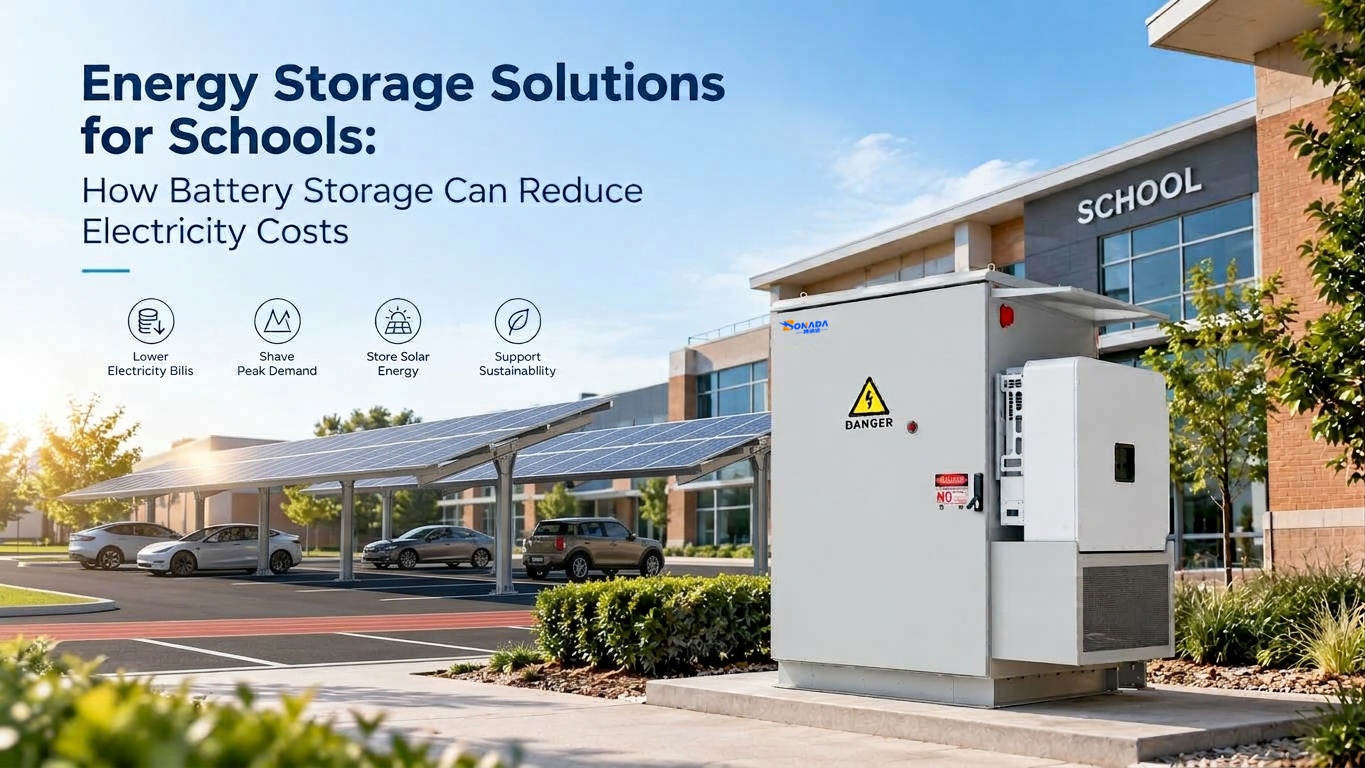
For a school, electricity is not simply another operating expense. Classrooms need lighting and air conditioning, computer rooms and laboratories rely on stable power, kitchens have heavy electrical loads, and larger campuses may also have sports facilities, workshops, EV chargers, and other energy-intensive equipment. When several of these loads operate at the same time, electricity demand can rise sharply.
Energy Storage Solutions for Schools: How Battery Storage Can Reduce Electricity Costs
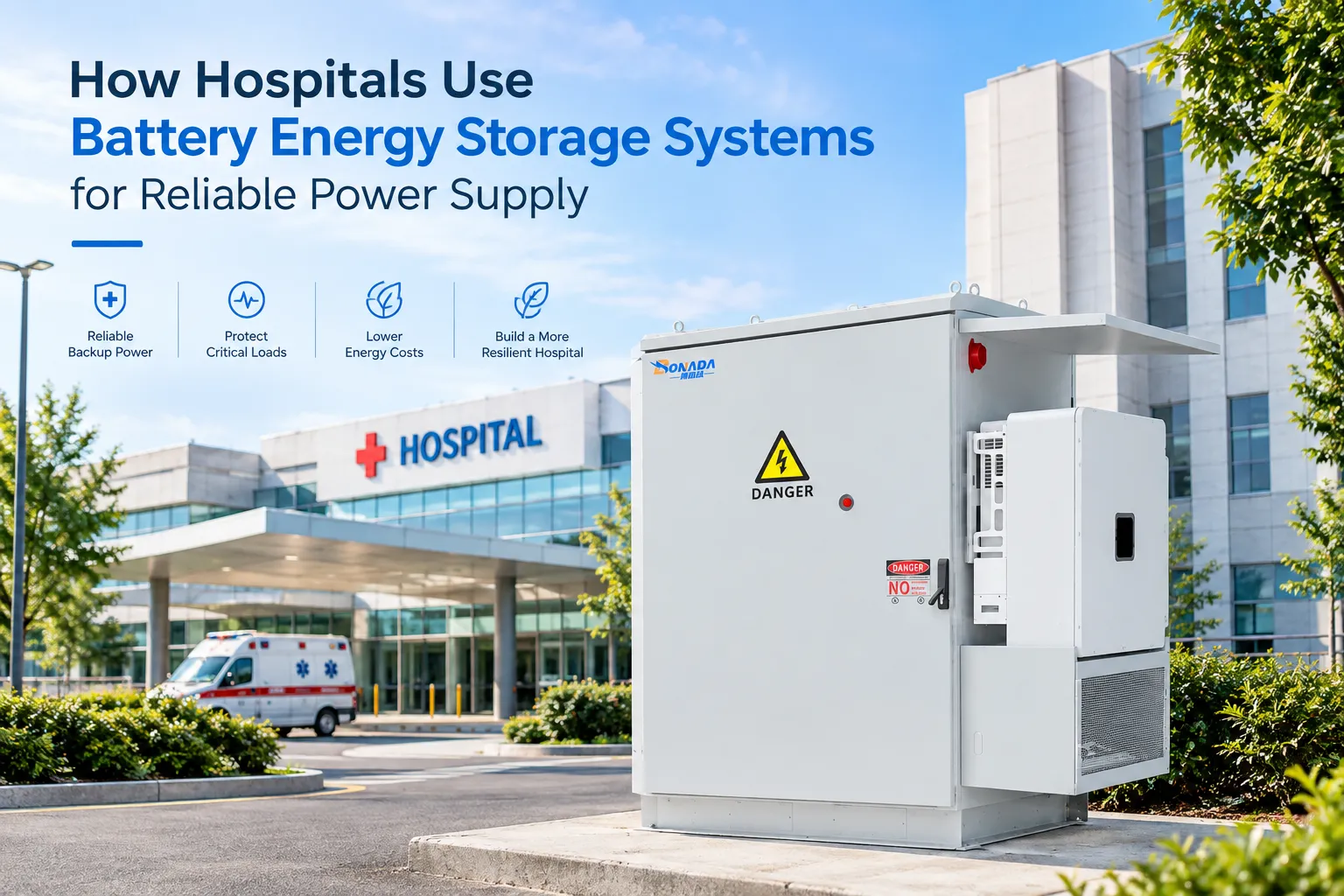
Hospitals cannot treat electricity as an ordinary operating expense. Surgical rooms, intensive care units, diagnostic equipment, medication storage, ventilation systems, communications, security systems, and electronic health records all depend on a stable power supply. Even a short interruption can create operational problems, while a prolonged outage can threaten patient care.
How Hospitals Use Battery Energy Storage Systems for Reliable Power Supply
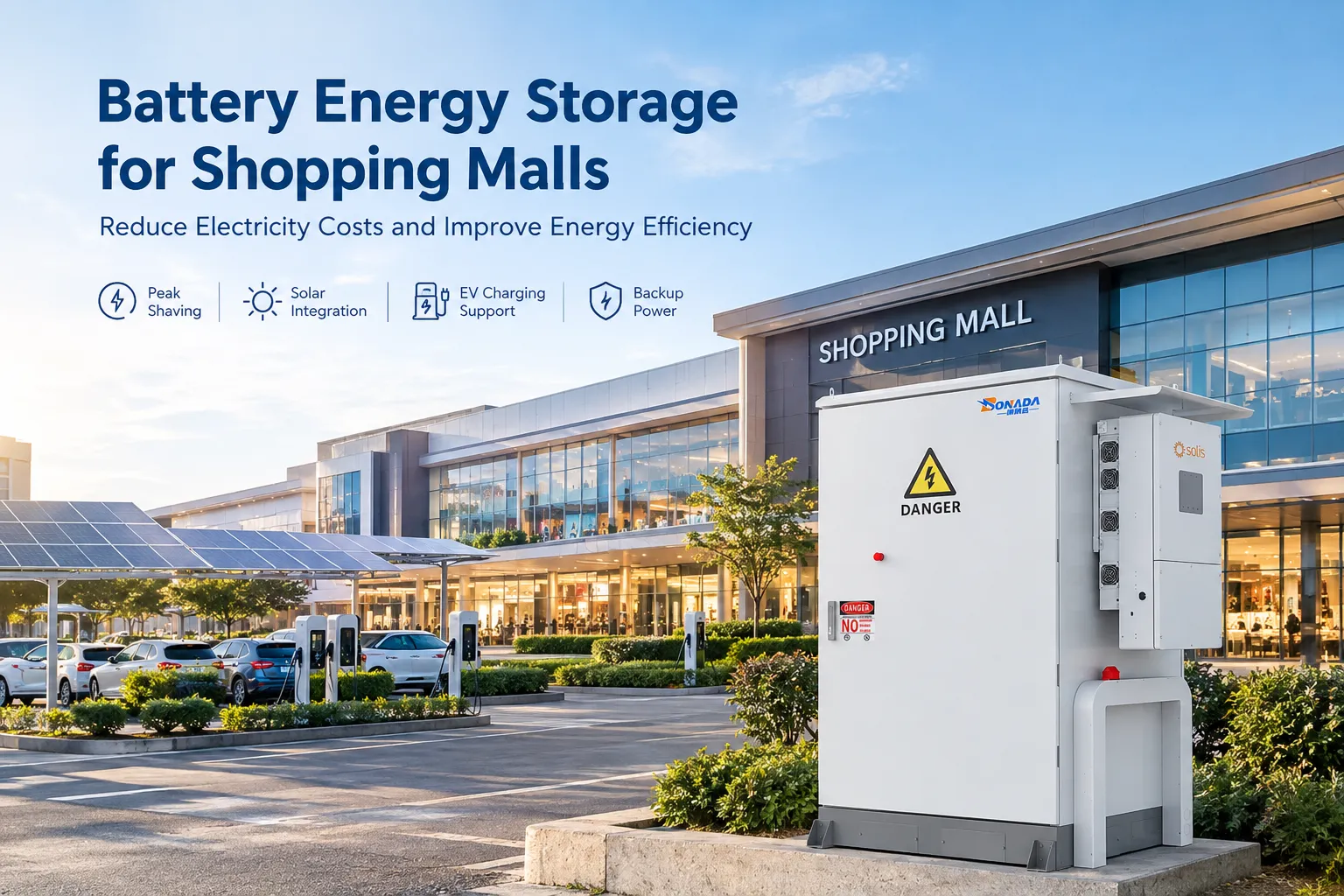
Shopping malls are among the most energy-intensive commercial buildings. HVAC systems, lighting, escalators, elevators, refrigeration, digital signage, security systems, and EV chargers can create large and highly variable electricity loads throughout the day.
Battery Energy Storage Systems for Shopping Malls: Lower Electricity Costs and Improve Energy Efficiency
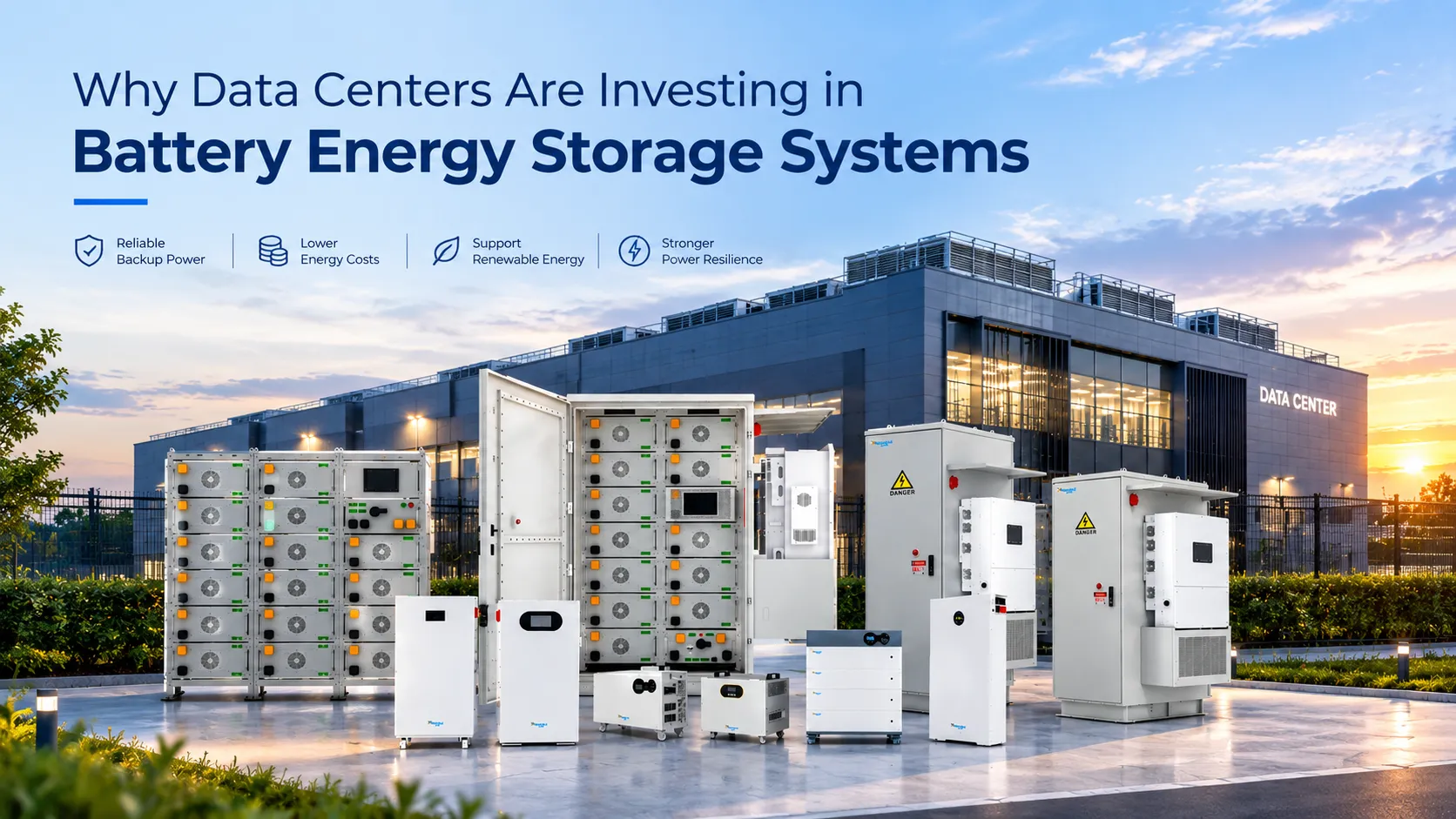
Data centers are entering a new era of electricity demand. The rapid expansion of artificial intelligence, cloud computing, high-performance computing, and digital services is pushing facilities to consume more power while demanding an even higher level of power reliability.
Why Data Centers Are Investing in Battery Energy Storage Systems