How BESS Reduces Electricity Costs for Factories
Electricity is a major operating expense for many manufacturing businesses. However, the amount a factory pays each month is not determined only by how much electricity it consumes. In some markets, a facility can receive a much higher electricity bill because of a short period of unusually high power demand.
This is one of the reasons battery energy storage systems are attracting increasing attention from manufacturers.
A Battery Energy Storage System (BESS) allows a factory to store electricity and use it when it provides the greatest economic or operational value. Depending on the local electricity tariff and the factory's load profile, the system can reduce peak demand charges, shift energy consumption away from expensive periods, increase solar self-consumption, and provide backup power for selected equipment.
The potential savings are different for every facility. A battery that works well for one factory may not be the right choice for another. The key is to understand how the factory consumes electricity and then configure the BESS around those operating conditions.

Understanding Factory Electricity Costs
What Drives High Electricity Costs for Manufacturers?
Factory electricity bills usually contain several different cost components. The exact structure varies between countries and utility companies, but common charges include energy consumption, demand charges, fixed charges, and sometimes different prices for different periods of the day.
The total energy consumed is measured in kilowatt-hours (kWh). Demand, on the other hand, is measured in kilowatts (kW) and represents how much power a facility is drawing at a particular moment.
This difference can have a significant financial impact.
A factory may consume a large amount of electricity throughout the month but have relatively moderate demand. Another facility may use less total energy but experience several very high demand peaks. If the utility uses peak demand as part of its billing calculation, those short periods can increase the monthly bill considerably.
Production equipment is often responsible for these spikes. Starting multiple machines at the same time, operating high-power motors, running compressors, or adding a new production line can push a factory's demand above its normal level.
For manufacturers, reducing these peaks can sometimes be more valuable than simply trying to reduce total electricity consumption.
Peak Demand Charges and Time-of-Use Electricity Rates
Two electricity pricing mechanisms are particularly relevant to battery storage: demand charges and time-of-use (TOU) rates.
With demand charges, the utility may calculate part of the bill according to the highest power demand recorded during a billing period. A battery can discharge during these high-demand periods and supply part of the factory's load.
With TOU pricing, electricity costs more during certain periods and less during others. A BESS can charge when electricity prices are relatively low and discharge when prices rise.
For example, a factory may have lower electricity prices overnight while production is limited. The battery can charge during this period and then provide energy during a more expensive production period.
The economic benefit depends on the difference between electricity prices, the battery's efficiency, operating costs, and the number of cycles performed.
How Grid Instability Can Increase Factory Operating Costs
Electricity costs are not the only concern for manufacturers.
An unexpected grid interruption can stop production, interrupt automated processes, affect sensitive equipment, and create material or labor losses. Even a short outage can be expensive when a production line needs to be restarted or a batch of products has to be discarded.
A BESS can provide short-duration backup power for selected loads, depending on the system configuration.
It does not necessarily have to support the entire factory. In many projects, it is more practical to identify critical equipment and provide backup power only to those loads.
This approach can reduce the required battery capacity while still protecting important operations.
What Is a Battery Energy Storage System (BESS)?
A Battery Energy Storage System (BESS) is an integrated system that stores electrical energy in batteries and releases it when required.
A commercial or industrial BESS normally includes more than the battery itself. The complete system may include battery modules, a Battery Management System (BMS), a Power Conversion System (PCS), an Energy Management System (EMS), thermal management equipment, electrical protection, fire safety equipment, and monitoring functions.
The battery stores energy, while the other components determine how safely and efficiently that energy is charged, converted, monitored, and delivered.
How BESS Works in Manufacturing Facilities
The basic operating principle is straightforward.
During a low-cost or low-demand period, electricity from the grid or a solar PV system can be used to charge the battery.
When electricity demand increases or grid electricity becomes more expensive, the BESS can discharge and supply part of the factory's load.
A simplified operating cycle looks like this:
Low-demand period → BESS charging → High-demand period → BESS discharging → Lower grid demand
The Energy Management System can automate this process based on predefined demand limits, electricity prices, solar production, battery state of charge, and factory operating conditions.
For a manufacturing facility, the objective is not necessarily to charge and discharge the battery as often as possible. The objective is to use the stored energy when it creates the greatest value.
Key Components of an Industrial BESS
A typical industrial energy storage system contains several important subsystems.
Battery modules store the electrical energy. Lithium iron phosphate (LFP) batteries are widely used in stationary energy storage because of their combination of safety characteristics, cycle performance, and operating stability.
The Battery Management System (BMS) monitors battery voltage, temperature, state of charge, and other operating conditions. It also provides protection against abnormal operating conditions.
The Power Conversion System (PCS) converts electricity between AC and DC and controls the charging and discharging power of the battery.
The Energy Management System (EMS) coordinates the BESS with the factory, grid, and potentially solar PV. It can determine when the battery should charge or discharge according to the selected operating strategy.
Thermal management and safety systems help maintain suitable operating conditions and respond to abnormal events.
The exact architecture varies according to the BESS manufacturer, power rating, battery capacity, installation environment, and project requirements.
Standalone BESS vs. Solar + Storage
A factory does not necessarily need solar PV to benefit from battery storage.
A standalone BESS can charge from the grid and discharge during high-cost or high-demand periods. This configuration can be useful where peak demand charges or TOU tariffs create a clear financial opportunity.
A solar + storage system adds another source of energy. Excess solar generation during the day can be stored in the battery and used later when factory demand remains high but solar production has fallen.
For factories with large rooftop PV systems, this combination can increase the percentage of solar electricity consumed on-site.
The right configuration depends on the factory's electricity tariff, solar generation profile, available space, and project objectives.
How BESS Reduces Electricity Costs for Factories
Peak Shaving to Reduce Demand Charges
Peak shaving is one of the most common applications for industrial BESS.
The basic idea is to establish a target grid demand level. When factory demand approaches or exceeds that level, the battery supplies part of the required power.
For example, suppose a production facility normally operates below a certain demand threshold but occasionally experiences short periods of very high demand. Instead of allowing the entire demand spike to come from the grid, the BESS can discharge during those periods.
The factory still uses the same equipment, but the amount of power drawn from the grid can be reduced.
The actual savings depend on how the local utility calculates demand charges. Before investing in a BESS, manufacturers should therefore examine historical interval data rather than relying only on monthly electricity consumption.
Time-of-Use Arbitrage to Shift Electricity Consumption
TOU energy shifting works differently from peak shaving.
Instead of focusing primarily on the highest demand level, the battery takes advantage of differences between electricity prices at different times.
The BESS charges when electricity is cheaper and discharges when electricity is more expensive.
Consider a factory that operates from early morning until evening. If electricity is inexpensive during the night and more expensive during afternoon production hours, the battery can be charged before production begins and discharged during the higher-priced period.
However, the price difference needs to be large enough to justify battery losses and operating costs.
A BESS should therefore be evaluated using the actual local tariff rather than assuming that every factory will achieve significant TOU savings.
Increasing Solar Self-Consumption
Solar PV can significantly reduce a factory's electricity purchases, but solar generation does not always match factory demand.
A rooftop solar system may generate its highest output around midday. A factory's production schedule, however, may create higher demand in the early morning or later afternoon.
Without storage, excess solar generation may be exported to the grid or have limited economic value depending on the local rules.
Adding a BESS allows the factory to store part of the surplus solar energy and use it later.
Solar generation → Factory load → Excess solar → BESS charging → Later factory demand
This can increase solar self-consumption and reduce electricity purchased from the grid during selected periods.
For manufacturers that already have significant rooftop PV capacity, adding battery storage can therefore be an effective way to make better use of existing renewable generation.
Demand Response and Potential Grid Revenue
Some electricity markets offer demand response programs in which qualified customers adjust their electricity consumption or battery operation in response to grid conditions.
An industrial BESS can potentially participate in these programs by reducing grid demand or providing other grid-support services, depending on local regulations and market rules.
This can create an additional revenue stream beyond electricity bill savings.
However, demand response opportunities vary considerably between countries and electricity markets. Manufacturers should confirm eligibility, program requirements, compensation mechanisms, and technical requirements before including this revenue in a BESS financial model.
Additional Operational Benefits of BESS
Backup Power for Critical Factory Loads
Reducing electricity costs is only one reason to install an industrial BESS.
Factories that experience unreliable grid power may also use batteries to support critical equipment during outages or power disturbances.
The required battery size depends on the loads that need to remain operational and the required backup duration.
A facility may choose to support only essential systems such as control equipment, communications, security systems, refrigeration, pumps, or selected production machinery rather than the entire site.
This can make the backup function more practical and reduce the required investment.
Supporting Power Quality and Operational Stability
Modern BESS systems can also contribute to electrical stability when the system is designed and configured for the relevant application.
The PCS and control system can respond quickly to changes in electrical demand. Depending on the project design, a BESS may support certain power quality or grid-support functions.
For factories using sensitive automation systems, motors, compressors, and other electrical equipment, stable power can be important for maintaining consistent production.
The exact capabilities depend on the PCS, grid connection, control strategy, and local electrical requirements, so power quality functions should be evaluated as part of the complete system design.
Reducing Carbon Emissions and Supporting ESG Goals
Energy cost reduction is often the primary financial reason for installing a BESS, but there can also be environmental benefits.
When a battery stores excess renewable electricity and allows the factory to use more of that electricity later, the system can help increase renewable energy utilization.
A BESS can also be incorporated into a broader factory energy strategy that includes rooftop solar, energy efficiency measures, electric vehicles, and other forms of electrification.
For manufacturers with corporate sustainability targets, this can make battery storage part of a larger long-term energy management plan rather than a standalone investment.
BESS ROI and Payback Period
What Determines BESS Return on Investment?
The financial performance of a BESS depends on how the system is operated and how electricity is priced.
Important factors include:
- Battery and PCS cost
- Installation and electrical integration costs
- Local electricity tariffs
- Demand charges
- TOU price differences
- Solar generation
- Battery efficiency
- Operating cycles
- Battery degradation
- Maintenance costs
- Expected system lifetime
- Available incentives
- Potential demand response revenue
A project with a large demand charge and predictable daily peaks may have a different financial profile from a factory that mainly wants backup power.
This is why a standard statement such as "a BESS will pay for itself in X years" is rarely meaningful without site-specific data.
How to Estimate Annual Energy Cost Savings
A simple BESS financial model can start with several sources of value.
Annual savings = Peak shaving savings + TOU savings + Solar self-consumption savings + Other eligible revenue − Operating costs
The actual calculation should account for battery efficiency and degradation.
For example, if a battery stores 100 kWh, the factory cannot normally expect to receive exactly 100 kWh back at the load. Some energy is consumed by power conversion and other system components.
The financial model should therefore use usable energy and round-trip efficiency rather than nominal battery capacity alone.
Historical electricity bills and interval load data are among the most useful inputs for a preliminary BESS ROI assessment.
Tax Incentives, Rebates and Local Support Programs
Government incentives can have a significant impact on the economics of energy storage.
Depending on the country or region, programs may include tax incentives, rebates, renewable energy support, demand response payments, or other forms of financial assistance.
These programs change over time and may have specific technical or eligibility requirements.
Manufacturers should check current local policies before including incentives in a project business case.
CapEx vs. Energy Storage as a Service
Traditional BESS projects are commonly purchased as a capital investment.
Under a CapEx model, the factory purchases the equipment and is responsible for the initial investment. The owner then benefits from the savings generated during the operating life of the system.
Another option in some markets is Energy Storage as a Service (ESaaS) or similar financing structures.
Under these models, a third party may finance, own, operate, or maintain the battery system while the customer pays according to an agreed commercial arrangement.
The better option depends on the factory's available capital, investment strategy, expected savings, and local financing market.
How to Choose the Right BESS for Your Factory
Analyze Your Factory Load Profile
The first step in selecting a BESS is understanding how the factory actually uses electricity.
Useful data includes:
- Maximum demand
- Average demand
- Peak demand duration
- Daily load profile
- Production schedule
- Seasonal changes
- Monthly electricity consumption
- Peak and off-peak tariffs
- Existing solar generation
A factory that experiences a 300 kW demand spike for 15 minutes has very different storage requirements from a facility that continuously consumes 300 kW for several hours.
Load data is therefore more useful than simply looking at the factory's annual electricity consumption.
Determine Required Battery Capacity and Power
Battery capacity is measured in kWh, while battery power is measured in kW.
These two specifications should be evaluated separately.
A factory that wants to reduce a short power peak may need a relatively high PCS power rating without requiring a very large amount of energy capacity.
In contrast, a factory that wants to move several hours of solar production into the evening may require substantially more kWh.
For a simplified example:
Required energy ≈ Required discharge power × Required discharge duration
If a factory needs approximately 100 kW of battery support for one hour, around 100 kWh of usable energy would be required before accounting for system losses, operating reserve, and other design considerations.
This is only a starting point. A professional BESS design should consider the complete load profile and operating strategy.
Choose the Right Battery Chemistry and System Configuration
Battery chemistry affects safety characteristics, cycle performance, operating temperature, and system design.
LFP batteries are widely used in commercial and industrial stationary storage, but the most appropriate configuration depends on the project.
Manufacturers should also compare:
- Usable capacity
- PCS rating
- Round-trip efficiency
- Cycle performance
- Cooling method
- Fire protection
- IP rating
- Monitoring functions
- EMS capabilities
- Warranty
- Expansion options
- Local technical support
The lowest purchase price is not necessarily the lowest total cost over the system's operating life.
Evaluate BESS Manufacturers and Integration Partners
A BESS project involves more than purchasing battery cabinets.
The supplier should be able to understand the factory's electrical system, load profile, operating objectives, and local installation requirements.
For larger industrial projects, manufacturers and EPC or integration partners should also consider:
- System compatibility
- Grid connection requirements
- Commissioning
- Remote monitoring
- Software updates
- Troubleshooting
- Spare parts
- Warranty response
- Long-term technical support
For factories operating critical production equipment, dependable technical support can be just as important as the initial equipment price.
Consider Safety, Warranty and After-Sales Support
Battery storage should be evaluated as a long-term energy asset.
Before selecting a system, review the manufacturer's safety architecture, battery protection, thermal management, fire protection, certifications, warranty terms, and service arrangements.
The installation environment also matters. Outdoor BESS projects may require appropriate enclosure protection against dust, moisture, corrosion, and temperature extremes.
Factories in hot, humid, dusty, or coastal environments should make sure that the selected cabinet is suitable for the actual site conditions.
How Much BESS Capacity Does a Factory Need?
Why kW and kWh Are Different
This is one of the most important concepts when sizing factory battery storage.
kW tells you how much power the BESS can provide at a given moment.
kWh tells you how much energy the battery can store.
A 129kWh BESS, for example, does not automatically mean that it can provide 129kW of output. The actual power rating depends on the PCS and system configuration.
This distinction is particularly important for peak shaving applications.
How Peak Demand Determines BESS Power Requirements
Suppose a factory wants to limit its grid demand to 500 kW but occasionally reaches 650 kW.
In a simplified example, the BESS may need to provide approximately 150 kW during the demand peak.
However, the battery also needs enough usable energy to maintain that output for the duration of the peak.
If the peak lasts 20 minutes, the required energy is much lower than if the same 150 kW difference lasts for three hours.
This is why both the power requirement and the duration of the event need to be considered.
How Load Duration Determines Battery Capacity
Battery capacity should be matched to how long the factory needs support.
For example:
100 kW × 1 hour = 100 kWh
while:
100 kW × 3 hours = 300 kWh
In real projects, additional factors such as efficiency, depth of discharge, reserve SOC, degradation, and operating conditions need to be considered.
This is also why a factory should not select a BESS based only on monthly electricity consumption.
When Multiple BESS Cabinets Are Required
Some factories require more capacity or power than a single cabinet can provide.
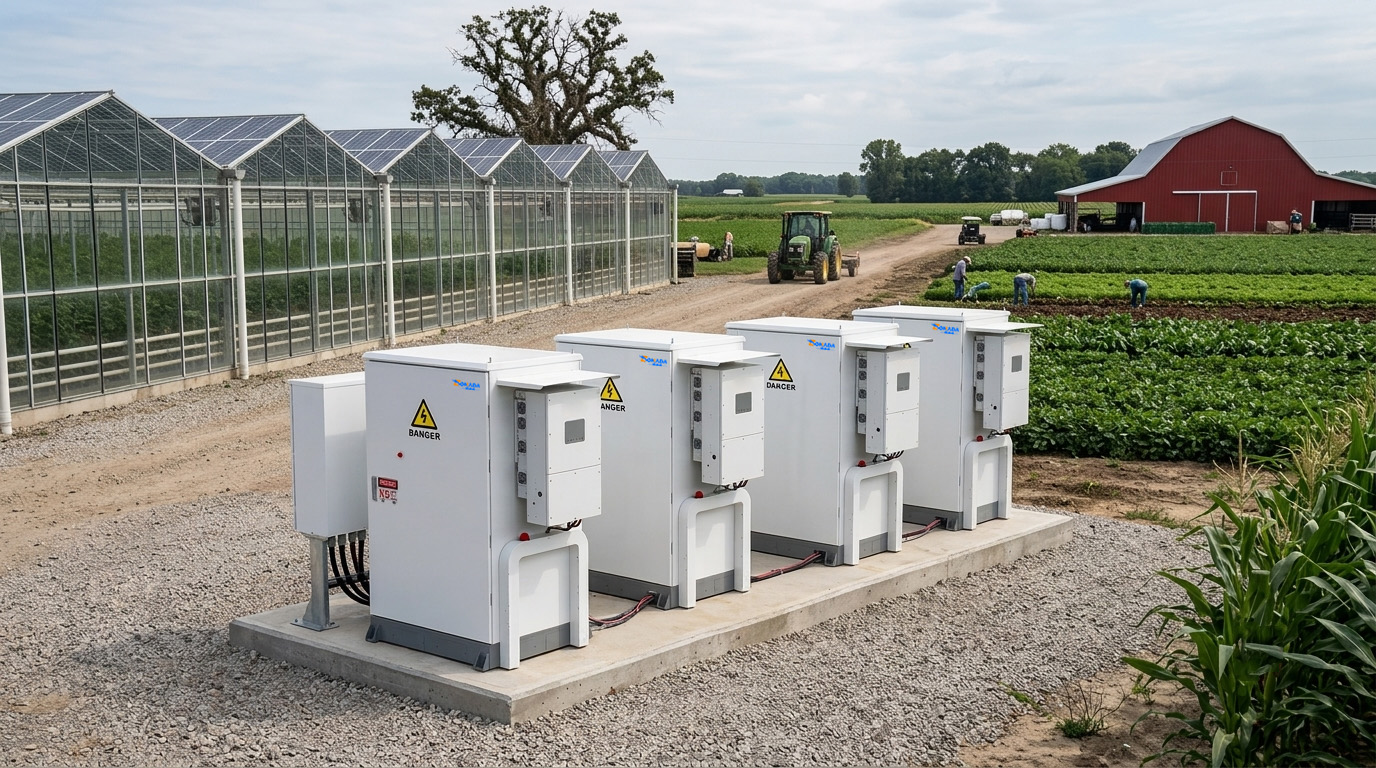
In these cases, multiple BESS cabinets can be connected in parallel to create a larger energy storage system.
For example, a project using 129kWh cabinets could theoretically scale the nominal energy capacity as follows:
| Number of Cabinets | Nominal Energy Capacity |
|---|---|
| 1 cabinet | 129 kWh |
| 2 cabinets | 258 kWh |
| 4 cabinets | 516 kWh |
The actual project configuration depends on the PCS rating, system architecture, protection design, grid connection, and manufacturer specifications.
Modular deployment can be useful for factories that expect their electricity demand or renewable energy capacity to grow over time.
Frequently Asked Questions
Can BESS really reduce a factory's electricity bill?
Yes. A BESS can reduce electricity costs when the factory's tariff structure creates an opportunity for peak shaving, TOU energy shifting, solar self-consumption, or other energy management strategies.
The amount of savings depends on the local tariff and the factory's actual load profile.
How much can a factory save with BESS?
There is no universal savings figure.
A realistic estimate requires information such as peak demand, electricity prices, operating hours, battery capacity, PCS power, cycling frequency, and solar generation.
The best approach is to use historical electricity bills and interval load data to model the expected savings.
How large should a BESS be for a factory?
The required BESS size depends on both power and energy requirements.
Peak shaving applications may prioritize power output, while solar shifting and backup applications may require more energy capacity.
A detailed load profile is normally the best starting point for sizing.
Is BESS better for peak shaving or solar storage?
Neither application is automatically better.
Peak shaving can be attractive when demand charges are significant. Solar storage can be more valuable when a factory has substantial rooftop PV and a mismatch between solar production and electricity consumption.
Some factories can combine both strategies using an EMS.
How long does a factory BESS typically last?
Battery service life depends on chemistry, operating temperature, depth of discharge, cycling frequency, charging and discharging rates, and system management.
Instead of looking only at a headline cycle-life number, factories should evaluate expected degradation under their actual operating profile.
Can BESS provide backup power during a grid outage?
Yes, if the system is designed and configured for backup operation.
The available backup duration depends on the battery's usable capacity and the electrical load being supported.
Many factories choose to back up critical loads rather than the entire facility.
How long is the typical BESS payback period?
Payback varies widely between projects.
Demand charges, TOU price differences, solar utilization, equipment cost, incentives, battery operating strategy, and financing terms can all affect the result.
A project-specific financial model is more useful than relying on a generic payback period.
Looking for the Right BESS for Your Factory?
Share your electricity bills, load profile, peak demand, solar capacity, and project requirements with our BESS team. We can help evaluate the appropriate battery capacity, power rating, and system configuration for your application.
Talk to a BESS EngineerWhy Solar Farms Need Battery Energy Storage Systems for Better ROI
Why Cold Storage Facilities Need Battery Energy Storage Systems
Related Article