How Commercial Energy Storage Systems (ESS) Reduce Peak Demand Charges & Lower Utility Bills
For many commercial buildings, electricity costs are driven by more than the amount of energy consumed. A facility may use relatively little electricity over an entire month and still receive a high utility bill because of a short period of unusually high power demand.
These demand charges can become a significant operating expense for office buildings, retail centers, hotels, manufacturing facilities, warehouses, and other commercial properties. As electricity tariffs become more complex and businesses look for ways to control operating costs, commercial energy storage systems (ESS) are becoming an increasingly practical tool for managing peak demand.
A properly designed battery energy storage system can store electricity when demand and electricity prices are lower, then discharge during periods of high load. This process, commonly known as peak shaving or load shifting, can reduce the amount of electricity a facility draws from the grid at its most expensive or highest-demand periods.

Understanding Commercial Peak Demand Charges and Energy Costs
What Are Peak Demand Charges and How Are They Calculated?
Commercial electricity bills commonly contain two different types of charges: energy charges and demand charges.
Energy charges are generally based on how much electricity a facility consumes over a billing period, measured in kilowatt-hours (kWh). Demand charges, by contrast, are based on the highest level of electrical power the facility draws from the grid during a specified measurement interval, usually expressed in kilowatts (kW).
For example, a factory might consume 100,000 kWh during a month but briefly reach a grid demand of 500 kW. Depending on the local tariff, that 500 kW peak may significantly affect the monthly electricity bill.
| Charge Type | Typical Measurement | What Affects the Cost? |
|---|---|---|
| Energy Charge | kWh consumed | Total electricity consumption and tariff |
| Demand Charge | Peak kW demand | Highest grid demand during the billing period |
| Time-of-Use Charge | kWh by time period | Whether electricity is consumed during peak or off-peak periods |
Demand-charge structures vary substantially by utility, region, customer class, and tariff. Some utilities calculate demand using a 15-minute interval, while others use different measurement periods or additional tariff rules. Businesses should therefore review their actual electricity tariff before estimating the savings available from energy storage.
The Impact of High Energy Demand on Commercial Facilities
Commercial buildings often experience predictable periods of high demand. Air-conditioning systems may start simultaneously in the afternoon. Manufacturing equipment can operate in overlapping production cycles. Refrigeration, pumps, compressors, elevators, HVAC equipment, and other large electrical loads can also create short but significant demand spikes.
These peaks can occur even when the facility's average electricity consumption is much lower.
Consider a building that normally operates at 250 kW but occasionally reaches 450 kW when several large HVAC and mechanical systems operate simultaneously. If the utility uses the facility's highest demand period to calculate the monthly demand charge, reducing that 450 kW peak can have a direct impact on the electricity bill.
This is where battery storage can complement conventional energy-efficiency measures.
Why Traditional Energy Management Strategies Fall Short
Energy-efficient lighting, high-efficiency HVAC systems, variable-frequency drives, building automation, and equipment scheduling can all reduce electricity consumption. However, these measures do not always eliminate short-duration demand peaks.
A facility may still need substantial power for a few minutes or hours during a production cycle or extreme weather event.
Commercial battery storage provides another layer of energy management. Instead of requiring the grid to supply the entire peak load, the battery can provide part of the required power locally.
How Commercial Energy Storage Systems (ESS) Reduce Peak Demand
The Mechanism of Peak Shaving and Load Shifting
Peak shaving means using stored battery energy to reduce the amount of power a facility draws from the grid during periods of high demand.
Suppose a facility has a grid demand limit of 500 kW and its load temporarily increases to 650 kW. A battery energy storage system capable of supplying 150 kW could theoretically keep grid demand near the target level, assuming sufficient battery state of charge and appropriate system controls.
The basic relationship can be expressed as:
Grid Power = Facility Load − Battery Discharge Power
For example:
- Facility load: 650 kW
- Battery discharge: 150 kW
- Grid power: approximately 500 kW
The battery does not necessarily need to power the entire building. Its role is often to reduce the highest portion of the load that would otherwise be supplied by the grid.
Load shifting takes the concept further. The battery charges during lower-cost or lower-demand periods and discharges when electricity is more expensive or demand is approaching a predefined threshold.
| Period | Typical Battery Operation | Objective |
|---|---|---|
| Off-peak | Charge | Store lower-cost electricity |
| Normal operation | Monitor | Maintain target state of charge |
| Peak demand | Discharge | Reduce grid demand and peak charges |
Intelligent Energy Management Systems (EMS) and Automated Discharge
Modern commercial battery systems are not simply large battery packs. They typically integrate a Battery Management System (BMS), Power Conversion System (PCS), and Energy Management System (EMS).
The EMS monitors operating conditions and can coordinate battery charging and discharging according to predefined objectives.
Depending on the system design, the EMS can consider:
- Real-time facility load
- Battery state of charge
- Grid power demand
- Time-of-use electricity tariffs
- Solar PV generation
- Demand thresholds
- Backup power requirements
- Weather or operating schedules
For demand management, the system can establish a target grid-demand threshold. When building consumption approaches that threshold, the battery can automatically discharge to reduce the additional grid load.
This automation is important because demand peaks can develop quickly. Manual battery operation would be difficult and inconsistent for most commercial facilities.
Combining Energy Storage with Solar and Alternative Energy
Commercial energy storage becomes even more versatile when combined with solar photovoltaic generation.
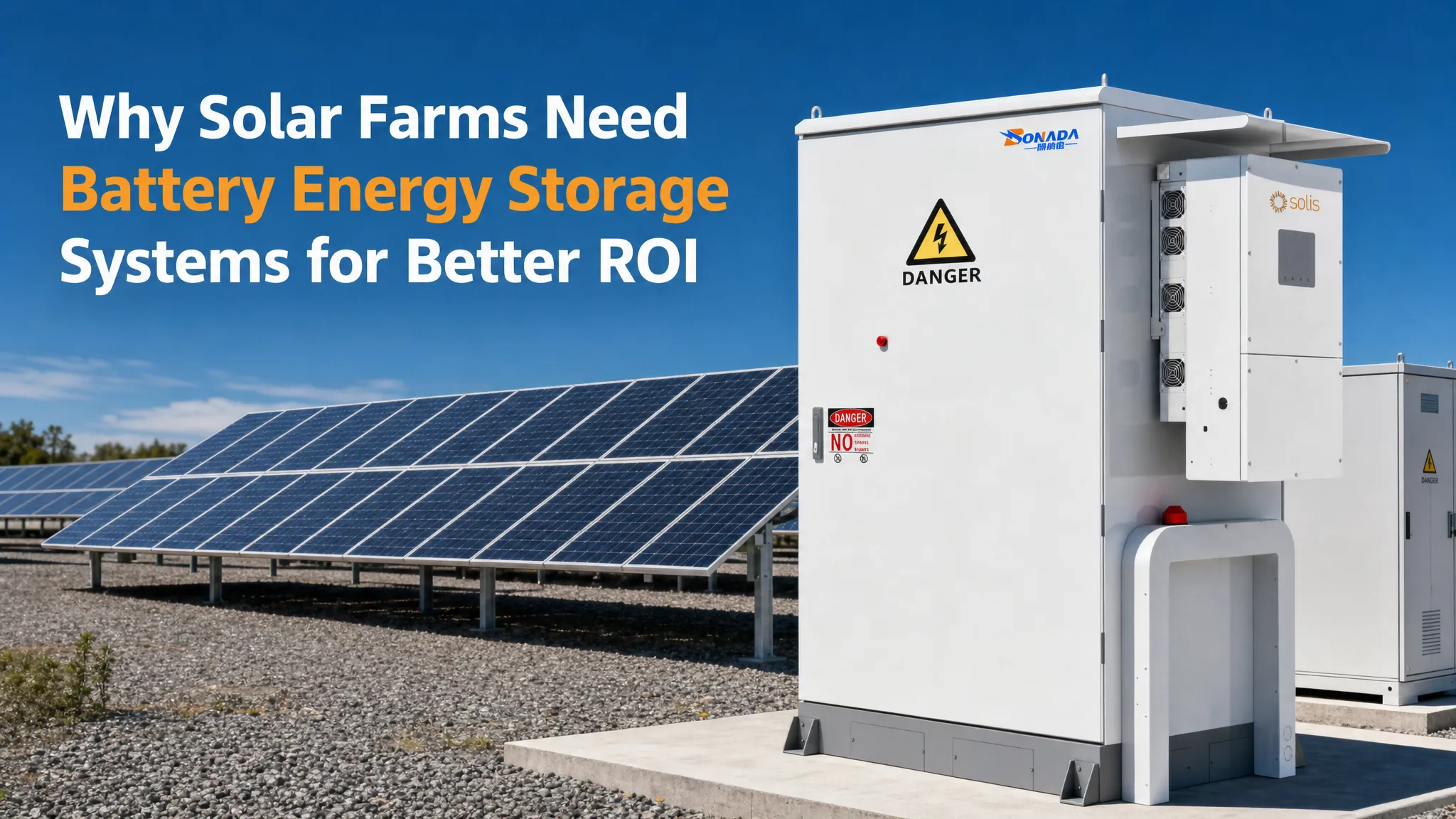
During periods of strong solar production, excess PV electricity can charge the battery instead of being exported or curtailed. The stored energy can then be used later when solar production falls and building demand increases.
A solar-plus-storage system can therefore support several objectives at the same time:
- Increase on-site solar utilization
- Reduce grid electricity consumption
- Shift solar energy into evening periods
- Reduce peak grid demand
- Provide backup power for selected loads
- Improve overall energy flexibility
Key Benefits of Energy Storage Solutions for Commercial Buildings
Significant Reduction in Monthly Utility Demand Charges
For facilities with substantial demand charges, reducing the monthly peak can produce meaningful savings.
The potential demand-charge savings can be estimated using a simplified calculation:
Demand Charge Savings = Peak Demand Reduction × Demand Charge Rate
For example, if a battery consistently reduces peak demand by 100 kW and the applicable demand charge is $15 per kW-month, the theoretical monthly demand-charge reduction would be approximately $1,500 before considering system losses, operational constraints, tariff details, and other charges.
Actual savings depend heavily on the utility tariff and the facility's load profile. A battery that is too small, poorly controlled, or installed where demand charges are minimal may provide limited economic value.
Peak-Valley Energy Arbitrage and Grid Services Revenue
Demand management is only one potential application of a commercial ESS.
Where time-of-use tariffs are available, batteries can charge during lower-cost periods and discharge during higher-cost periods. This is commonly referred to as energy arbitrage or peak-valley tariff optimization.
Depending on local regulations and market rules, some commercial storage systems may also participate in demand response or other grid-support programs.
However, these opportunities differ significantly between electricity markets. Revenue from grid services should not be assumed when calculating a project's financial return unless the applicable market and utility rules have been confirmed.
Uninterrupted Emergency Backup Power and Resilience
Commercial battery storage can also provide backup power during grid outages.
For facilities where a power interruption creates significant operational losses, the battery can supply designated critical loads until the grid is restored or another power source becomes available.
Potential critical loads include:
- Emergency lighting
- Network and communications equipment
- Security systems
- IT infrastructure
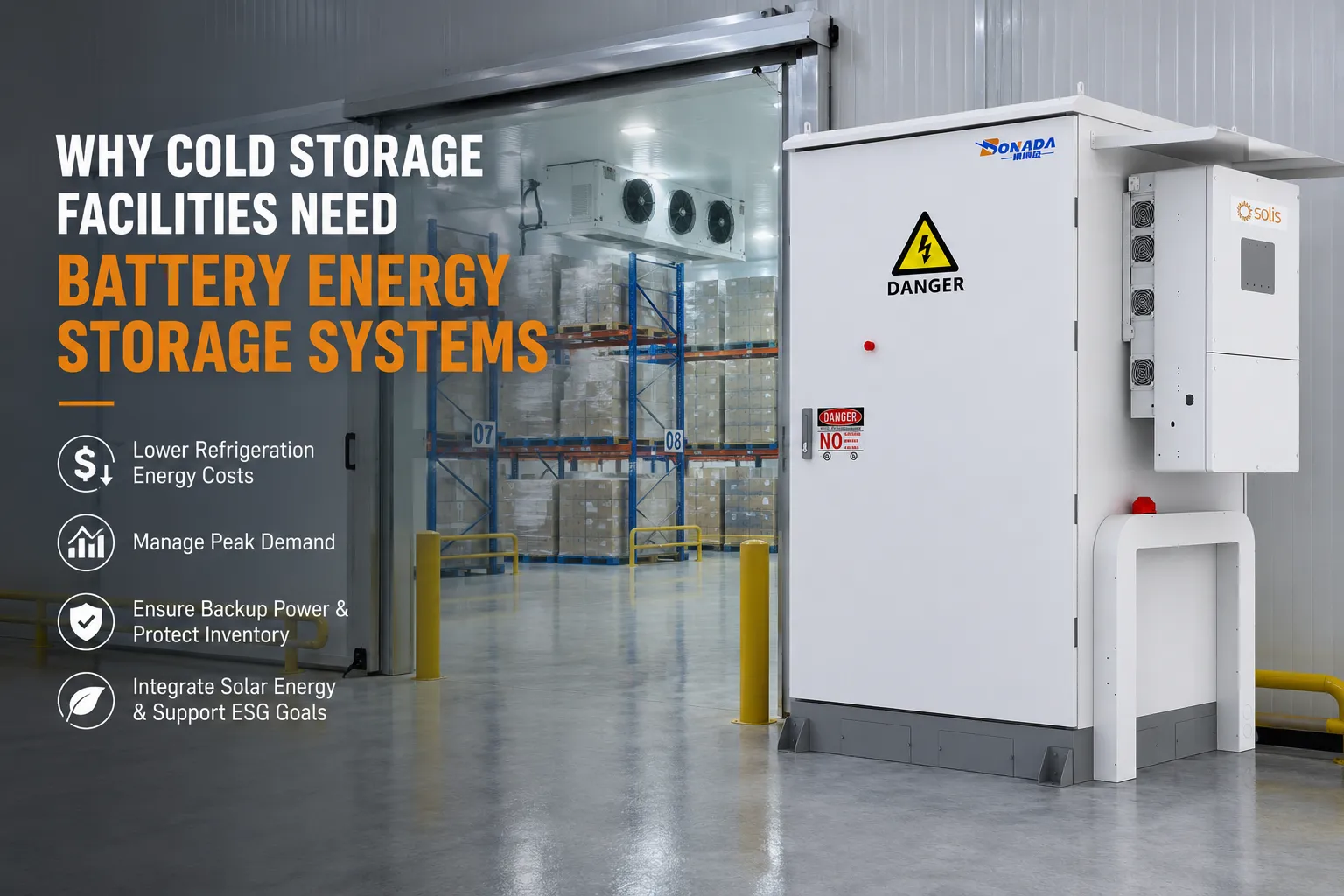
- Refrigeration
- Critical manufacturing equipment
- Medical or life-safety equipment where appropriately designed
Backup duration depends on battery capacity, inverter power, load size, system configuration, and the amount of load connected during an outage.
Sustainability Goals and Utility Incentive Programs
Energy storage can support corporate sustainability strategies by increasing renewable-energy utilization and reducing reliance on grid electricity during selected periods.
Some regions also provide incentives for battery storage, demand response, energy efficiency, or solar-plus-storage projects. Incentive eligibility can change frequently, so businesses should verify current requirements with the relevant utility or government agency before including incentives in a project financial model.
Types of Commercial and Industrial (C&I) Battery Energy Storage Systems
Air-Cooled vs. Liquid-Cooled Battery Storage Systems
Commercial and industrial battery storage systems use different thermal-management approaches.
Air-cooled systems use fans and forced air to control battery temperature. They can offer a relatively straightforward architecture and may be suitable for many commercial applications.
Liquid-cooled systems circulate a cooling fluid through dedicated thermal-management components. This approach can provide more precise temperature control and is increasingly used in higher-power or higher-energy-density battery systems.
| Feature | Air-Cooled ESS | Liquid-Cooled ESS |
|---|---|---|
| Thermal management | Forced air | Liquid circulation |
| Typical architecture | Simpler cooling structure | More integrated thermal control |
| Application suitability | Broad range of C&I projects | Higher-density and demanding applications |
The choice should be based on system size, climate, installation environment, operating conditions, maintenance requirements, and total project cost rather than cooling technology alone.
High-Voltage Lithium Battery Solutions
High-voltage lithium battery systems are widely used in commercial and industrial energy storage because they can provide substantial power while maintaining an efficient system architecture.
Lithium iron phosphate (LiFePO4 or LFP) chemistry is particularly common in stationary energy storage because of its combination of cycle performance, thermal characteristics, and long service life when properly designed and operated.
A commercial ESS should include appropriate battery monitoring, thermal management, electrical protection, isolation, fire-safety measures, and compliance with applicable local standards and certification requirements.
Integrated All-In-One Commercial ESS Cabinets
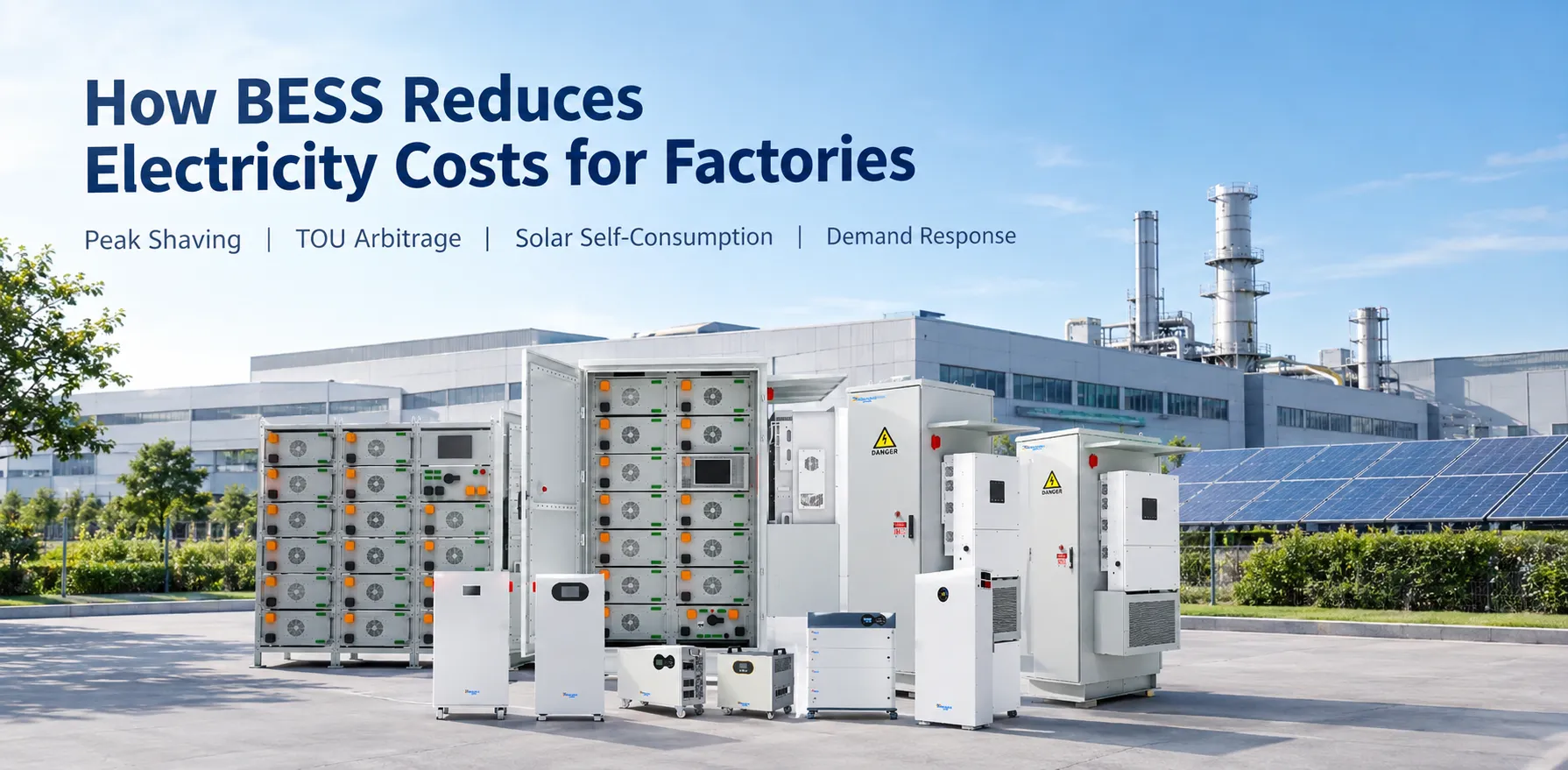
All-in-one commercial ESS cabinets integrate multiple components into a coordinated enclosure. Depending on the product, this may include battery modules, PCS, BMS, EMS, thermal management, protection equipment, and fire-safety systems.
This integrated approach can simplify installation and reduce the number of separate components that need to be coordinated during project deployment.
For EPC companies and commercial energy users, an integrated cabinet can also make system expansion and standardized project deployment easier.
Top Application Scenarios for Demand Charge Management
Manufacturing Plants and Industrial Facilities
Manufacturing facilities are often strong candidates for peak shaving because their electrical loads can be large and highly variable.
Motors, compressors, pumps, HVAC systems, production machinery, and process equipment can create substantial demand peaks. A properly sized battery can provide additional power during these periods while allowing the grid connection to operate closer to a predefined demand target.
Commercial Office Buildings and Retail Centers
Office buildings and retail properties typically have strong relationships between occupancy, HVAC operation, lighting, and electricity demand.
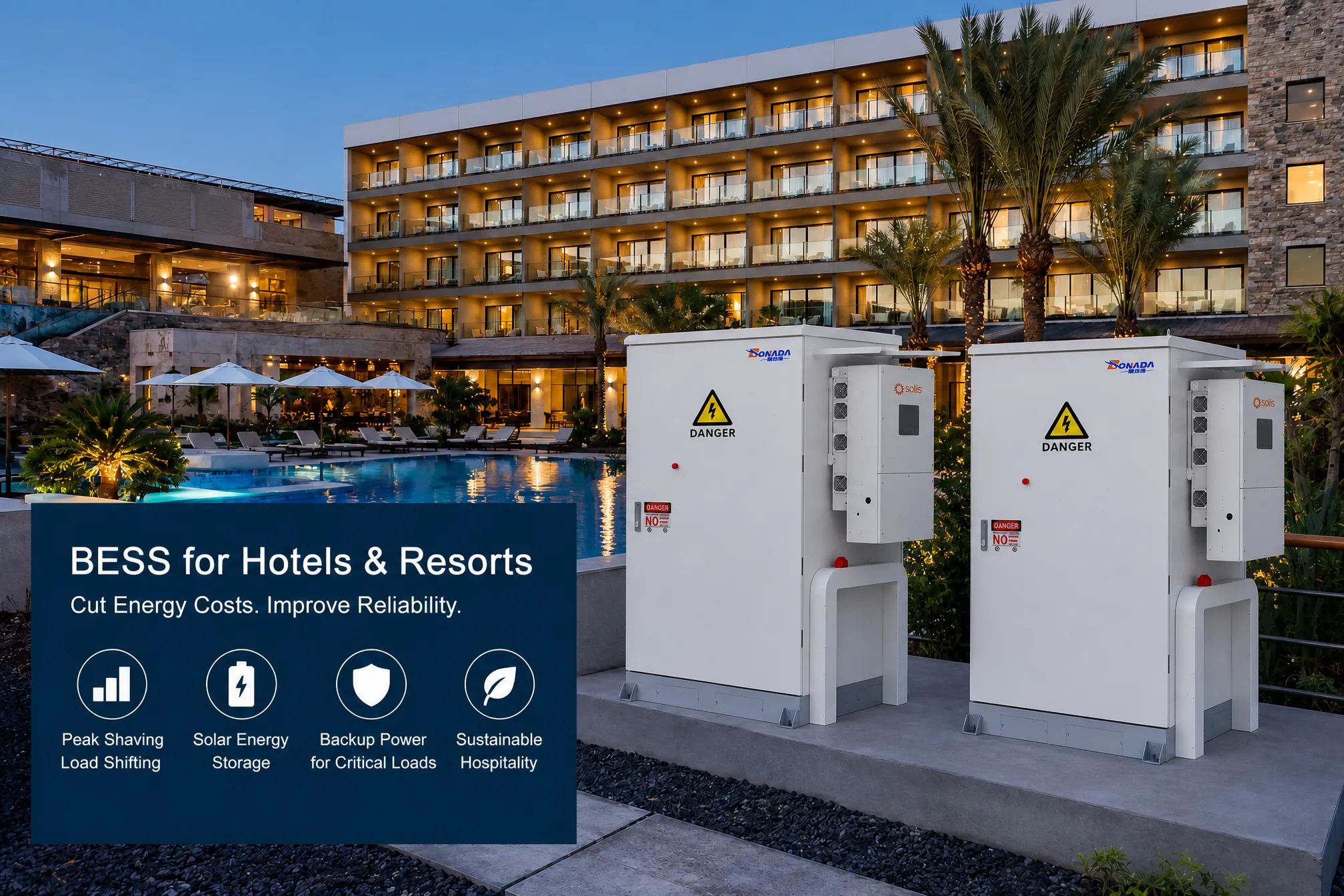
Demand may increase significantly during hot afternoons when cooling systems operate at high capacity. Battery storage can discharge during these periods while charging when demand is lower.
Retail centers can also benefit from coordinated energy management across HVAC, refrigeration, lighting, and other large electrical loads.
Data Centers and Critical Infrastructure Facilities
Data centers have different energy-storage requirements because reliability and power quality are often as important as electricity cost.
Battery systems can potentially support peak demand management while also contributing to backup power strategies. However, critical infrastructure applications require careful engineering, redundancy planning, power-quality analysis, and compliance with applicable electrical and safety standards.

How to Select and Size the Right Commercial Battery System
Analyzing Building Load Profiles and Peak Usage Patterns
The first step in sizing a commercial battery is understanding the facility's actual electricity profile.
At minimum, project developers should collect historical interval electricity data where available. Monthly bills alone may not reveal when or how demand peaks occur.
Important data points include:
- Maximum demand in kW
- Average demand
- 15-minute or other interval load data
- Daily load patterns
- Seasonal demand changes
- Operating hours
- Large equipment operating schedules
- Solar PV generation, if applicable
- Utility demand-charge structure
- Time-of-use electricity rates
Determining Power (kW) and Capacity (kWh) Requirements
One of the most important concepts in commercial battery sizing is the difference between power and energy capacity.
Power, measured in kW or MW, determines how much electricity the battery can deliver at a given moment.
Energy capacity, measured in kWh or MWh, determines how long the battery can continue supplying that power.
For example, a 500 kW / 1,000 kWh battery theoretically has enough stored energy to deliver 500 kW for approximately two hours under idealized conditions. Actual usable duration will depend on system efficiency, operating limits, state-of-charge settings, temperature, degradation, and other factors.
For peak shaving, the required battery power may be more important than total energy capacity. For longer load shifting or backup applications, energy capacity becomes increasingly important.
| Project Requirement | Primary Sizing Consideration |
|---|---|
| Short demand spikes | Battery power in kW |
| Peak shaving over several hours | Both kW and kWh |
| Time-of-use arbitrage | Usable kWh and tariff spread |
| Backup power | Critical-load kW and required backup hours |
Evaluating Safety, Durability, and Maintenance Needs
Cost should not be the only consideration when selecting a commercial battery system.
Businesses and EPC developers should evaluate the battery chemistry, cell quality, BMS architecture, PCS efficiency, thermal management, enclosure protection, fire-safety design, certifications, warranty terms, degradation assumptions, monitoring capabilities, and after-sales support.
For international projects, it is also important to confirm that the equipment can satisfy the electrical codes, grid requirements, transportation regulations, and certification requirements applicable in the target market.
Financial Considerations: ROI, Payback Period, and Incentives
Estimating Initial Capital Costs vs. Operational Savings
A commercial energy storage investment should be evaluated using the facility's actual electricity tariff and load data.
Potential economic benefits may come from several sources:
- Demand-charge reduction
- Time-of-use energy arbitrage
- Solar self-consumption
- Demand-response programs
- Backup-power value
- Potential utility incentives
At the same time, project costs can include the battery system, PCS, EMS, electrical equipment, installation, civil work, commissioning, grid interconnection, software, maintenance, insurance, and eventual battery replacement or augmentation.
Leveraging Utility Rebates and Tax Incentives
Financial incentives can materially affect the economics of a commercial energy storage project, but eligibility varies by location and customer type.
Before including an incentive in a business case, project owners should confirm the current program rules, application deadlines, eligible equipment, installation requirements, and whether the incentive can be combined with other programs.
For international EPC projects, local incentive programs should be checked independently because regulations and tariff structures differ significantly from one country to another.
Total Cost of Ownership (TCO) and ROI Projections
Looking only at the purchase price of the battery can produce an incomplete comparison.
A more useful approach is to calculate the Total Cost of Ownership (TCO) over the expected operating period.
A basic financial model should consider:
- Initial equipment and installation cost
- Annual electricity savings
- Demand-charge savings
- Energy arbitrage savings
- Operating and maintenance expenses
- Battery degradation
- Round-trip efficiency
- Financing costs
- Incentives and tax benefits
- Expected system operating life
For example, a system with a lower upfront price may not necessarily have the lowest lifetime cost if it has lower efficiency, higher maintenance requirements, shorter warranty coverage, or faster capacity degradation.
A detailed project model should therefore compare both upfront capital expenditure and long-term operating performance.
Frequently Asked Questions About Commercial Energy Storage
Can a Single Battery System Handle Both Backup Power and Demand Reduction?
Yes, a properly engineered commercial ESS can potentially perform both functions.
During normal operation, the battery can participate in peak shaving, load shifting, and solar optimization. During a grid outage, the system can switch to backup operation and supply designated critical loads.
However, the system must be sized and controlled for both objectives. If the battery is fully discharged for peak shaving before an outage, it may not have enough energy remaining for backup power. An EMS can maintain a minimum state-of-charge reserve when backup capability is a priority.
How Does the System Know Exactly When to Discharge?
The EMS continuously monitors electrical conditions and applies predefined control strategies.
For demand-charge management, the system may monitor real-time facility demand and compare it with a target threshold. When grid demand approaches the threshold, the battery can discharge automatically.
More advanced systems can combine demand forecasting, tariff schedules, solar generation forecasts, battery state of charge, and historical load patterns to optimize charging and discharging.
How Long Does It Take to Deploy a Commercial Energy Storage Solution?
Deployment time depends on system size, site conditions, permitting, equipment availability, grid interconnection requirements, and project complexity.
A standardized commercial ESS cabinet can simplify installation, but larger C&I projects may require detailed engineering, site surveys, utility approval, civil work, electrical upgrades, commissioning, and safety inspections.
For this reason, businesses should evaluate the complete project timeline rather than considering battery delivery alone.
Friendly Reminder
Peak demand charges can represent a substantial portion of electricity costs for commercial and industrial facilities, particularly where short periods of high electrical demand determine the monthly billing demand.
Commercial energy storage systems provide a flexible way to address this challenge. By storing electricity during lower-demand periods and discharging when facility consumption approaches a predefined peak, a battery system can reduce grid demand while also supporting solar integration, time-of-use optimization, and backup power.
The key to a successful project is not simply choosing the largest battery available. The system should be matched to the facility's actual load profile, utility tariff, peak-demand pattern, operating schedule, backup requirements, and financial objectives.
For commercial buildings, factories, warehouses, hotels, retail centers, and other C&I facilities, the right Battery Energy Storage System (BESS) can become an important part of a broader energy-management strategy.
If you are evaluating a commercial energy storage project, start with your historical electricity bills and interval load data. From there, an EPC provider or energy-storage specialist can determine the required battery power, usable capacity, operating strategy, and expected financial performance based on the site's actual conditions.
Looking to Reduce Peak Demand Charges?
Find the right BESS configuration for your commercial facility. Bonada’s energy storage engineers can analyze your load profile, peak demand patterns, and operating requirements to develop a site-specific solution for peak shaving, load shifting, and backup power.
Talk to Bonada BESS Engineers
Why Solar Farms Need Battery Energy Storage Systems for Better ROI
Related Article